View in other NatureServe Network Field Guides
NatureServe
Montana
Utah
Wyoming
Idaho
Wisconsin
British Columbia
South Carolina
Yukon
California
New York
Painted Turtle - Chrysemys picta
Native Species
Global Rank:
G5
State Rank:
S5
(see State Rank Reason below)
Agency Status
USFWS:
USFS:
BLM:
State Rank Reason (see State Rank above)
Species is relatively common within suitable habitat and widely distributed across portions of the state.
General Description
EGGS:
Eggs of the Painted Turtle (Chrysemys picta) are white, smooth, and oval. They are approximately 31 mm (1.2 in) long. Initially flexible, the shell gradually becomes firmer as water is absorbed (Ernst et al. 1994, Werner et al. 2004). Clutch size can range from 6-21 leathery eggs (Ernst et al. 1994, Russell and Bauer 2000). In southern Canada, clutch size is 20 and in Wisconsin and Minnesota, clutch size was documented as 10 (Christiansen and Moll 1973). In Wisconsin, 50% of females laid two clutches and nested from June to mid-July. Eggs may overwinter (Ernst 1972).
HATCHLINGS:
Hatchlings have a keeled carapace and vivid orange plastron (Hammerson 1999).
JUVENILES AND ADULTS:
Painted Turtles are named for their highly decorative yellow or reddish orange markings on its carapace and yellow markings on its legs, tail, and head. The plastron (underside) is a brilliant yellow or reddish orange with a large olive, loosely symmetrical blotch in the center, while the carapace (top) is mainly olive to black with more distinct yellow or reddish orange markings along its outer edge. Striking yellow lines along the head and neck, and a red spot behind the eye are distinctive for this species. Yellow markings on the fore and hind legs and tail are also present, but less obvious than those on the head. Brighter than adults, juveniles are otherwise similar in coloration. Adult females are larger than males; carapace length can vary from 8-18 cm (3.2 to 7.1 inches) (Werner et al. 2004). Mature males have a flat plastron, long forefeet claws, and rear vent located beyond the edge of the carapace, while the claws on the forefeet of the female are relatively short with the vent located at or inside the rear edge of the carapace (Hammerson 1999). Juveniles are distinguishable by a deep crease in the abdominal plastron shields (Hammerson 1999).
Diagnostic Characteristics
Lacking the distinct bright coloration, it is unlikely other turtle species in the state would be confused with the Painted Turtle. The Spiny Softshell (
Apalone spinifera) is smooth and creamy light brown in coloration with a relatively pointed head and flat pancake-like appearance. The Snapping Turtle (
Chelydra serpentina) has a dark brown, grey, or black carapace without contrasting coloration patterns anywhere on the shell or body. The Spiny Softshell is found in the central and eastern portions of the state, along the Missouri and Yellowstone Rivers and their main tributaries, while the Snapping Turtle is limited to the central and southern portions of eastern Montana (Werner et al. 2004) with non-native populations located west of the Continental Divide (MTNHP POD 2022).
Species Range
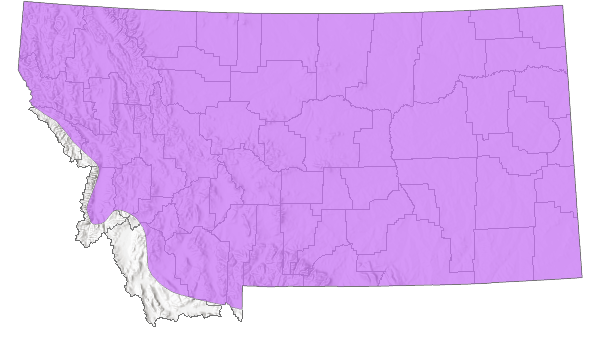
Montana Range
Range Descriptions
 Native
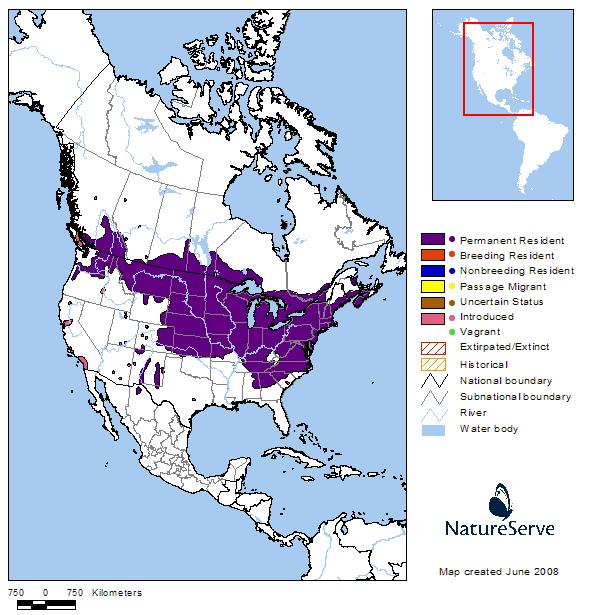
Western Hemisphere Range
Range Comments
The Western Painted Turtle (Chrysemys picta belli) in Montana is one of four subspecies of C. picta whose range extends across much of North America and southern Canada. This subspecies is found in the western U.S. and Canadian provinces. In Montana, the Painted Turtle is found throughout the state at lower elevations, with only a few counties in the central portion of the state lacking documented observations (Werner et al. 2004). The Eastern Painted Turtle (C. p. picta) is generally found in southeastern Canada, the northeastern U.S. and into southeastern U.S.; the Midland Painted Turtle (C. p. marginata) is documented in a few mid-western states. The Southern Painted Turtle (C. p. dorsalis) is generally located in the southcentral and southeastern U.S. states (NatureServe 2006). Chrysemys dorsalis (C. p. dorsalis) has been recognized as a distinct species from C. picta by Starkey et al. (2003) based upon molecular data. Disagreements on this point because of apparent intergrades in western Kentucky, southern Illinois, and southeastern Missouri leave the debate open if C. dorsalis is indeed conspecific with C. picta (NatureServe 2006).
Maximum elevation: 1,993 m (6,539 ft) Duck Creek Bay of Hebgen Reservoir in Gallatin County (Clint Sestrich, Adam Kehoe, and Kyle Salzman, MTNHP POD 2022).
Observations in Montana Natural Heritage Program Database
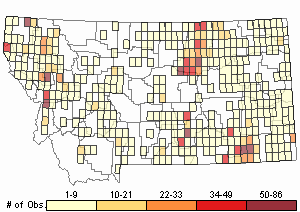
Number of Observations: 2847
(Click on the following maps and charts to see full sized version)
Map Help and Descriptions
Relative Density
Recency
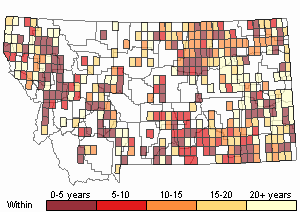
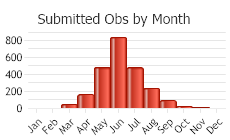
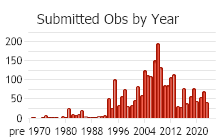
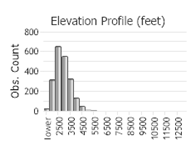 (Observations spanning multiple months or years are excluded from time charts)
Habitat
An animal of aquatic environments, the Painted Turtle prefers slow-moving shallow waterways (streams, marshes, ponds, lakes, and creeks) with soft mud bottoms and aquatic vegetation. They have been documented in glacial lakes (Franz 1971); but not found in oligotropic mountain lakes above 1,025 m (3363 ft) in Mission Mountains (Brunson and Demaree 1951). Partially submerged logs and rocks for basking are desirable habitat features. This turtle species may colonize areas only seasonally wet but must return to permanent waters for winter hibernation. Behaviorally, juveniles and hatchlings may differ from mature individuals in habitat use. For example, in Michigan, Congdon et al. (1992) found that the hatchlings and juveniles were found in more shallow areas of marsh habitat. This behavior could result from greater food resources available or an attempt to avoid the larger predators present in deeper water (Hammerson 1999). Painted Turtles hibernate in mud at the bottom from early October to mid- or late April. Nests are placed in terrestrial habitats and may range up to 600 meters from water, where the eggs are left to incubate on their own (Ernst et al. 1994, Hammerson 1999)). In southern Canada, nest have been found on south-facing grassy slopes (MacCracken et al. 1983). In small marsh systems, the home range size may be very small (e.g., average of 1.2 ha in Michigan) (Rowe 2003), whereas in rivers, individual home range sizes are generally much larger (e.g., 7-26 km or 4.3-16.2 mi) (MacCulloch and Secoy 1983, NatureServe 2006).
National Vegetation Classification System Groups Associated with this Species
Forest and Woodland
Deciduous Forest and Woodland
Wetland and Riparian
Alkaline - Saline Wetlands
Alpine Riparian and Wetland
Peatland
Riparian and Wetland Forest
Riparian Shrubland
Wet Meadow and Marsh
Food Habits
Ease of capture and size are major influences on what prey is taken. Food quality (animal vs. plant) and quantity may influence reproductive potential (MacCracken et al. 1983). Plant material was a significant food item (21 to 61%) in some Painted Turtles that had stopped growing. In addition to living and dead plants, Painted Turtles may consume a wide variety of living or dead organisms. In southern Saskatchewan, Painted Turtles preferred animal food (over 87% by volume) over abundant vegetation. Food interests include worms, leeches, insect larvae, pupae, and adults, as well as beetles, damselflies, dragonflies, water striders, water mites, spiders, mayflies, springtails, mosquitoes, crustaceans, snails, clams, frogs, and fish (Ernst et al. 1994, Hammerson 1999).
Ecology
Most nesting occurs during the afternoon hours, with a smaller proportion of nests initiated in the morning (Ernst et al. 1994). Nesting may occur early or late into the summer. Nests that hatch later in the breeding season may exhibit delayed emergence, e.g., the young overwinter in the nest. Even though Brettenbach et al. (1984) found greater survivorship of nests in Michigan if covered by a beneficial layer of snow, substantial mortality of overwintering hatchlings can occur (Nagle et al. 2000). Nest mortality (resulting from predation) can be high, especially for those nests placed closer, rather than farther, from a water source (Christens and Bider 1987). In Christens and Bider’s (1987) study, hatchlings overwintering in the nest survived early predation, suggesting that open nests may trigger olfactory clues and make early predation more likely.
Adult mortality can occur for individuals overwintering in areas prone to both drought and widely ranging winter temperatures. Christiansen and Bickham (1989) discovered more than 100 painted turtles frozen to death when the pond in which they were hibernating had frozen to the bottom. A 1995 mortality study (Fowle 1996) reported most Painted Turtles found dead on road occurred from late May to mid-July and consisted of 43% adult males, 26% adult females, and 31% of unknown sex, including juveniles. Densities of adult Painted Turtles were positively correlated with pond distance from the highway, and proportionally more juveniles and fewer adults were found at ponds closest to the highway, implying that roadkill mortality may be killing proportionally more adults (Fowle 1996).
Reproductive Characteristics
Sexual maturity appears more a consequence of size in males. Maturity occurs when plastron lengths are 70-95 mm (2.76-3.74 in), rather than age, and enhanced growth can shorten the average age of maturity of four years to two (Ernst et al. 1994). Females generally mature at 6-10 years of age at which time their plastron length ranges from 97-128 mm (3.8-5.1 in) (Ernst et al. 1994). Painted Turtles become active in late March or early April and may be observed basking on sun exposed banks, rocks, or logs in ponds, lakes, reservoirs, and streams. Nesting generally occurs from May until mid-July, with most nesting activity in June and early July. Christens and Bider (1987) found a consistent correlation between the mean temperature of the previous year for the current year’s nest initiation date for nests in Quebec, Canada. The flask-shaped nests are dug with the hind feet into rain-soaked soil, or soil sometimes softened with bladder water during digging (Ernst et al. 1994). Nests are dug into sandy, loamy, or other friable soil (Russell and Bauer 2000). Nest digging and egg laying can take up to four hours (Ernst et al. 1994), after which the eggs are covered over with soil. Poor weather conditions, such as extreme heat or drought can delay nesting (Lindeman 1989, Ernst et al. 1994).
Nest placement and the associated microsite characteristics are important as the sex of the incubating eggs is determined by temperature (cooler temperatures produce males, warmer produce females). While females may lay up to three clutches of eggs in one breeding season, Iverson and Smith (1993) reported an unusual 4 clutches for two females. Tinkle et al. (1981) estimated that 30-50% of females may not reproduce every year. Egg size and clutch size increase with female body size (Hammerson 1999).
A 1995 study from the Mission Valley in Montana (Fowle 1996) reported gravid females ranging from 7 to 17 in age, with smallest gravid female plastron lengths/widths of 166 and 82 mm (6.5 and 3.2 in) for 11- and 9-year old, respectively. The youngest males with secondary sex characteristics were 2 years old, with minimum plastron lengths/widths of 33 and 49 mm (1.3 and 1.9) for 4- and 3-year old, respectively (Fowle 1996).
Management
The following was taken from the Status and Conservation section for the Painted Turtle account in
Maxell et al. 2009.
The Painted Turtle is the most abundant turtle species in Montana; both the Spiny Softshell and Snapping Turtle have much smaller ranges, fewer recorded observations, and are more likely to be collected for harvest (Maxell and Hokit 1999, Werner et al. 2004). At the time when the comprehensive summaries of amphibians and reptiles in Montana (Maxell et al. 2003, Werner et al. 2004) were published, the Painted Turtle was documented in 41 counties, and broadly distributed across both the western and eastern portions of the state. Counties absent of records are generally located in the central portion of the state. State records are comprised of 392 observations in 40 counties, with 60 museum voucher records from 19 counties. The distribution of this species reflects its relative abundance compared to the two other turtle species in Montana. Specific state status information on the Painted Turtle is not available for Montana. Global trends over the short term are identified as stable, and relatively stable over the long term (NatureServe 2006).
Studies identifying or addressing specific risk factors for
Chrysemys picta in Montana are lacking; however, documented studies and other issues pertaining to their conservation include the following: (1) During the breeding season, females are quite sensitive to disturbance while on nesting forays; human activity (e.g., fishing) can disrupt nesting activity even from a distance (Hammerson 1999). (2) Artificially high mammalian predator numbers resulting from human augmented food resources can result in lower abundance of local turtle populations. While the Raccoon (
Procyon lotor) is the most detrimental native predator in all life stages of this turtle species (Ross 1988, Ernst et al. 1994), other native predators of Painted Turtle nests include the Thirteen-lined Ground Squirrel (
Ictidomys tridecemlineatus), Chipmunk (
Neotamias), Squirrel (
Sciurus), Striped Skunk (
Mephitis mephitis), American Badger (
Taxidea taxus), Coyote (
Canis latrans), Red Fox (
Vulpes vulpes), Common Raven (
Corvus corax), Plains Garter Snake (
Thamnophis radix), and other snakes (
Coluber). Hatchlings and small juveniles may fall prey to Giant Water Bugs (
Belostomatidae), Hammerson 1999). Young Painted Turtles are under threat of predation by Muskrats (
Ondatra zibethicus), American Mink (
Neogale vison), Raccoon, Snapping Turtles (
Chelydra serpentina), snakes (
Coluber), American Bullfrog (
Lithobates catesbeianus), large fish (
Micropterus,
Ictalurus), herons (
Ardea), and Giant Water Bugs (
Hemiptera) (Ernst et al. 1994, Maxell and Hokit 1999). In addition to Raccoons, adult Painted Turtles may be preyed upon by Bald Eagles (
Haliaeetus leucocephalus), Osprey (
Pandion haliaetus), and hawks. (3) Fowle’s (1996) mortality study in Montana reported most Painted Turtles found dead on the road occurring from late May to mid-July consisted of 43% adult males, 26% adult females, and 31% of unknown sex, including juveniles. Densities of adult turtles were positively correlated with pond distance from the highway, and proportionally more juveniles and fewer adults were found at ponds closest to the highway, implying that roadkill mortality may be killing proportionally more adults (Fowle 1996). (4) Ernst (1999) notes that, notwithstanding all of the potential wild predators, the greatest source of mortality for Painted Turtles is probably human caused: road kills, habitat destruction, pet trade, indiscriminate shooting and pesticide poisoning.
Stewardship Responsibility
References
- Literature Cited AboveLegend:
 View Online Publication
- Brettenbach, G.L., J.D. Congdon, and R.C. Van Loben Sels. 1984. Winter temperatures of Chrysemys picta nests in Michigan: effects on hatchling survival. Herpetologica 40(1): 76-81.
- Brunson, R.B. and H.A. Demaree, Jr. 1951. The herpetology of the Mission Mountains, Montana. Copeia (4):306-308.
- Christens, E. and J.P. Bider. 1987. Nesting activity and hatching success of the painted turtle (Chrysemys picta marginata) in southwestern Quebec. Herpetologica 43(1): 55-65.
- Christiansen, J.L. and E.O. Moll. 1973. Latitudinal reproductive variation within a single subspecies of painted turtle, Chrysemys picta bellii. Herpetologica 29(2):152-163.
- Christiansen, J.L. and J.W. Bickham. 1989. Possible historic effects of pond drying and winterkill on the behavior of Kinosternon flavescens and Chrysemys picta. Journal of Herpetology 23(1): 91-94.
 Congdon, J.D., S.W. Gotte, S.W., and R.W. Mcdiarmid. 1992. Ontogenetic changes in habitat use by juvenile turtles, Chelydra serpentina and Chrysemys picta. Canadian Field Naturalist 106(2): 241-248.
- Ernst, C. H., R. W. Barbour, and J. E. Lovich. 1994. Turtles of the United States and Canada. Smithsonian Institution Press. Washington, D.C. 578 p.
- Ernst, C.H. 1972. Temperature-activity relationship in the painted turtle, Chrysemys picta. Copeia 1972(2): 217-222.
- Fowle S.C. 1996. Effects of roadkill mortality on the western painted turtle (Chrysemys picta bellii) in the Mission Valley, western Montana. pp. 205-223. In: Evink G., D. Ziegler, P. Garrett, and J. Berry (eds). Highways and movement of wildlife: improving habitat connections and wildlife passageways across highway corridors. Proceedings of the Florida Department of Transportation/Federal Highway Administration Transportation-Related Wildlife Mortality Seminar. April 30-May 2, 1996. Orlando, Florida.
- Franz, R. 1971. Notes on the distribution and ecology of the herpetofauna of northwestern Montana. Bulletin of the Maryland Herpetological Society 7: 1-10.
- Hammerson, G.A. 1999. Amphibians and reptiles in Colorado. University Press of Colorado & Colorado Division of Wildlife. Denver, CO. 484 p.
- Iverson, J.B. and G.R. Smith. 1993. Reproductive ecology of the painted turtle (Chrysemys picta) in the Nebraska Sandhills and across its range. Copeia 1993(1): 1-21.
- Lindeman, P.V. 1989. Chrysemys picta belli (western painted turtle). Egg retention. Herpetological Review 20(3): 69.
- MacCracken, J.G., L.E. Alexander, and D.W. Uresk. 1983. An important lichen of southeastern Montana rangelands. Journal of Range Management 36(1):35-37.
- Maxell, B.A. and D.G. Hokit. 1999. Amphibians and reptiles. Pages 2.1– 2.30 In G. Joslin and H. Youmans, committee chairs. Effects of recreation on Rocky Mountain wildlife: a compendium of the current state of understanding in Montana. Committee on Effects of Recreation on Wildlife, Montana Chapter of the Wildlife Society.
- Maxell, B.A., J.K. Werner, P. Hendricks, and D.L. Flath. 2003. Herpetology in Montana: a history, status summary, checklists, dichotomous keys, accounts for native, potentially native, and exotic species, and indexed bibliography. Society for Northwestern Vertebrate Biology, Northwest Fauna Number 5. Olympia, WA. 135 p.
- Maxell, B.A., P. Hendricks, M.T. Gates, and S. Lenard. 2009. Montana amphibian and reptile status assessment, literature review, and conservation plan, June 2009. Montana Natural Heritage Program. Helena, MT. 643 p.
- Nagle, R.D., O.M. Kinney, J.D. Congdon, and C.W. Beck. 2000. Winter survivorship of hatching painted turtles (Chrysemys picta) in Michigan. Canadian Journal of Zoology 78(2): 226-233.
- Ross, D.A. 1988. Chrysemys picta (painted turtle). Predation. Herpetological Review 19(4): 85-87, illustr.
- Rowe, J.W. 2003. Activity and movements of midland painted turtles (Chrysemys picta marginata) living in a small marsh system on Beaver Island, Michigan. Journal of Herpetology 37: 342-353.
- Russell, A. P. and A. M. Bauer. 2000. The Amphibians and Reptiles of Alberta: A field guide and primer of boreal herpetology. University of Calgary Press, Toronto, Ontario. 279 p.
- Starkey, D. E., H. B. Shaffer, R. L. Burke, M.R.J. Forstner, J. B. Iverson, F. J. Janzen, A.G.J. Rhodin, and G. R. Ultsch. 2003. Molecular systematics, phylogeography, and the effects of Pleistocene glaciation in the painted turtle (Chrysemys picta) complex. Evolution 57(1): 119-128.
- Tinkle, D.W., J.D. Congdon, and P.C. Rosen. 1981. Nesting frequency and success: implications for the demography of painted turtles. Ecology 62: 1426-1432.
- Werner, J.K., B.A. Maxell, P. Hendricks and D.L. Flath. 2004. Amphibians and Reptiles of Montana. Mountain Press Publishing Company: Missoula, MT. 262 pp.
- Additional ReferencesLegend: View Online Publication
Do you know of a citation we're missing?- [DCC] Decker Coal Company. 1998. 1997 Consolidated annual progress report. Decker Coal Company West, North and East Pits. Decker, MT.
- [EI] Econ Incorporated. 1984. Terrestrial wildlife inventory for the Lame Jones and Ismay coal lease tracts. Econ Incorporated. Helena, MT.
- [OEA] Olson Elliot and Associates Research. 1985. 1983-1984 Wildlife monitoring report for the CX Ranch project. Olson Elliot and Associates Research. Helena, MT.
- [PRESI] Powder River Eagle Studies Incorporated. 1998a. Big Sky Mine 1997 wildlife monitoring studies. Powder River Eagle Studies Incorporated. Gillete, WY.
- [PRESI] Powder River Eagle Studies Incorporated. 1998b. Spring Creek Mine 1997 wildlife monitoring studies. Powder River Eagle Studies Incorporated. Gillete, WY.
- [VTNWI] VTN Wyoming Incorporated. No Date. Second year's analysis of terrestrial wildlife on proposed mine access and railroad routes in southern Montana and northern Wyoming, March 1979 - February 1980. VTN Wyoming Incorporated. Sheridan, WY. 62 p.
- [WESCO] Western Ecological Services Company. 1983a. Wildlife inventory of the Knowlton known recoverable coal resource area, Montana. Western Ecological Services Company, Novato, CA. 107 p.
- [WESCO] Western Ecological Services Company. 1983b. Wildlife inventory of the Southwest Circle known recoverable coal resource area, Montana. Western Ecological Services Company, Novato, CA. 131 p.
- [WESTECH] Western Technology and Engineering Incorporated. 1998. Wildlife Monitoring Absaloka Mine Area 1997. Western Technology and Engineering, Inc., Helena, Mt.
- [WWPC] Washington Water Power Company. 1995. 1994 wildlife report Noxon Rapids and Cabinet Gorge Reservoirs. Washington Water Power Company. Spokane, WA.
- Ackerman, R.A., R.C. Seagrave, R. Dmi’el, and A. Ar. 1985. Water and heat exchange between parchment-shelled reptile eggs and their surroundings. Copeia 1985(3): 703-711.
- Almeida, V.M.F., L.T. Buck, and P.W. Hochachka. 1994. Substrate and acute temperature effects on turtle heart and liver mitochondria. American Journal of Physiology 266(3 PART 2): R858-R862.
- Anderson, C. W. and J. Keifer. 1996. Extraretinal photoreceptors in the caudal mesencephalon of the turtle, Chrysemys picta. American Zoology 36(5): 74A.
- Anderson, M.E. 1977. Aspects of the ecology of two sympatric species of Thamnophis and heavy metal accumulation with the species. M.S. thesis, University of Montana, Missoula. 147 pp.
- Anderson, P.K. 1958. The photic responses and water-approach behavior of hatchling turtles. Copeia 1958: 211-215.
- Andrews, K.D. 1996. An endochondral rather than a dermal origin for scleral ossicles in cryptodiran turtles. Journal of Herpetology 30(2): 257-260.
- Ashe, V.M., D. Chiszar, and H.M. Smith. 1975. Behavior of aquatic and terrestrial turtles on a visual cliff. Chelonia 2(4): 3-7.
- Atkinson, E.C. and M.L. Atkinson. 2004. Amphibian and reptile survey of the Ashland and Sioux of the Custer National Forest with special emphasis on the Three-Mile Stewardship Area:2002. Marmot's Edge Conservation. 22 p.
- Attaway, M.B., G.C. Packard, and M.J. Packard. 1996. Hatchling painted turtles survive only brief freezing of body fluids. American Zoology 36(5): 34A.
- Babcock, H.L. 1933. The eastern limit of range for Chrysemys picta marginata. Copeia 1933(2): 101.
- Baker, M.R. 1979. Serpinema/ spp. (Nematoda: camallanidae) from turtles of North America and Europe. Canadian Journal of Zoology 57(4): 934-939.
- Balcombe, J.P., and L.E. Licht. 1986. Some aspects of the ecology of the midland painted turtle, Chrysemys picta marginata, in Wye Marsh, Ontario (Canada). Canadian Field Naturalist 9(3): 98-100.
- Baldwin, E.A., M.N. Marchand, and J.A. Litvaitis. 2004. Terrestrial habitat use by nesting painted turtles in landscapes with different levels of fragmentation. Northeastern Naturalist 11(1): 41-48.
- Barone, M.C. and F.A. Jacques. 1975. The effects of induced cold torpor and time of year on blood coagulation in Pseudemys scripta elegans and. Chrysemys picta belli. Comparative Biochemistry Physiology A 50(4): 717-721.
- Bayless, L.E. 1975. Population parameters for Chrysemys picta in a New York pond. American Midland Naturalist 93(1):168-176.
- Beall, R.J. and C.A. Privitera. 1973. Effects of cold exposure on cardiac metabolism of the turtle C. picta. American Journal of Physiology 224: 435-441.
- Beane, J.C. and K.E. Douglass. Chrysemys picta picta (Eastern Painted Turtle). Predation. Herpetological Review 36:310.
- Belmore, B. 1985. Early spring turtle observations in Massachusetts. Northern Ohio Association of the Herpetological Notes 12(7): 10.
- Benson, K.R. 1978. Herpetology of the Lewis and Clark expedition 1804-1806. Herpetological Review 9(3): 87-91.
- Bider, J.R. and W. Hoeck. 1971. An efficient and apparently unbiased sampling technique for population studies of painted turtles. Herpetologica 27(4): 481-484.
- Birchard, G.F. and G.C. Packard. 1996. Heart rate during supercooling in hatchling turtles. American Zoology 36(5): 34A.
- Birchard, G.F. and G.C. Packard. 1997. Cardiac activity in supercooled hatchlings of the painted turtle (Chrysemys picta). Journal of Herpetology 31(1): 166-169.
- Bishop, S.C. and F.J.W. Schmidt. 1931. The painted turtles of the genus Chrysemys. Zool. Ser. Field. Mus. Nat. Hist. 18: 123-139.
- Black, J.H. and A.H. Black. 1987. Western painted turtle in Grant County, Oregon. Great Basin Naturalist 47(2): 344.
- Black, J.H. and J.N. Black. 1971. Montana and its turtles. International Turtle and Tortoise Society 1971(May-July): 10-11, 34-35.
- Blau, A. and A.S. Powers. 1989. Discrimination learning in turtle after lesions of the dorsal cortex or basal forebrain. Psychobiology 17(4): 445-449.
- Bleakney, J.S. 1958. Postglacial dispersal of the turtle Chrysemys picta. Herpetologica 14: 101-104.
- BLM. 1982b. Moorhead baseline inventory - wildlife. Bureau of Land Management, Miles City District Office. Miles City, MT. 29 pp.
- Boback, S., L. Shelley, C. Montgomery, and J. Hobert, E. Bergman, B. Hill, S.P. Mackessy. 1996. Chrysemys picta bellii (western painted turtle). Herpetological Review 27(4): 210.
- Boundy, J. 1991. A possible native population of the painted turtle, Chrysemys picta, in Arizona. Bulletin of Chicago Herpetology Society 26(2):33.
- Boundy, J. 2001. Herpetofaunal surveys in the Clark Fork Valley region, Montana. Herpetological Natural History 8: 15-26.
- Bowen, K.D. and F.J. Janzen. Rainfall and depredation of nests of the painted turtle, Chrysemys picta. Journal of Herpetology 39(4):649-652.
- Bowen, K.D., R.J. Spencer, and F.J. Janzen. 2005. A comparative study of environmental factors that affect nesting in Australian and North American freshwater turtles. Journal of Zoology (London) 267(4):397-404.
- Braid, M.R. 1974. A Bal-Chatri trap for basking turtles. Copeia 1974(2):539-540.
- Bramblett, R.G., and A.V. Zale. 2002. Montana Prairie Riparian Native Species Report. Montana Cooperative Fishery Research Unit, Montana State University - Bozeman.
- Britson, C.A. and W.H.N. Gutzke. 1993. Antipredator mechanisms of hatchling freshwater turtles. Copeia 1993(2): 435-440.
- Brockelman, W.Y. 1975. Competition, the fitness of offspring, and optimal clutch size. American Naturalist 109: 677-699.
- Brooks, D.R. 1981. Raw similarity measures of shared parasites: an empirical tool for determining host phylogenetic relationships? Systems of Zoology 30(2): 203-207.
- Brown, E.E. 1992. Notes on amphibians and reptiles of the western Piedmont of North Carolina. Journal of the Elisha Mitchell Scientific Society 108(1): 38-54.
- Brunson, R.B. 1955. Check list of the amphibians and reptiles of Montana. Proceedings of the Montana Academy of Sciences 15: 27-29.
- Buck, L.T. and P.E. Bickler. 1995. Role of adenosine in nmda receptor modulation in the cerebral cortex of an anoxia-tolerant turtle (Chrysemys picta belli). Journal of Experimental Biology 198(7): 1621-1628.
- Buck, L.T., P.W. Hochachka, A. Schoen, E. Gnaiger. 1993. Microcalorimetric measurement of reversible metabolic suppression induced by anoxia in isolated hepatocytes. American Journal of Physiology 265(5 PART 2): R1014-R1019.
- Buck, L.T., S.C. Land, S.C., and P.W. Hochachka. 1993. Anoxia-tolerant hepatocytes: Model system for study of reversible metabolic suppression. American Journal Of Physiology 265(1 Part 2): R49-R56.
- Bureau of Indian Affairs, Department of the Interior. 1981. Draft Environmental Impact Statement. Unpublished report for the Crow/Shell Coal Lease, Crow Indian Reservation, Montana.
- Burroughs, R. D. 1961. Natural history of the Lewis and Clark expedition. Michigan State University Press, East Lansing. 340 p.
- Bury, R.B., J.H. Wolfheim, and R.A. Luckenbach. 1979. Agonistic behavior in free-living painted turtles (Chrysemys picta belli). Biological Behavior 1979: 227-239.
- Butts, T.W. 1997. Mountain Inc. wildlife monitoring Bull Mountains Mine No. 1, 1996. Western Technology and Engineering. Helena, MT.
- Cagle, F.R. 1937. Egg laying habits of the slider turtle (Pseudemys troosti), the painted turtle (Chrysemys picta) and the musk turtle (Sternotherus odoratus). Tennessee Academy of Science 12: 225-235.
- Cagle, F.R. 1942. Turtle populations in southern Illinois. Copeia 1942(3): 155-162.
- Cagle, F.R. 1954. Observations on the life cycles of painted turtles (genus Chrysemys). American Midland Naturalist 52: 225-235.
- Cagle, K.D., G.C. Packard, K. Miller, and M.J. Packard. 1993. Effects of the microclimate in natural nests on development of embryonic painted turtles, Chrysemys picta. Functional Ecology 7(6): 653-660.
- Callard, I.P. and V. Abrams-Motz. 1985. Hormonal regulation of myometrial activity in the turtle, Chrysemys picta. American Zoology 25(4): 117A.
- Callard, I.P., E.V. Callard, V. Lance, and S. Eccles. 1976. Seasonal changes in testicular structure and function and the effects of gonadotropins in the freshwater turtle, Chrysemys picta. General Comparative Endocrinology 30: 347-356.
- Callard, I.P., V. Lance, A.R. Salhanick, and D. Barad. 1978. The annual ovarian cycle of /Chrysemys picta/: correlated changes in plasma steroids and parameters of Vitellogenesis. General Comparative Endocrinology 35(1): 245-257.
- Cameron, J.N. 1989. The respiratory physiology of animals. Oxford University Press, New York.
- Carey, M.G. and K.B. Aubry. 1988. Geographic distribution. Chrysemys picta belli (western painted turtle). Herpetological Review 19(3): 61.
- Carley, W.W. and I.P. Callard. 1980. Gonadotropin binding by ovarian tissues of the turtle Chrysemys picta. American Zoology 20(4): 792.
- Carlsen, T. and R. Northrup. 1992. Canyon Ferry Wildlife Management Area Final Draft Management Plan. March 1992.
- Case, D.J. and W.C. Scharf. 1985. Additions to the birds and land vertebrates of north Manitou Island. Jack-Pine Warber 63(1): 17-23.
- Casper, G. 1987. New herpetological records for Wisconsin, USA. Bulletin of the Chicago Herpetological Society 22(5): 95.
- Chan, C.Y., J. Hounsgaard, and C. Nicholson. 1988. Effects of electric fields on transmembrane potential and excitability of turtle cerebellar Purkinje cells in vitro. Journal of Physiology (Cambridge) 402: 751-771.
- Cheek, W.K. 1995. Population and biomass estimation of turtles at Spring Meadow State Park, Helena, Montana. Undergraduate Honors Thesis. Carroll College, Helena, MT. 29 p.
- Chiszar, D. and H.M. Smith. 1992a. Chrysemys picta bellii (western painted turtle). Herpetological Review 23(4): 122.
- Chiszar, D. and H.M. Smith. 1993a. Additions to the known herpetofauna of Banner County, Nebraska. Bulletin of the Chicago Herpetological Society 28(6): 118-119.
- Chiszar, D. and H.M. Smith. 1993b. Chrysemys picta bellii (western painted turtle). Herpetological Review 24(4): 254. (154?)
- Chiva, M., D. Kulak, and H.E. Kasinsky. 1989. Sperm basic proteins in the turtle Chrysemys picta: Characterization and evolutionary implications. Journal of Experimental Zoology 249(3): 329-333.
- Christens, E. and J.P. Bider. 1986. Reproductive ecology of the painted turtle (Chrysemys picta marginata) in southwestern Quebec. Canadian Journal of Zoology 64: 914-920.
- Christiansen, J. 1986. North American reptiles. 1. Golden turtles (Chrysemys picta). Nordisk Herpetologisk Forening 29(2): 43-58.
- Christiansen, J.L. and J.M. Grzybowski, and B.P. Rinner. 2004. Facial lesions in turtles, observations on prevalence, reoccurence, and multiple origins. Journal of Herpetology 37(3):293-298.
- Churchill, T.A. and K.B. Storey. 1991. Metabolic response to freezing by organs of hatchling painted turtles Chrysemys picta marginata and Chrysemys picta bellii. Canadian Journal of Zoology 69(12): 2978-2984.
- Churchill, T.A. and K.B. Storey. 1992b. Natural freeze tolerance in painted turtle hatchlings: a metabolic assessment. Cryobiology 29(6): 760.
- Churchill, T.A. and K.B. Storey. 1992c. Natural freezing survival by painted turtles Chrysemys picta marginata and Chrysemys picta bellii. American Journal of Physiology 262(3 Part 2): R530-R537.
- Churchill, T.A. and K.B. Storey. 1992d. Responses to freezing exposure of hatchling turtles Trachemys scripta elegans: Factors influencing the development of freeze tolerance by reptiles. Journal of Experimental Biology 167(0): 221-233.
- Claussen, D.L. and P.A. Zani. 1991. Allometry of cooling, supercooling and freezing in the freeze-tolerant turtle Chrysemys picta. American Journal of Physiology 261(3 Part 2): R626-R632.
- Claussen, D.L. and Y. Kim. 1993. The effects of cooling, freezing, and thawing on cardiac and skeletal muscle of the turtle, Chrysemys picta. Journal of Thermal Biology 18(2):91-101.
- Cobell, B. and R. Wagner. 2002. An evaluation of the terrestrial and aquatic resources of Malmstrom Air Force Base. USFWS - Montana Fish and Wildlife Management Assistance Office. 28 pgs + append.
- Cochran, P.A. 1986c. The herpetofauna of the Weaver Dunes, Wabasha County, Minnesota (USA). Prairie Naturalist 18(3): 143-150.
- Cochran, P.A. 1987a. Life history notes, Graptemys geographica (map turtle). Adult mortality. Herpetological Review 18(2): 37.
- Cochran, P.A. 1988. Chrysemys picta (painted turtle). Herpetological Review 19(1): 21.
- Cochran, P.A. 1992. New locality observations for some amphibians and reptiles in Wisconsin. Bulletin of the Chicago Herpetological Society 27(3): 64.
- Colt, L.C., R.A. Saumure, and S. Baskinger. 1995. First record of the algal genus Basicladia (Chlorophyta, Cladophorales) in Canada. Canadian Field Naturalist 109(4): 454-455.
- Confluence Consulting Inc. 2010. Montana Department of Transportation Wetland Mitigation Monitoring Reports (various sites). MDT Helena, MT.
- Confluence Consulting Inc. 2011. Montana Department of Transportation Wetland Mitigation Monitoring Reports (various sites). MDT Helena, MT.
- Congdon, J.D. and D.W. Tinkle. 1982b. Reproductive energetics of the painted turtle (Chrysemys picta). Herpetologica 38(1): 228-337.
- Congdon, J.D. and J.W. Gibbons. 1985. Egg components and reproductive characteristics of turtles: Relationships to body size. Herpetologica 41(2): 194-205.
- Congdon, J.D. and J.W. Gibbons. 1987. Morphological constraint on egg size: A challenge to optimal egg size theory? Proceedings of the National Academy of Sciences of the United States of America 84(12): 4145-4147.
- Congdon, J.D. and R.E. Gatten. 1989. Movements and energetics of nesting Chrysemys picta. Herpetologica 45(1): 94-100.
- Cooley, C.R., A.O. Floyd, A. Dolinger, and P.B. Tucker. 2003. Demography and diet of the painted turtle (Chrysemys picta) at high-elevation sites in south-western Colorado. Southwestern Naturalist 48(1): 47-53.
- Cooper, S.V., C. Jean, and P. Hendricks. 2001. Biological survey of a prairie landscape in Montana's glaciated plains. Report to the Bureau of Land Management. Montana Natural Heritage Program, Helena, MT. 24 pp. plus appendices.
- Cope, E.D. 1872. Report on the recent reptiles and fishes of the survey, collected by Campbell Carrington and C.M. Dawes. pp. 467-469 In: F.V. Hayden, Preliminary report of the United States geological survey of Montana and portions of adjacent territories; being a fifth annual report of progress. 538 pp. 42nd Congress, 2nd Session, House Executive Document Number 326. Serial 1520.
- Cope, E.D. 1875. Check-list of North American Batrachia and Reptilia; with a systematic list of the higher groups, and an essay on geographical distribution. Based on the specimens contained in the U.S. National Museum. U.S. Natioanl Museum Bulletin 1: 1-104.
- Corn, J. and P. Hendricks. 1998. Lee Metcalf National Wildlife Refuge bullfrog and painted turtle investigations: 1997. Montana Natural Heritage Program. Helena, MT. 20 pp.
- Costanzo, J.P. 1982. Heating and cooling rates of Terrapene ornate and Chrysemys picta in water. Biosensors and Bioelectrics 53(3):159-166.
- Costanzo, J.P., M.F. Wright, and R.E. Lee. 1990. Freeze tolerance and intolerance in hatchling turtles. Cryobiology 27(6): 678.
- Coues, E. and H. Yarrow. 1878. Notes on the herpetology of Dakota and Montana. Bulletin of the U.S. Geological Geographic Survey of the Territories 4: 259-291.
- Crawford, K.M. 1991a. The effect of temperature and seasonal acclimatization on renal function of painted turtles, Chrysemys picta. Comparative Biochemistry and Physiology A 99(3): 375-380.
- Crawford, K.M. 1991b. The winter environment of painted turtles, Chrysemys picta: temperature, dissolved oxygen, and potential cues for emergence. Canadian Journal of Zoology 69(9): 2493-2498.
- Crawford, K.M. 1994. Patterns of energy substrate utilization in overwintering painted turtles, Chrysemys picta. Biochemistry and Physiology A Comparative Physiology 109(2): 495-502.
- Crocker, C.E., R.A. Feldman, G.R. Ultsch, and D.C. Jackson. 2000. Overwintering behavior and physiology of eastern painted turtles (Chrysemys picta picta) in Rhode Island. Canadian Journal of Zoology 78(6): 936.
- Crother, B.I. (ed.) 2008. Scientific and standard English names of amphibians and reptiles of North America north of Mexico. SSAR Herpetological Circular No. 37:1-84.
- Cserr, H.F., M. DePasquale, and D.C. Jackson. 1988. Brain and cerebrospinal fluid ion composition after long-term anoxia in diving turtles. American Journal of Physiology 255(2)(Ii): R338-R343.
- D'Allessandro, S.E. and C.H. Ernst. 1995. Additional geographical records for reptiles in Virginia. Herpetology Review 26(4):212-213.
- Darrow, T.D. 1961. Food habits of western painted and snapping turtles in southeastern South Dakota and eastern Nebraska. Unpubl. MS Thesis, University of South Dakota, Vermillion.
- Day, D. 1989. Montco Terrestrial Wildlife Monitoring Report. Unpublished report for Montco, Billings, Montana.
- Day, D., P.J. Farmer, and C.E. Farmer. 1989. Montco terrestrial wildlife monitoring report December, 1987 - July, 1989. Montco, Billings, MT, and Western Technology and Engineering, Inc. Helena, MT.
- DePari, J.A. 1996. Overwintering in the nest chamber by hatchling painted turtles, Chrysemys picta, in northern New Jersey. Chelonian Conservation Biology 2(1):5-12.
- DeRosa, C.T. 1978. A comparison of orientation mechanisms in aquatic, semi-aquatic and terrestial turtles (Trionyx spinifer, Chrysemys picta and Terrapene c. carolina). Ph.D. Dissertation, Miami University 99p.
- DeRosa, C.T. and D.H. Taylor. 1978. Sun-compass orientation in the painted turtle, Chrysemys picta (Reptilia, Testudines, Testudinidae). Journal of Herpetology 12(1): 25-28.
- DeRosa, C.T. and D.H. Taylor. 1980. Homeward orientation mechanisms in three species of turtles (Trionyx spinifer, Chrysemys picta, and Terrapene carolina). Behavioral Ecology and Sociobiololgy 7(1):15-23.
- DeRosa, C.T. and D.H. Taylor. 1982. A comparison of compass orientation mechanisms in three turtles (Trionyx spinifer, Chrysemys picta, and Terrapene carolina). Copeia 1982: 394-399.
- Differences in habitat use by Blanding's turtles, Emydoidea blandingii, and Painted turtles, Chysemys picta, in the Nebraska Sandhills. American Midland Naturalist 149: 241-244.
- Dimond, M.T. 1979. Sex differentiation and incubation temperature in turtles. American Zoology 19(3): 981.
- Dimond, M.T. 1983. Sex of turtle hatchlings as related to incubation temperature. Annual Reptile Symposium on Captive Propagation and Husbandry Proceedings 6 1982[1983]: 88-101, illustr.
- Dood, A.R. 1980. Terry Badlands nongame survey and inventory final report. Montana Department of Fish, Wildlife, and Parks and Bureau of Land Management, Helena, MT. 70 pp.
- Drought, J.F. 1987a. Chrysemys picta marginata (midland painted turtle). Herpetological Review 18(1): 21.
- Dubois, W. 1982. Testis structure and function in the fresh water turtle Chrysemys picta. Ph.D. Dissertation, Boston University Graduate School. 205 p.
- Dubois, W., J. Pudney, and I.P. Callard. 1988. The annual testicular cycle in the turtle, Chrysemys picta: a histochemical and electron microscopic study. General and Comparative Endocrinology 71(2): 191-204.
- Dunson, W.A. and H. Heatwole. 1986. Effect of relative shell size in turtles on water and electrolyte composition. American Journal of Physiology 250(6)(Ii): R1133-R1137.
- ECON, Inc. (Ecological Consulting Service), Helena, MT., 1976, Colstrip 10 x 20 Area wildlife and wildlife habitat annual monitoring report, 1976. Proj. 135-85-A. December 31, 1976.
- Econ, Inc. 1988. Wildlife monitoring report, 1987 field season, Big Sky Mine. March 1988. In Peabody Mining and Reclamation Plan Big Sky Mine Area B. Vol. 8, cont., Tab 10 - Wildlife Resources. Appendix 10-1, 1987 Annual Wildlife Report.
- Elrod, M.J. 1902. A biological reconnoissance in the vicinity of Flathead Lake. Bulletin of the University of Montana Number, Biological Series 10(3):89-182.
- Ernst, C.H. 1964. Social dominance and aggressiveness in a juvinile Chrysemys picta picta. Bulletin of the Philadelphia Herpetological Society 13: 18-19.
- Ernst, C.H. 1967. Intergradation between the painted turtles Chrysemys picta picta and Chrysemys picta dorsalis. Copeia 1967: 131-136.
- Ernst, C.H. 1970. The status of the painted turtle, Chrysemys picta, in Tennessee and Kentucky. Journal of Herpetology 4: 39-45.
- Ernst, C.H. 1971b. Growth of the painted turtle, Chrysemys picta, in southeastern Pennsylvania. Herpetologica 27(2): 135-141.
- Ernst, C.H. 1971c. Population dynamics and activity cycles of Chrysemys picta in southeastern Pennsylvania. Journal of Herpetology 5: 151-160.
- Ernst, C.H. 1971d. Seasonal incidence of leech infestation on the painted turtle Chrysemys picta. Journal of Parasitol. 57: 32.
- Ernst, C.H. 1971e. Sexual cycles and maturity of the turtle, Chrysemys picta. Biology Bulletin 140(2): 191-200.
- Ernst, C.H. 1974. Effects of Hurricane Agnes on a painted turtle population. Journal of Herpetology 8(3): 237-240.
- Ernst, C.H. and B.S. McDonald. 1989. Preliminary report on enhanced growth and early maturity in a Maryland population of painted turtles, Chrysemys picta. Bulletin of the Maryland Herpetological Society 25(4) 1989: 135-142.
- Ernst, C.H. and E. M. Ernst. 1973. Biology of Chrysemys picta bellii in southwestern Minnesota. Journal of the Minnesota Academy of Science 38(2, 3): 77-80.
- Ernst, C.H. and E.M Ernst. 1971a. Chrysemys picta. Catalogue of American Amphibians and Reptiles 106: 1-106.
- Ernst, C.H. and E.M. Ernst. 1980. Relationships between North American turtles of the Chrysemys complex as indicated by their Endoparasitic Helminths. Proceedings of the Biological Society in Washington 93(2): 339-345.
- Ernst, C.H. and E.M.Ernst. 1971b. The taxonomic status and zoogeography of the painted turtle, Chrysemys picta, in Pennsylvania. Herpetologica 27(4) :390-396.
- Ernst, C.H. and J.A. Fowler. 1977. Taxonomic status of the turtle, Chrysemys picta, in the Northern peninsula of Michigan. Proceedings of the Biological Society of Washington 90(3): 685-689.
- Essner, R. and A.J. Hendershott. 1996. County records for reptiles and amphibians in Missouri found in the vertebrate museum at Southeast Missouri State University. Herpetology Review 27(4):218.
- Etchberger, C.R., M.A. Ewert, B.A. Raper, and C.E. Nelson. 1992. Do low incubation temperatures yield females in painted turtles? Canadian Journal of Zoology 70(2): 391-394.
- Evans, L.T. 1940. Effects of light and hormones upon the activity of young turtles, Chrysemys picta. Biology Bulletin 79(2): 370-371.
- Evans, L.T. 1940. Effects of testosterone propionate upon social dominance in young turtles, Chrysemys picta. Biology Bulletin 79: 371.
- Farmer, P. 1980. Terrestrial wildlife monitoring study, Pearl area, Montana June, 1978 - May, 1980. Western Technology and Engineering, Inc. Helena, MT.
- Farmer, P. and S.B. Heath. 1987. Wildlife baseline inventory, Rock Creek study area, Sanders County, Montana. Western Technology and Engineering, Inc. Helena, MT.
- Farmer, P. J. 1980. Terrestrial Wildlife Monitoring Study, Pearl Area, Montana, June, 1978 - May, 1980. Tech. Rep. by WESTECH for Shell Oil Co.
- Feder, M.E. 1983. The relation of air breathing and locomotion to predation on tadpoles, Rana berlandieri, by turtles. Physiological Zoology 56(4): 522-531.
- Feigley, H. P. 1997. Colonial nesting bird survey on the Bureau of Land Management Lewistown District: 1996. Unpublished report, U.S. Bureau of Land Management, Lewistown, Montana.
- Fishbeck, D.W. and E.C. Bovee. 1993. Two new amoebae, Striamoeba sparolata n. sp. and Flamella tiara n. sp., from fresh water. Ohio Journal of Science 93(5): 134-139.
- Fjell, Alan K., 1986, Peabody Coal Company Big Sky Mine, Rosebud County, MT. Wildlife monitoring report: 1985 field season. March 1986.
- Fjell, Alan K., and Brian R. Mahan., 1983, Peabody Coal Company Big Sky Mine, Rosebud County, MT. Wildlife monitoring report: 1982 field season. May 1983.
- Fjell, Alan K., and Brian R. Mahan., 1985, Peabody Coal Company Big Sky Mine, Rosebud County, MT. Wildlife monitoring report: 1984 field season. February 1985.
- Fjell, Alan K., and Brian R. Mahan., 1987, Big Sky Mine, Rosebud County, MT. Wildlife monitoring report: 1986 field season. April 1987.
- Flath, D.L. 2002. Reptile and amphibian surveys in the Madison-Missouri River Corridor, Montana. Annual Progress Report. 14pp.
- Foster, B.J., D.W. Sparks, and J.E. Duchamp. 2003. Urban herpetology I: New distribution records of amphibians and reptiles from Hendricks County, Indiana. Herpetological Review 34(4):395.
- Fowle, S.C. 1996. The Painted Turtle in the Mission Valley of western Montana. M.S. thesis. University of Montana. Missoula, MT. 101 pp.
- Fowle, S.C. 1996a. The effects of roadkill mortality on the western painted turtle in the Mission Valley, Western Montana. Abstract. Intermountain Journal of Sciences 2(2): 39.
- Frazer, N.B., J.W. Gibbons, and J.L. Greene. 1991. Growth, survivorship and longevity of painted turtles (Chrysemys picta) in a southwestern Michigan marsh. American Midland Naturalist 125: 245-258.
- Frazer, N.B., J.W. Gibbons, and J.L. Greene. 1993. Temporal variation in growth rate and age at maturity of male painted turtles, Chrysemys picta. American Midland Naturalist 130: 314-324.
- Funk, G.D. and W.K. Milsom. 1987. Changes in ventilation and breathing pattern produced by changing body temperature and inspired carbon dioxide concentration in turtles. Respiration Physiology 67(1): 37-52.
- Gamache, N. 1989a. A season in the life of the turtle. Manitoba Naturalists Society Bulletin 14(1): 3, illustr.
- Gamache, N. 1993. Activity time allocation and diving behavior in the western painted turtle, Chrysemys picta bellii. M.S. Thesis, University Manitoba (Canada). 215 p.
- Gamble, T. and A.M. Simons. 2004. Comparison of harvested and nonharvested painted turtle populations. Wildlife Society Bulletin 32(4):1269-1277.
- Ganzhorn, D. and P. Licht. 1983. Regulation of seasonal Gonadal cycles by temperature in the painted turtle, Chrysemys picta. Copeia 1983(2): 347-358.
- Gapp, D.A. and J.M. Polak. 1983. The endocrine pancreas of the turtle, Chrysemys picta. American Zoology 23(4): 910.
- Garbin, C.P. and J. Rowe. 1992. An initial study of hatchling food preferences and group feeding behaviors of four species of Nebraskan turtles. Bulletin of the Chicago Herpetolical Society 27(3):57-62.
- Gates, M.T. 2005. Amphibian and reptile baseline survey: CX field study area Bighorn County, Montana. Report to Billings and Miles City Field Offices of Bureau of Land Management. Maxim Technologies, Billings, MT. 28pp + Appendices.
- Gatten, R.E. 1981. Anaerobic metabolism in freely diving painted turtles (Chrysemys picta). Jouranl of Experimental Zoology 216(3): 377-385.
- Gee, R.J. 1988. The anterior nervous system in the praesoma of five species of the genus Neoechinorhynchus (Acanthocephala: Neoechinorhynchidae) from turtles. Canadian Journal of Zoology 66(4): 782-789.
- Gelatt, T.S. and J.D. Kelley. 1995. Western painted turtles, Chrysemys picta bellii, basking on a nesting common loon, Gavia immer. Canadian Field Naturalist 109(4): 456-45
- Gemmell, D.J. 1970. Some observations on the nesting of the western painted turtle, Chrysemys picta belli, in northern Minnesota. Canadian Field Naturalist 84: 308-309.
- Giannoukos, G., D.O. Toft, and I.P. Callard. 1991. Immunorecognition of progesterone receptors (pr) in the turtle, Chrysemys picta, by avian monoclonal antibodies. American Zoology 31(5): 13A.
- Gibbons, J.W. 1967a. Population dynamics and ecology of the painted turtle, Chrysemys picta. Unpubl. Ph.D. Dissertation, Michigan State University, East Lansing, Michigan.
- Gibbons, J.W. 1967b. Variation in growth rates in three populations of the painted turtle, Chrysemys picta. Herpetologica 23(4): 296-303.
- Gibbons, J.W. 1968a. Food of the turtle, Chrysemys picta, in a polluted river. American Midland Naturalist 80: 559-562.
- Gibbons, J.W. 1968c. Population structure and survivorship in the painted turtle, Chrysemys picta. Copeia 1968: 260-268.
- Gibbons, J.W. 1968d. Reproductive potential, activity, and cycles in the painted turtle, Chrysemys picta. Ecology 49: 399-409.
- Gibson, G. and J. McCracken. 1993. Turtles at the tip. Long Point Bird Observers Newsletter (Port Rowan, Ontario, Canada) 25(3):15.
- Gildart, R.C. and J. Wassink. 1982. Montana wildlife. Montana Geographic Series. Number three. Montana Magazine, Inc. Helena, MT. 128 p.
- Gist, D.H., J.A. Michaelson, and J.M. Jones. 1990. Autumn mating in the painted turtle, Chrysemys picta. Herpetologica 46(3): 331-336.
- Gist, D.H., R.A. Hess, and R.J. Thurston. 1992. Cytoplasmic droplets of painted turtle spermatozoa. Journal of Morphology 214(2): 153-158.
- Glass, M.L., R.G. Boutilier, and N. Heisler. 1985. Effects of body temperature on respiration, blood gases and acid-base status in the turtle Chrysemys picta bellii. Journal of Experimental Biology 114(0): 37-52.
- Gordon, D.M. 1990. Geographic variation in painted turtles, Chrysemys picta, from eastern Ontario and southern Quebec (Canada). Canadian Field Naturalist 104(3): 347-353.
- Gotte, S.W. 1992. Chrysemys picta picta (eastern painted turtle). Predation. Herpetological Review 23(3): 80.
- Graf, V. 1973. De lange characteristics for the fresh-water turtle Chrysemys picta picta, and the pigeon Columba livia. Vision Research 13(10):1815-1822.
- Graham, T.E. 1973. Temperature-photoperiod effects on diel locomotor activity and thermal selection in the turtles, Chrysemys picta (schneider), Clemmys guttata (schneider), and Sternotherus odoratus (latreille). Ph.D. Thesis, University of Rhode Island 179p. 1972.
- Graham, T.E. and V.H. Hutchison. 1978. Locomotor activity in Chrysemys picta: response to asynchronous cycles of temperature and photoperiod. Copeia 1978 (2): 364-367.
- Graham, T.E. and V.H. Hutchison. 1979. Effect of temperature and photoperiod acclimatization on thermal preferences of selected freshwater turtles. Copeia 1979(1):165-169.
- Grayson, K.L. and M.E. Dorcas. 2004. Seasonal temperature variation in the painted turtle (Chrysemys picta). Herpetologica 60(3):325-336.
- Greer, K.R. 1955. Yearly food habits of the River Otter in the Thompson Lakes region, northwestern Montana, as indicated by scat analysis. Am. Midl. Nat. 54(2):299-313.
- Griffin, Kathleen Ann. 2007. Spatial population dynamics of western painted turtles in a wetland ecosystem in northwestern Montana. Ph.D. Dissertation. Missoula, MT. Wildlife Biology Program. 221 p.
- Grogan, W.L., Jr. and G.L. Williams. 1973. Notes on hatchling painted turtles, Chrysemys p. picta, from Maryland. Bulletin of the Maryland Herpetological Society 9(4):108-110.
- Groves, J.D. 1983. Taxonomic status and zoogeography of the painted turtle Chrysemys picta (testudines: emydidae), in Maryland. American Midland Naturalist 109(2):274-279.
- Gutzke, W.H.N. 1985. The influence of environmental factors on eggs and hatchlings of painted turtles (Chrysemys picta). Ph.D. Dissertation, Colorado State University 120p.
- Gutzke, W.H.N. and G.C. Packard. 1985. Hatching success in relation to egg size in painted turtles (Chrysemys picta). Canadian Journal of Zoology 63(1): 67-70.
- Gutzke, W.H.N. and G.C. Packard. 1986. Sensitive periods for the influence of the hydric environment on eggs and hatchlings of painted turtles (Chrysemys picta). Physiological Zoology 59(3): 337-343.
- Gutzke, W.H.N. and G.L. Paukstis. 1984. A low threshold temperature for sexual differentiation in the painted turtle. Copeia 1984: 546-547
- Gutzke, W.H.N., G.C. Packard, M.J. Packard, and T.J. Boardman. 1987. Influence of the hydric and thermal environments on eggs and hatchlings of painted turtles (Chrysemys picta). Herpetologica 43(3): 393-404.
- Hahn, M.E., A. Poland, E. Glover, and J.J. Stegeman. 1994. Photoaffinity labeling of the Ah receptor: Phylogenetic survey of diverse vertebrate and invertebrate species. Archives of Biochemistry and Biophysics 310(1): 218-228.
- Halm, J.B. 1930. Goofus birds. Montana Wildlife 3(5): 6-7.
- Hanauska-Brown, L., B.A. Maxell, A. Petersen, and S. Story. 2014. Diversity Monitoring in Montana 2008-2010 Final Report. Montana Fish, Wildlife & Parks. Helena, MT. 78 pp.
- Harding, J.H. and K. Latinen. 1982. Chrysemys picta (painted turtle). Coloration. Herpetology Review 13(1):19.
- Harms, H.K., R.T. Paitz, R.M. Bowden, and F.J. Janzen. 2005. Age and season impact resource allocation to eggs and nesting behavior in the painted turtle. Physiological and Biochemical Zoology 78(6):966-1004.
- Harris, C.G. 1983. A sighting of the western painted turtle from Morgan Creek, Killdeer badlands, Saskatchewan. Blue Jay 41(3):145.
- Hart, D.R. 1980. Resource partitioning among louisiana turtles of the genus. Chrysemys. Ph.D. Dissertation, Tulane University; 126p. 1979.
- Hart, D.R. 1982. Growth of painted turtles, Chrysemys picta, in Manitoba and Louisiana. Canadian Field Naturalist 96(2): 127-130.
- Hartman, W.L. 1958. Intergradation between two subspecies of painted turtle, genus Chrysemys. Copeia 1958: 261-265.
- Hartweg, N. 1944. Spring emergence of painted turtle hatchlings. Copeia 1944: 20-22.
- Hartweg, N. 1946. Confirmation of overwintering in painted turtles. Copeia 1946: 255.
- Hayden, F.V. 1858. Catalogue of the collections in geology and natural history, obtained by the expedition under command of Lieutenant G.K. Warren, Topographical Engineers. pp. 104-105. In: F.N. Shubert (1981) Explorer on the northern plains: Lieutenant Gouverneur K. Warren's preliminary report of explorations in Nebraska and Dakota, in the years 1855-'56-'57. Engineer Historical Studies No. 2. Office of the Chief of Engineers, Washington, DC. 125 p.
- Hayden, F.V. 1862. On the geology and natural history of the upper Missouri. Transactions of the American Philosophical Society New Series 12(1): 1-218
- Hayes, F.E. 1986. Intraspecific kleptoparasitism and aggression in the midland painted turtle (Chrysemys picta marginata). Bulletin of the Marland Herpetological Society 22(4):175-177.
- Hendricks, P. 1997. Lee Metcalf National Wildlife Refuge preliminary amphibian and reptile investigations: 1996. Montana Natural Heritage Program, Helena, MT. 21 p.
- Hendricks, P. 1999a. Amphibian and reptile survey of the Bureau of Land Management Miles City District, Montana. Montana Natural Heritage Program, Helena, MT. 80 p.
- Hendricks, P. 2000. Amphibian and reptile survey of the Thompson Chain of Lakes. A report to the Montana Department of Fish, Wildlife, and Parks. Montana Natural Heritage Program, Helena, MT. 15 p.
- Hendricks, P. and J.D. Reichel. 1996a. Amphibian and reptile survey of the Bitterroot National Forest: 1995. Montana Natural Heritage Program. Helena, MT. 95 p.
- Hendricks, P. and J.D. Reichel. 1996b. Preliminary amphibian and reptile survey of the Ashland District, Custer National Forest: 1995. Montana Natural Heritage Program, Helena, MT. 79 p.
- Hendricks, P. and J.D. Reichel. 1998. Amphibian and reptile survey on Montana refuges: 1996. Montana Natural Heritage Program, Helena, MT. 19 p.
- Hendricks, P., S. Lenard, D.M. Stagliano, and B.A. Maxell. 2013. Baseline nongame wildlife surveys on the Fort Peck Indian Reservation. Report to the Assiniboine and Sioux Tribes of the Fort Peck Indian Reservation. Montana Natural Heritage Program, Helena, MT. 83 p.
- Herbert, C.V. 1984. The physiological responses of the turtle, Chrysemys picta bellii, to apnea, as a function of temperature. Ph.D. Dissertation, Brown University. 155 p.
- Herbert, C.V. and D.C. Jackson. 1985a. Temperature effects on the responses to prolonged submergence in the turtle Chrysemys picta bellii. I. Blood acid-base and ionic changes during and following anoxic submergence. Physiological Zoology 58: 655-669.
- Herbert, C.V. and D.C. Jackson. 1985b. Temperature effects on the responses to prolonged submergence in the turtle Chrysemys picta bellii. II. metabolic rate, blood acid-base and ionic changes, and cardiovascular function in aerated and anoxic water. Physiological Zoology 58: 670-681.
- Ho, S., J. L'Italien, and I.P. Callard. 1980. Studies on reptilian yolk: Chrysemys vitellogenin and Phosvitin. Comparative Biochemisrty and Physiology B 65(1): 139-144.
- Holland, R.L., D. Chiszar, C. Ristau, and H.M. Smith. 1994. Chrysemys picta bellii (western painted turtle). Herpetological Review 25(4): 163.
- Holland, R.L., H.M. Smith, and D. Chiszar. 1995c. Testudines: Chrysemys picta bellii (western painted turtle). Herpetological Review 26(4): 209.
- Holliman, R.B., J.E. Fisher, and J.C. Parker. 1971. Studies on Spirorchis parvus (stunkard, 1923) and its pathological effects on Chrysemys picta picta. Journal of Parasitology 57(1): 71-77.
- Holman, J.A. 1977. Comments on turtles of the genus Chrysemys gray. Herpetologica 33(3): 274-276.
- Holman, J.A. 1986. Turtles from the Late Wisconsinan of west-central Ohio. American Midland Naturalist 116(1): 213-214.
- Holman, J.A. and D.C. Fisher. 1993. Late Pleistocene turtle remains (Reptilia: Testudines) from southern Michigan. Michigan Academician 25(4): 491-499.
- Holman, J.A. and J.N. Mcdonald. 1986. A late quaternary herpetofauna from Saltville, Virginia (USA). Brimleyana 0(12): 85-100.
- Holman, J.A. and K.D. Andrews. 1994. North American Quaternary cold-tolerant turtles: Distributional adaptations and constraints. Boreas (Oslo) 23(1): 44-52.
- Holman, J.A. and S.G. Clouthier. 1995. Pleistocene herpetofaunal remains from the East Milford mastodon site (ca. 70000-80000 BP), Halifax County, Nova Scotia. Canadian Journal of Earth Sciences 32(2): 210-215, illustr.
- Hooper, D.F. 1992. Turtles, snakes and salamanders of east-central Saskatchewan. Blue Jay 50(2): 72-77.
- Hossack, B. and P.S. Corn. 2001. Amphibian survey of Medicine Lake National Wildlife Refuge Complex: 2001. USGS Northern Rocky Mountain Science Center, Aldo Leopold Wilderness Research Institute, Missoula, MT. 13 p.
- Hossack, B., D. Pilliod, and P.S. Corn. 2001a. Reptile and amphibian inventory at Grant-Kohrs Ranch National Historic Site and Little Bighorn Battlefield National Monument. USGS Northern Rocky Mountain Science Center, Aldo Leopold Wilderness Research Institute, Missoula, MT. 6 p.
- Hossack, B., D. Pilliod, and P.S. Corn. 2001b. Preliminary amphibian surveys of the National Bison Range, Lost Trail National Wildife Refuge, and Swan River National Wildlife Refuge: 2001. USGS Northern Rocky Mountain Science Center, Aldo Leopold Wilderness Research Institute, Missoula, MT. 15 p.
- Hutchinson, V.H. and J. Maness. 1979. The role of behavior in temperature acclimation and tolerance in ectotherms. American Zoolologist 19(1): 367-384.
- Hutchinson, V.H. and R.J. Kosh. 1965. The effect of photoperiod on the critical thermal maxima of painted turtles (Chrysemys picta). Herpetologica 20: 233-238.
- Iverson, J.B. 1982a. Biomass in turtle populations: a neglected subject. Oecologia 55(1): 69-76.
- Iverson, J.B. 1982b. Ontogenetic changes in relative skeletal mass in the painted turtle Chrysemys picta. Journal of Herpetologica 16(4): 412-414.
- Iverson, J.B., C.P. Balgooyen, K.K. Byrd, and K.K. Lyddan. 1993. Latitudinal variation in egg and clutch size in turtles. Canadian Journal of Zoology 71: 2448-2461.
- Jackson, D.C. 1987. Cardiovascular function in turtles during anoxia and acidosis: in vivo and in vitro studies. American Zoologist 27(1): 49-58.
- Jackson, D.C., E.A. Arendt, K. Inman, R.G. Lawler, G. Panol, and J.S. Wasser. 1991. Phosphorus-31 NMR study of normoxic and anoxic perfused turtle heart during graded carbon dioxide and lactic acidosis. American Journal of Physiology 260(6 Part 2): R1130-R1136.
- Jackson, D.C., H. Shi, J.H. Singer, P.H. Hamm, R.G. Lawler. 1995. Effects of input pressure on in vitro turtle heart during anoxia and acidosis: A 31P-NMR study. American Journal of Physiology 268(3 PART 2): R683-R689.
- Jackson, D.C., J.H. Singer, and P.T. Downey. 1991. Oxidative cost of breathing in the turtle Chrysemys picta bellii. American Journal of Physiology 261(5 Part 2): R1325-R1328.
- Janzen, F.J. 1994a. Climate change and temperature-dependent sex determination in reptiles. Proceedings of the National Academy of Sciences of the United States of America 91(16): 7487-7490 .
- Janzen, F.J. 1994c. Vegetational cover predicts the sex ratio of hatchling turtles in natural nests. Ecology 75(6):1593-1599.
- Janzen, F.J. and C.L. Morjan. 2002. Egg size, incubation temperature, and posthatching growth in Painted turtles (Chrysemys picta). Journal of Herpetology 36(2):308-311.
- Janzen, F.J., G.L. Paukstis, and E.D. Brodie, III. 1992. Observations on basking behavior of hatchling turtles in the wild. Journal of Herpetology 26(2): 217-279.
- Jennings, M.R. 1987. Status of the western painted turtle (Chrysemys picta bellii) in Arizona. Journal of the Arizona-Nevada Academy of Science 22(2): 129-133.
- Johnson, C.A. 1968. Parasites of the gastrointestinal tract of aquatic turtles from Kuderna lake, Lee County, Alabama, and three new species of parasites from the southern United States and Mexico. M.S. Thesis, Auburn University 81 p.
- Johnson, R.M. 1954. The painted turtle, Chrysemys picta, in eastern Tennessee. Copeia 1954(4): 298-299.
- Joslin, Gayle, and Heidi B. Youmans. 1999. Effects of recreation on Rocky Mountain wildlife: a review for Montana. [Montana]: Montana Chapter of the Wildlife Society.
- Karch, A.P. and R.J. Brooks. 1999. Northern painted turtles (Chrysemys picta): simulaneously abundant and rare. Canadian Amphibian and Reptile Conservation Network
- Kepenis, V. and J.J. McManus. 1974. Bioenergetics of young painted turtles, Chrysemys picta. Comparative Biochemistry and Physiology 48A: 309-317.
- Kingsmill, S. 1990. Room temperature. When its winter home freezes, so does the painted turtle. Nature Canada (Ottawa) 19(1): 11-12.
- Knight, A.W. and J.W. Gibbons. 1968. Food of the painted turtle, Chrysemys picta, in a polluted river. American Midland Naturalist 80(2): 558-562.
- Kofron, C.P. and A.A. Schreiber. 1987. Observations on aquatic turtles in a northeastern Missouri marsh. Southwestern Naturalist 32(4):517-521.
- Kolbe, J.J. and F.J. Janzen. 2002. Spatial and temporal dynamics of turtle nest predation: edge effects. – Oikos 99: 538-544.
- Koper, N. and R.J. Brooks. 2000. Environmental constraints on growth of painted turtles (Chrysemys picta) in northern climates. Herpetologica 56(4): 421.
- Kottwitz, J. 2004. Severe bite trauma to a painted turtle. Exotic DVM 6(1):8-10.
- Land & Water Consulting, Inc., Missoula, MT., 2002, Montana Dept. of Transportation Wetland Mitigation Monitoring Report, Year 2001: Beaverhead Gateway, Dillon, Montana. Proj. No. 130091.011. July 2002. In 2001 Wetland Mitigation Monitoring Reports, Vol. I.
- Land & Water Consulting, Inc., Missoula, MT., 2002, Montana Dept. of Transportation Wetland Mitigation Monitoring Report, Year 2001: Fourchette Creek Reservoir Complex, Phillips County, Montana. Proj. No. 130091.023. July 2002. In 2001 Wetland Mitigation Monitoring Reports, Vol. I.
- Land & Water Consulting, Inc., Missoula, MT., 2002, Montana Dept. of Transportation Wetland Mitigation Monitoring Report, Year 2001: Lawrence Park, Kalispell, Montana. Proj. No. 130091.008. July 2002. In 2001 Wetland Mitigation Monitoring Reports, Vol. I.
- Land & Water Consulting, Inc., Missoula, MT., 2002, Montana Dept. of Transportation Wetland Mitigation Monitoring Report, Year 2002: Fourchette Creek Reservoir Complex, Phillips County, Montana. Proj. No. 130091.023. February 2003. In 2002 Wetland Mitigation Monitoring Reports, Vol. I.
- Land & Water Consulting, Inc., Missoula, MT., 2002, Montana Dept. of Transportation Wetland Mitigation Monitoring Report, Year 2002: Wigeon Reservoir, Alzada, Montana. Proj. No. 130091.028. February 2003. In 2002 Wetland Mitigation Monitoring Reports, Vol. II.
- Lefevre, K. and R.J. Brooks. 1995. Effects of sex and body size on basking behavior in a northern population of the painted turtle, Chrysemys picta. Herpetologica 51(2): 217-224.
- Legler, J.M. 1954. Nesting habits of the western painted turtle, Chrysemys picta bellii (Gray). Herpetologica 10: 137-144.
- Leuteritz, T.E. and C.J. Manson. 1996. Preliminary observations on the effects of human perturbation on basking behavior in the midland painted turtle (Chrysemys picta marginata). Bulletin of the Maryland Herpetological Society 32(1): 16-23.
- Lewis, M., Clark, W., and Members of the Corps of Discovery. (2002). The Journals of the Lewis and Clark Expedition (G. Moulton, Ed.). Lincoln: University of Nebraska Press. Retrieved Oct. 1, 2005, from the University of Nebraska Press / University of Nebraska-Lincoln Libraries-Electronic Text Center, The Journals of the Lewis and Clark Expedition.
- Licht, P., G.L. Breitenbach, and J.D. Congdon. 1985. Seasonal cycles in testicular activity, gonadotropin and thyroxine in the painted turtle, Chrysemys picta, under natural conditions. General and Comparative Endocrinology 59(1): 130-139.
- Lindeman, P.V. 1990a. Chrysemys picta bellii (western painted turtle). Herpetology Review 21(2):38-39.
- Lindeman, P.V. 1990b. Closed and open model estimates and tests of model assumptions for two populations of the turtle, Chrysemys picta. Journal of Herpetology 24: 78-81.
- Lindeman, P.V. 1991. Survivorship of overwintering hatchling painted turtles, Chrysemys picta, in northern Idaho (USA). Canadian Field Naturalist 105(2): 263-266.
- Lindeman, P.V. 1992. Nest-site fixity among painted turtles (Chrysemys picta) in northern Idaho. Northwestern Naturalist 73(1): 27-30.
- Lindeman, P.V. 1993. Aerial basking by hatchling freshwater turtles. Herpetological Review 24(3): 84-87.
- Lindeman, P.V. 1996. Comparative life history of painted turtles (Chrysemys picta) in two habitats in the inland Pacific Northwest. Copeia 1996: 114-130.
- Lindeman, P.V. 1997b. Does life-history variation in the turtle Chrysemys picta have a subspecific component? Journal of Herpetology 31(1): 155-161.
- Lindeman, P.V. and F.W. Rabe. 1990. Effect of drought on the western painted turtle, Chrysemys picta belli, in a small wetland ecosystem. Journal of Freshwater Ecology 5(3): 359-364.
- Lindeman, P.V., and A. F. Scott. 2001. Over three decades of persistence of a small and apparently isolated population of painted turtles (Chrysemys picta) in a Kentucky reservoir. Chelonian Conservation and Biology 4:206-208.
- Linderman, P.V. 1988. Comparative life history of the painted turtle, Chrysemys picta, in the inland Pacific Northwest. M.S. Thesis. University Idaho, Moscow. 102 pp.
- Litwin, S.C. 1975a. Aggressive behavior during basking in Chrysemys picta. 55th Annual Meeting of the American Society of Ichthyology and Herpetology: 50.
- Litwin, S.C. 1975b. Basking activity in the Eastern painted turtle, Chrysemys picta picta. M.S. Thesis, Rutgers University, New Brunswick, New Jersey.
- Livo, L.J. 1996. Shell game. Colorado Outdoors 45(5): 16-20.
- Lovich, J. 1988. Aggressive basking behavior in eastern painted turtles (Chrysemys picta picta). Herpetologica 44(2): 197-202.
- Lovich, J.E. 1990. Gaping behavior in basking eastern painted turtles. Journal of the Pennsylvania Academy of Science 64(2): 78-80.
- Lowell, W.R. 1990. Aerobic metabolism and swimming energetics of the painted turtle, Chrysemys picta. Experimental Biology (Berlin) 48(6): 349-355.
- Macartney, J.M. and P.T. Gregory. 1985. The western painted turtle in Kikomun Creek Provincial Park. Unpublished Report, submitted to Parks Branch, British Columbia, Canada.
- MacCulloch, R. D. and D. M. Secoy. 1983. Movement in a river population of Chrysemys picta belli in southern Saskatchewan. Journal of Herpetology 17: 283-285.
- MacCulloch, R.D. 1980. Some aspects of the ecology of the western painted turtle, Chrysemys picta belli (gray), in southern Saskatchewan, with reference to movement and growth. Unpubl. M.S. Thesis, University of Regina.
- MacCulloch, R.D. 1981. Variation in the shell of Chrysemys picta belli from southern Saskatchewan. Journal of Herpetology 15(2):181-185.
- MacCulloch, R.D. and D.M. Secoy. 1983. Demography, growth, and food of western painted turtles, Chrysemys picta bellii (gray), from southern Saskatchewan. Canadian Journal of Zoology 61(7): 1499-1509.
- Maginniss, L.A., S.S. Tapper, and L.S. Miller. 1983. Effect of chronic cold and submergence on blood oxygen transport in the turtle, Chrysemys picta. Respiration Physiology 53(1): 15-29.
- Mahmoud, I.Y. 1968. Nesting behavior in the western painted turtle, Chrysemys picta bellii. Herpetologica 24: 158-162.
- Mak, P., S. Ho, and I.P. Callard. 1983. Characterization of an estrogen receptor in the turtle testis. General Comparative Endocrinology 52(2): 182-189.
- Makris, V. and A.J. Rotermund. 1989. High energy organophosphate levels in the myocardia of cold acclimated and cold-hypoxic freshwater turtles, Chrysemys picta. Comparative Biochemistry and Physiology A 92(2): 259-262.
- Manville, R.H. 1957. Amphibians and reptiles of Glacier National Park, Montana. Copeia 1957: 308-309.
- Manwell, C. and C.V. Schlesinger. 1966. Polymorphism of turtle hemoglobin and geographical differences in the frequency of variants of Chrysemys picta "slow" hemoglobin - an example of "temperature anti-adaptation?" Comparative Biochemistry and Physiology 18: 627-637.
- Marchand, M.N. and J.A. Litvaitis. 2004a. Effects of habitat features and landscape composition on the population structure of a common aquatic turtle in na region undergoing rapid development. Conservation Biology 18(3): 758-767.
- Marchand, M.N. and J.A. Litvaitis. 2004b. Effects of landscape composition, habitat features, and nest distribution on predation rates of simulated turtle nests. Biological Conservation 117(3):243-251.
- Marnell, L. E. 1997. Herpetofauna of Glacier National Park. Northwestern Naturalist 78:17-33.
- Martin, P.R. 1980a. Terrestrial wildlife habitat inventory in southeastern Montana. Montana Department of Fish, Wildlife and Parks and Bureau of Land Management, Helena MT. 114 p.
- Martin, P.R. 1980b. Terrestrial wildlife inventory in selected coal areas of Montana. Montana Department of Fish, Wildlife and Parks and Bureau of Land Management, Helena, MT. 84 p.
- Martin, P.R., K. Dubois and H.B. Youmans. 1981. Terrestrial wildlife inventory in selected coal areas, Powder River resources area final report. Montana Department of Fish, Wildlife and Parks and Bureau of Land Management, Helena, MT. No. YA-553-CTO- 24. 288 p.
- Mason, E.B. 1977. Serum thyroxine levels in /Chrysemys picta marginata/ (Reptilia, Testudines, Testudinidae) exposed to different thermal environments. Journal of Herpetological 11(2): 232-234.
- Matthews, W.L. 1979. Wibaux-Beach wildlife baseline study - nongame species. Bureau of Land Management, Miles City, MT. 93 p.
- Matthews, W.L. 1980a. Wibaux-Beach comparison study: Sydney, Glendive and Plevna Study Areas. Bureau of Land Management, Miles City, MT. 50 p.
- Matthews, W.L. 1981. Broadus-Pumpkin Creek baseline inventory - wildlife. Bureau of Land Management, Miles City, MT. 83 p.
- Maurer, E.F. 1995. Chrysemys picta belli (western painted turtle). Feeding behavior. Herpetology Review 26(1):34.
- Maurer, E.F. 1995. Testudines: Chrysemys picta belli (Western Painted Turtle). Feeding Behavior. Herpetological Review 26(1): 34.
- Maxell, B.A. 2002a. Amphibian and aquatic reptile inventories in watersheds in the South and Middle Forks of the Flathead River drainage that contain lakes being considered for application of piscicides and subsequent stocking of west slope cutthroat trout. Report to the Region 1 Office of the U.S. Forest Service and the Montana Department of Fish, Wildlife, and Parks. Montana Cooperative Wildlife Research Unit and Wildlife Biology Program, University of Montana, Missoula, MT. 62 pp.
- Maxell, B.A. 2016. Northern Goshawk surveys on the Beartooth, Ashland, and Sioux Districts of the Custer-Gallatin National Forest: 2012-2014. Montana Natural Heritage Program. Helena, MT. 114pp.
- Maxim Technologies, Inc., 2002, Western Energy Company Rosebud Mine, Colstrip, Montana: 2002 Annual Wildlife Monitoring Report; December 1, 2001 - November 30, 2002. Febr. 24, 2002.
- McAlpine, D.F. and G. Godin. 1986. New records of snapping turtles, Chelydra serpentina, and painted turtles, Chrysemys picta, from New Brunswick. Canadian Field Naturalist 100(1):63-68.
- McAlpine, D.F. and G. Godin. 1986. Snapping turtles, Chelydra serpentina, new record and painted turtles, Chrysemys picta, new record from New Brunswick (Canada). Canadian Field Naturalist 100(1): 63-68.
- McAuliffe, J.R. 1975. A preliminary report on some aspects of the life history of the western painted turtle (/Chrysemys picta belli/) in Douglas County, Nebraska. Proceedings of the Nebraska Academy of Science 85: 17-18.
- McAuliffe, J.R. 1978. Seasonal migrational movements of a population of the western painted turtle, Chrysemys picta bellii (Reptilia, Testudines, Testudinae). Journal of Herpetology 12(2): 143-149.
- McDonald, M.G. 1981. Terrestrial Wildlife Inventory, Redwater Project Area. Unpublished report for WESCO Resources, Inc., Billings, Montana.
- McEneaney, T. and J. Jensen. 1974. The reptiles and amphibians of the Charles M. Russell National Wildlife Range - 1974. Charles M. Russell National Wildlife Refuge. Lewistown, MT. 3 p.
- McKenna, K.C. 2001. Chrysemys picta (painted turtle) trapping. Herpetological Review 32(3): 184.
- Meseth, E.H. and O.J. Sexton. 1963. Response of painted turtles, Chrysemys picta, to removal of surface vegetation. Herpetologica 19: 52-56.
- Midtgaard, J. 1992a. Membrane properties and synaptic responses of Golgi cells and stellate cells in the turtle cerebellum in vitro. Journal of Physiology (Cambridge) 457(0): 329-354.
- Midtgaard, J. 1992b. Stellate cell inhibition of Purkinje cells in the turtle cerebellum in vitro. Journal of Physiology (Cambridge) 457: 355-367.
- Miller, J. D. 1975. Interspecific food relationships of anurans in northwestern Montana and fluoride accumulation in amphibians and reptiles in northwestern Montana. M.S. thesis. University of Montana, Missoula, MT. 105 p.
- Milsom, W.K. 1979. Pulmonary receptors and their role in the control of breathing in turtles. Ph.D. Dissertation, University British Columbia.
- Milsom, W.K. and P. Chan. 1986. The relationship between lung volume, respiratory drive and breathing pattern in the turtle, Chrysemys picta. Journal of Experimental Biology 120(0): 233-248.
- Mitchell, J.C. 1981. Some aspects of the population ecology of the freshwater turtles Chrysemys picta and Sternotherus odoratus in Virginia. Virginia Journal of Science 32(3): 96.
- Mitchell, J.C. 1982. Population ecology and demography of the freshwater turtles Chrysemys picta and Sternotherus odoratus. Ph.D. Dissertation, University of Tennessee 173p. 1982.
- Mitchell, J.C. 1984. Female reproductive cycles in syntopic populations of the freshwater turtles Chrysemys picta and Sternotherus odoratus in Central Virginia. Virginia Journal of Sciences 35(2) :86.
- Mitchell, J.C. 1985a. Female reproductive cycle and life history attributes in a Virginia (USA) population of painted turtles, Chrysemys picta. Journal of Herpetology 19(2): 218-226.
- Mitchell, J.C. 1985b. Variation in the male reproductive cycle in a population of painted turtles, Chrysemys picta, from Virginia (USA). Herpetologica 41(1): 45-51.
- Mitchell, J.C. 1988. Population ecology and life histories of the freshwater turtles Chrysemys picta and Sternotherus odoratus in an urban lake. Herpetological Monographs 2: 40-61.
- Mitchell, J.C. 1990. Movement patterns of two species of freshwater turtles in an urban Virginia Lake. Virginia Journal of Science 41(2):57.
- Mitchell, J.C. and B.V. Mcavoy. 1990. Enteric bacteria in natural populations of freshwater turtles in Virginia (USA). Virginia Journal of Science 41(3): 233-242.
- Moll, D.L. 1974. Notes on the behavior of Isle Royale painted turtles(Chrysemys picta bellii). Journal of Herpetology 8(3): 254-255.
- Moll, E.O. 1973. Latitudinal and intersubspecific variation in reproduction of the painted turtle, Chrysemys picta. Herpetologica 29(4):307-318.
- Monagas, W.R. and R.E. Gatten. 1983. Behavioural fever in the turtles Terrapene Carolina and Chrysemys picta. Journal of Thermal Biology 8(3): 285-288.
- Montana Dept. of Transportation., 200?, Montana Dept. of Transportation Biological Resources Report: Wetland mitigation east of Browning. Montana Wetland ?? Proj. No. NH 0002(232) CN 0703. In Perry Ranch - East of Browning Wetland Mitigation Site, Glacier County. US#3. Man.? Fin Dist3 Admin.Dist3
- Morjan, C.L. and N. Valenzuela. 2001. Is ground-nuzzling by female turtles associated with soil surface temperatures? Journal of Herpetology 35(4): 668-672.
- Morlock, H., S. Herrington, and M. Oldham. 1972. Weight loss during food deprivation in the eastern painted turtle, Chrysemys picta picta. Copeia 1972(2): 392-394.
- Motz, V.A. 1986. Regulation of the reproductive tract in the fresh water turtle, Chrysemys picta: role of ovarian steroids, relaxin and Arginine vasotocin. Ph.D. Dissertation, Boston University.
- Motz, V.A. and I.P. Callard. 1988. Seasonal variations in oviductal activity, extensibility, and tensile strength in Chrysemys picta. General and Comparative Endocrinology 72(3): 453-460.
- Motz, V.A. and I.P. Callard. 1991. Seasonal variations in oviductal morphology of the painted turtle, Chrysemys picta. Journal of Morphology 207(1): 59-72.
- Moulton, G.E. editor. 1983. The Journals of the Lewis and Clark Expedition. University of Nebraska Press, Lincoln & London.
- Muir, J.H. 1989. A description of the painted turtles (Chrysemys picta ssp.) from Town Creek, Jackson County, Alabama. Bulletin of the Chicago Herpetological Society 24(1): 9-10, illustr.
- Mundinger, J.G. 1975. The influence of rest-rotation grazing management on waterfowl production on stock-water reservoirs in Phillips County, Montana. M.Sc. Thesis. Bozeman, MT: Montana State University. 100 p.
- Musacchia, X.J. and M.L. Sievers. 1956. Effect of induced cold torpor on the blood of Chrysemys picta. American Journal of Physiology 187: 99-102.
- Nichols, J.T. 1933. Further notes on painted turtles. Copeia 1933: 41-42.
- Nicholson, K.E. ed. 2025. Scientific and standard English names of amphibians and reptiles of North America north of Mexico, with comments regarding confidence in our understanding. Ninth Edition. Society for the Study of Amphibians and Reptiles. 87 p.
- Nicol, S.C., M.L. Glass, and N. Heisler. 1983. Comparison of directly determined and calculated plasma bicarbonate concentration in the turtle Chrysemys picta bellii at different temperatures. Journal of Expimental Biology 107: 521-525.
- Nijs, J. 1993. Resistance of the eggs of the southern painted turtle, Chrysemys picta dorsalis, to experimental low temperatures. Bulletin of the Chicago Herpetological Society 28(8): 165-166.
- Nijs, J. 1994. A further experiment on the resistance to cooling of freshly laid eggs of Chrysemys picta dorsalis. Bulletin of the Chicago Herpetological Society 29(12): 268.
- Nijs, J. 1995. An incubator with daily temperature fluctuations: a better way to incubate eggs from turtles with temperature-dependent sex determination. Bulletin of the Chicago Herpetological Society 30(7): 141-144.
- Norman, M.D. 1989. Preliminary survey of the freshwater turtles of the Blackwater River. Catesbeiana 9(1): 9-14.
- Northcutt, R.G. 1968. The telencephalon of the western painted turtle (Chrysemys picta belli). Ph.D. Dissertation, University of Illinois (Urbana-Champaign). 170 p.
- Northrop, Devine & Tarbell, Inc. 1994. Cabinet Gorge and Noxon Rapids hydroelectric developments: 1993 wildlife study. Unpublished report to the Washington Water Power Company, Spokane. Vancouver, Washington and Portland, Maine. 144 pp. plus appendices.
- Northrop, Devine and Tarbell, Inc. 1995. Cabinet Gorge and Noxon Rapids Hydroelectric Developments, 1994 Wetland Mapping and Assessment Study, Volume I of II. 27 pp. plus appendices.
- OEA Research. 1985. Wildlife Inventory:Monitoring Report for the CX Ranch Project. 1983-1984. Unpublished report for Consolidation Coal Company, Pittsburgh, Pennsylvania.
- Olson, J.M. 1984. Effect of seasonal acclimatization on metabolic enzyme activity in Chrysemys picta marginata. American Zoology 24(3): 97A.
- Olson, J.M. 1987. The effect of seasonal acclimatization on metabolic-enzyme activities in the heart and pectoral muscle of painted turtles chrysemys picta marginata. Physiological Zoology 60(1): 149-158.
- Olson, J.M. and K.M. Crawford. 1989. The effect of seasonal acclimatization on the buffering capacity and lactate dehydrogenase activity in tissues of the freshwater turtle Chrysemys picta marginata. Journal of Experimental Biology 145: 471-476.
- Olson, R.E. 1987. Minnesota herpetological records. Bulletin of the Maryland Herpetological Society 23(3): 101-104.
- Ostovar, K., G. Wolff, D. Dockery, U. Hoensch, M. Ruggles, A. Massey, R. Robinett, and E. Radonski. 2021. Population structure of the spiny softshell turtle (Apalone spinifera) in five Montana rivers. Chelonian Conservation and Biology 20(2):242-253.
- Overgaard, J., T. Wang, O.B. Nielsen, and H. Gesser. 2005. Extracellular determinants of cardiac contractility in the cold anoxic turtle. Physiological and Biochemical Zoology 78(6):976-995.
- Owen, P.J. and M.R. Wells. 1976. Insecticide residues in two turtle species following treatment with DDT. Bulletin of Environmental Contaminants and Toxicology 15(4): 406-411.
- Packard Gary C; Packard Mary J. 2001. The overwintering strategy of hatchling Painted Turtles, or how to survive in the cold without freezing. Biosicience. 51:199-207
- Packard, G.C. 1997. Temperatures during winter in nests with hatchling painted turtles (Chrysemys picta). Herpetologica 53(1): 89-95.
- Packard, G.C. and F.J. Janzen. 1996. Interpopulational variation in the cold-tolerance of hatchling painted turtles. Journal of Thermal Biology 21(3): 183-190.
- Packard, G.C. and M.J. Packard. 1990b. Patterns of survival at subzero temperatures by hatchling painted turtles and snapping turtles. Journal of Experimental Zoology 254(2): 223-236.
- Packard, G.C. and M.J. Packard. 1993a. Delayed inoculative freezing is fatal to hatchling painted turtles (Chrysemys picta). Cryo Letters 14(5): 273-284.
- Packard, G.C. and M.J. Packard. 1993b. Hatchling painted turtles (Chrysemys picta) survive exposure to subzero temperatures during hibernation by avoiding freezing. Journal of Comparative Physiology B 163(2): 147-152.
- Packard, G.C. and M.J. Packard. 1995a. A review of the adaptive strategy used by hatchling painted turtles to survive in the cold. Herpetological Review 26(1): 8-12.
- Packard, G.C. and M.J. Packard. 1995b. The basis for cold tolerance in hatchling painted turtles (Chrysemys picta). Physiological Zoology 68(1): 129-148, illustr.
- Packard, G.C. and M.J. Packard. 2004. To freeze or not to freeze: adaptations for overwintering by hatchlings of the North American painted turtle. Journal of Experimental Biology 207(17):2897-2906.
- Packard, G.C., M.J. Packard, and G.F. Birchard. 1989. Sexual differentiation and hatching success by painted turtles incubating in different thermal and hydric environments. Herpetologica 45(4): 385-392.
- Packard, G.C., M.J. Packard, and L. Benigan. 1991. Sexual differentiation, growth, and hatching success by embryonic painted turtles incubated in wet and dry environments at fluctuating temperatures. Herpetologica 47(1):125-132.
- Packard, G.C., M.J. Packard, and T.J. Boardman. 1981. Patterns and possible significance of water exchange by flexible-shelled eggs of painted turtles (Chrysemys picta). Physiological Zoology 54(1):165-178.
- Packard, G.C., M.J. Packard, C.L. Morjan, and F.J. Janzen. 2002. Cold-tolerance of hatchling Painted turtles (Chrysemys picta bellii) from the southern limit of distribution. Journal of Herpetology 36(2):300-304.
- Packard, G.C., M.J. Packard, J.W. Lang, and J.K. Tucker. 1999. Tolerance for freezing in hatchling turtles. Journal of Herpetology 33(4): 536-543.
- Packard, G.C., M.J. Packard, P.L. McDaniel, and L.L. McDaniel. 1989. Tolerance of hatchling painted turtles to subzero temperatures. Canadian Journal of Zoology 67(4): 828-830.
- Packard, G.C., M.J. Packard, T.J. Boardman, K.A. Morris, and R.D. Shuman. 1983. Influence of water exchanges by flexible-shelled eggs of painted turtles Chrysemys picta on metabolism and growth of embryos. Physiological Zoology 56(2): 217-230.
- Packard, G.C., S.L. Fasano, M.B. Attaway, L.D. Lohmiller, and T.L. Lynch. 1996. A field study of cold-tolerance in hatchling painted turtles. American Zoology 36(5): 67A.
- Packard, G.C., S.L. Fasano, M.B. Attaway, L.D. Lohmiller, and T.L. Lynch. 1997. Thermal environment for overwintering hatchlings of the painted turtle (Chrysemys picta). Canadian Journal of Zoology 75(3): 401-406.
- Packard, M.J. and G.C. Packard. 1986. Effect of water balance on growth and calcium mobilization of embryonic painted turtles (Chrysemys picta). Physiological Zoology 59(4): 398-405.
- Pakard, G.C. and M.J. Packard. 1997. Type of soil affects survival by overwintering hatchlings of the painted turtle. Journal of Thermal Biology 22(1): 55-58.
- Palmer, B.D. 1988. Eggshell and albumen formation in turtles. American Zoology 28(4): 49A.
- Pang, P.K.T., S. Harvey, R. Fraser, and T. Kaneko. 1988. Parathyroid hormone-like immunoreactivity in brains of tetrapod vertebrates. American Journal of Physiology 255(4)(Ii): R635-R642.
- Parker, P.G. and H.H. Whiteman. 1993. Genetic diversity in fragmented populations of Clemmys guttata and Chrysemys picta marginata as shown by DNA fingerprinting. Copeia 1993(3):841-846.
- Paukstis, G.L., R.D. Shuman, and F.J. Janzen. 1989. Supercooling and freeze tolerance in hatchling painted turtles (Chrysemys picta). Canadian Journal of Zoology 67(4): 1082-1084.
- Paukstis, G.L., W.H.N. Gutzke, and G.C. Packard. 1984. Effects of substrate water potential and fluctuating temperatures on sex ratios of hatchling painted turtles (Chrysemys picta). Canadian Journal of Zoology 62(8): 1491-1494
- Pavalko, P. 1986. Shell and scute anomalies in some midwestern turtles. Bulletin of the Chicago Herpetological Society 21(1-2): 36-38.
- Pearse, A.S. 1923b. The growth of the painted turtle. Biology Bulletin 45: 145-148.
- Peterson, C.C. 1987. Thermal relations of hibernating painted turtles, Chrysemys picta. Journal of Herpetology 21(1): 16-20.
- Peterson, C.C. and A. Kruegl. 2005. Peaked temporal pattern of embryonic metabolism in an emydid turtle (Chrysemys picta picta). Journal of Herpetology 39(4):678-681.
- Petokas, P.J. and M.M. Alexander. 1979. A new trap for basking turtles. Herpetological Review; 10(3): 90.
- Petrillo, M., C.A. Ritter, and A.S. Powers. 1994. A role for acetylcholine in spatial memory in turtles. Physiology & Behaviour 56(1): 135-141.
- Platt, T.R. 1977. A survey of the helminth fauna of two turtle species from northwestern Ohio. Ohio Journal of Science 77(2):97-98.
- Platt, T.R. 1983a. Redescription of Capillaria serpentina harwood, 1932, (nematoda: trichuroidea) from freshwater turtles in virginia. Canadian Journal of Zoology 61(9):2185-2189.
- Platt, T.R. 1983b. The rediscovery of capillaria serpentina (nematoda: trichuroidea) from fresh-water turtles in virginia. Virginia Journal of Science 34(3):133.
- Platt, T.R. 1990. Aphanospirorchis kirki n. gen., n. sp. (Digenea: spirorchidae), a parasite of the midland painted turtle, Chrysemys picta marginata, from northwestern Indiana, with comments on the proper spelling of the family name. Journal of Parasitology 76(5): 650-652.
- Plude, J.L. and I.Y. Mahmoud. 1989. Corticosteroid secretion in Vitro by interrenal tissue of the painted turtle, Chrysemys picta. American Zoology 29(4): 138A.
- Plummer, M.V. 1977a. Activity, habitat and population structure in the turtle, Trionyx muticus. Copeia 1977:431-44.
- Postupalsky, S. and J.P. Kleiman. 1965. Osprey preys on turtle. Wilson Bulletin 77(4): 401-402.
- Pough, F.H. and M.B. Pough. 1968. The systematic status of painted turtles (Chrysemys) in the northeastern United States. Copeia 1968: 612-618.
- Powder River Eagle Studies, Inc., Gillette, WY., 2000, Spring Creek Mine 1999 Wildlife Monitoring. March 2000.
- Powder River Eagle Studies, Inc., Gillette, WY., 2000, Spring Creek Mine 2000 Wildlife Monitoring. March 2000.
- Powder River Eagle Studies, Inc., Gillette, WY., 2002, Spring Creek Mine 2001 Wildlife Monitoring. March 2002
- Powell, C.B. 1967. Female sexual cycles of Chrysemys picta and Clemmys insculpta in Nova Scotia. Canadian Field Naturalist 81: 134-140.
- Quinn, A.J. and J.L. Christiansen. 1972. The relationship between pond bottom type and growth rate of western painted turtles Chrysemys picta bellii in Iowa, a preliminary report. Proceedings of the Iowa Academy of Sciences 78: 67-69.
- Raney, E.C. and E.A. Lachner. 1942. Summer food of Chrysemys picta marginata, in Chautauqua Lake, New York. Copeia 1942: 83-85.
- Ratterman, R.J. and R.A. Ackerman. 1986a. Water exchange and nest environment fluctuations of painted turtle (Chrysemys picta) eggs during natural incubation. Proceedings of the Iowa Academy of Science 93(1)
- Ratterman, R.J. and R.A. Ackerman. 1986b. Water exchange and nest temperatures of painted turtle (Chrysemys picta) eggs during natural incubation. American Zoologist 26(4):52A.
- Ratterman, R.J. and R.A. Ackerman. 1987. The environment and water exchange of painted turtle (Chrysemys picta) eggs during natural incubation. Proceedings of the Iowa Academy of Science 94(1):237.
- Ratterman, R.J. and R.A. Ackerman. 1989. The water exchange and hydric microclimate of painted turtle (Chrysemys picta) eggs incubating in field nests. Physiological Zoology 62(5): 1059-1079.
- Rauscher, R.L. 1998. Amphibian and reptile survey on selected Montana Bureau of Reclamation impoundments. Montana Department of Fish, Wildlife and Parks, Nongame Program. Bozeman, MT. 24 pp.
- Ream, C. and R. Ream. 1966. The influence of sampling methods on the estimation of population structure in painted turtles. American Midland Naturalist 75: 325-338.
- Reichel, J. and D. Flath. 1995. Identification of Montana's amphibians and reptiles. Montana Outdoors 26(3):15-34.
- Reichel, J. D. In prep. Amphibian and reptile survey in southwest Montana: 1996. Unpublished report.
- Reichel, J. D. In prep. Amphibian and reptile survey of USFWS lands in north-central Montana: 1996. Unpublished report.
- Reichel, J.D. 1995a. Preliminary amphibian and reptile survey of the Lewis & Clark National Forest: 1994. Montana Natural Heritage Program. Helena, MT. 92 p.
- Reichel, J.D. 1995b. Preliminary amphibian and reptile survey of the Sioux District of the Custer National Forest: 1994. Montana Natural Heritage Program, Helena, MT. 75 p.
- Reichel, J.D. 1996. Preliminary amphibian and reptile survey of the Helena National Forest: 1995. Montana Natural Heritage Program. Helena, MT. 87 pp.
- Reichel, J.D. 1997a. Amphibian, reptile and northern bog lemming survey on the Rocky Mountain Front: 1996. Montana Natural Heritage Program, Helena, MT. 81 p.
- Rhodin, A.G.J. and G.H. Mittelhauser. 1994. Maximum size and clutch size records for eastern painted turtles, Chrysemys picta picta, from mid-coastal Maine. Chelonian Conservation and Biology 1(2): 148-150, illustr.
- Rice, M.E. and J. Cammack. 1991. Anoxia-resistant turtle brain maintains ascorbic acid content in vitro. Neuroscience Letters 132(2): 141-145.
- Riley, D., J.C. Reese, and I.P. Callard. 1988. Hepatic progesterone receptors: characterization in the turtle Chrysemys picta. Endocrinology 123(2): 1195-1201.
- Risen, K.W. 1992. Unusual feeding behavior observed for king rail. Loon 64(3): 162-163.
- Risher, J.F. and D.L. Claussen. 1987. The effects of cold acclimation on electrocardiogram parameters in five species of turtles. Comparative Biochemistry and Physiology A 87(1): 73-80.
- Rodgers, T. L. and W. L. Jellison. 1942. A collection of amphibians and reptiles from western Montana. Copeia (1):10-13.
- Roedel, M.D. and P. Hendricks. 1998a. Amphibian and reptile survey on the Bureau of Land Management Lewistown District: 1995-1998. Montana Natural Heritage Program, Helena, MT. 53 p.
- Roedel, M.D. and P. Hendricks. 1998b. Amphibian and reptile inventory on the Headwaters and Dillon Resource Areas in conjunction with Red Rocks Lakes National Wildlife Refuge: 1996-1998. Montana Natural Heritage Program, Helena, MT. 46 p.
- Ross, D.A. 1989. Population ecology of painted and Blanding's turtles (Chrysemys picta and Emydoidea blandingi) in Central Wisconsin (USA). Transactions of the Wisconsin Academy of Sciences Arts and Letters 77(0): 77-84.
- Rowe, C.L. and S.M. Kelly. 2005. Marking hatchling turtles via intraperitoneal placement of PIT tags: Implications for long-term study. Herpetological Review 36(4):408-410.
- Rowe, J.W. 1992. Comparative life-histories of the painted turtle (Chrysemys picta) in western Nebraska. Unpubl. Ph.D. Dissertation, University of Nebraska, Lincoln.
- Rowe, J.W. 1994a. Egg size and shape variation within and among Nebraskan painted turtle (Chrysemys picta bellii) populations: Relationships to clutch and maternal body size. Copeia 1994(4): 1034-1040.
- Rowe, J.W. 1994b. Reproductive variation and the egg size-clutch size trade-off within and among populations of painted turtles (Chrysemys picta bellii). Oecologial (Berlin) 99(1-2): 35-44.
- Rowe, J.W. 1995. Hatchling size in the turtle Chrysemys picta belli from western Nebraska: Relationships to egg and maternal body size. Journal of Herpetology 29(1): 73-79.
- Rowe, J.W. 1997. Growth rate, body size, sexual dimorphism and morphometric variation in four populations of painted turtles (Chrysemys picta bellii) from Nebraska. American Midland Naturalist 138: 174-188.
- Rowe, J.W. and K. Bowen. 2005. Diet of midland painted turtles (Chrysemys picta marginata) in a northern lake Michigan Bay. Herpetological Review 36(4):382-384.
- Rowe, J.W. and W. Parsons. 2000. Diet of the midland painted turtle (Chrysemys picta marginata) on Beaver Island, Michigan. Herpetological Review 31(1): 16-17.
- Rowe, J.W., K.A. Coval, and K.C. Cambell. 2003. Reproductive characteristics of female midland painted turtles (Chrysemys picta marginata) from a population on Beaver Island, Michigan. Copeia 2: 326-336.
- Rowe, J.W., K.A. Coval, and M.R. Dugan. 2005. Nest placement, nest-site fidelity and nesting movements in midland painted turtles (Chrysemys picta marginata) on Beaver Island, Michigan. American Midland Naturalist 154(2):383-397.
- Rubinsky, B., J.S. Hong, and K.B. Storey. 1994. Freeze tolerance in turtles: Visual analysis by microscopy and magnetic resonance imaging. American Journal of Physiology 267(4 PART 2): R1078-R1088.
- Rucknagel, K.P. and G. Braunitzer. 1988. Hemoglobins of reptiles. The primary structure of the major and minor hemoglobin component of adult western painted turtle (Chrysemys picta bellii). Biological Chemistry Hoppe-Seyler 369(2): 123-131.
- Saba, V.S. and J.R. Spotila. 2003. Survival and behavior of freshwater turtles after rehabilitation from an oil spill. Environmental Pollution 126(2):213-223.
- Sarrafizadeh, R. and J.C. Houk. 1994. Anatomical organization of the limb premotor network in the turtle (Chrysemys picta) revealed by in vitro transport of biocytin and neurobiotin. Journal of Comparative Neurology 344(1): 137-159.
- Scheuhammer, A.M., S.L. Money, D.A. Kirk, and G. Donaldson. 2003. Lead fishing sinkers and jigs in Canada: a review of their use patterns and toxic impacts on wildlife. Canadian Wildlife Service Occasional Papers 108:1-45.
- Schmidt, K.P. 1953. A checklist of North American Amphibians and Reptiles. Sixth edition. American Society of Icthyologists and Herpetologists. 280 p.
- Schwab, D. 1986. Field notes: Chrysemys picta picta (eastern painted turtle): Isle of Wight County, town of Smithfield, St. Rt. 10, 0.7 km E. of St. Rt. 10 (Bus.). June 2, 1986. Catesbeiana 6(2): 15.
- Schwab, D. 1989. Chrysemys picta picta (eastern painted turtle). Catesbeiana 9(2): 34.
- Schwarzkopf, L. 1984. The effect of temperature on sex determination and nest-site selection in painted turtles, Chrysemys picta (Gray, 1844). Unpubl. MS Thesis, University of Guelph, Guelph, Ontario.
- Schwarzkopf, L. and R.J. Brooks. 1985a. Application of operative environmental temperatures to analysis of basking behavior in Chrysemys picta. Herpetologica 41(2): 206-212.
- Schwarzkopf, L. and R.J. Brooks. 1985b. Sex determination in northern painted turtles (Chrysemys picta): Effect of incubation at constant and fluctuating temperatures. Canadian Journal of Zoology 63(11): 2543-2547.
- Schwarzkopf, L. and R.J. Brooks. 1986. Annual variations in reproductive characteristics of painted turtles (Chrysemys picta). Canadian Journal of Zoology 64: 1148-1151.
- Schwarzkopt, L. and R.J. Brooks. 1987. Nest-site selection and offspring sex ratio in painted turtles, Chrysemys picta. Copeia 1987(1): 53-61.
- Scow, K.L. 1980. Terrestrial wildlife survey American Colloid study area Phillips County, Montana. Western Technology and Engineering, Inc., Helena, MT.
- Scribner, K.T., J.D. Congdon, R.K. Chesser, and M.H. Smith. 1993. Annual differences in female reproductive success affect spatial and cohort-specific genotypic heterogeneity in painted turtles. Evolution 47(5): 1360-1373.
- Seidel, M.E. 2002. Hemoglobin variation and comments on systematic relationships in the turtle family Emydidae. Copeia 4: 1118-1121.
- Sestrich, Clint. 2006. 2006 Hebgen Reservoir Amphibian Survey, USDA Forest Service Annual Progress Report to PPL Montana. Hebgen Lake Ranger District. Gallatin National Forest. West Yellowstone Montana.
- Sexton, O.J. 1957. Notes concerning turtle hatchlings. Copeia 1957: 229-230.
- Sexton, O.J. 1959a. A method of estimating the age of painted turtles for use in demographic studies. Ecology 40: 716-718.
- Sexton, O.J. 1959b. Spatial and temporal movements of a population of the painted turtle, Chrysemys picta marginata (Agassiz). Ecological Monographs 29: 113-140.
- Sexton, O.J. 1965. The annual cycle of growth and shedding in the midland painted turtle, Chrysemys picta marginata. Copeia 1965: 314-318.
- Siddall, M.E. and E.S. Gaffney. 2004. Observations on the leech Placobdella ornata feeding from bony tissue of turtles. Journal of Parasitology 90(5):1186-1188.
- Siddall, M.E. and S.S. Dessers. 1992. Prevalence and intensity of Haemogregarina balli (Apicomplexa: Adeleina: Haemogregarinidae) in three turtle species from Ontario, with observations on intraerythrocytic development. Canadian Journal of Zoology 70(1): 123-128.
- Sievert, L.M., G.A. Sievert, and P.V. Cupp. 1988. Metabolic rate of feeding and fasting juvenile midland painted turtles, Chrysemys picta marginata. Comparative Biochemistry and Physiology A 90(1): 157-160.
- Sinclair, A.G. and R.M. Alexander. 1987. Estimates of forces exerted by the jaw muscles of some reptiles. Journal of Zoology (London) 213(1): 107-115, illustr.
- Skinner, M.P. 1924. The Yellowstone Nature Book. A.C. McClurg Company, Chicago, IL. 221 p.
- Smith, C.C. and S.D. Fretwell. 1974. The optimal balance between size and number of offspring. American Naturalist 108: 499-506.
- Smith, H.M. and D. Chiszar. 1995. Chrysemys picta bellii (western painted turtle). Herpetological Review 26(3): 154.
- Smith, H.M., D.C. Kritsky, and R.L. Holland. 1969. Reticulate melanism in the painted turtle. Journal of Herpetology 3: 173-176.
- Snow, J.E. 1980. Second clutch laying by painted turtles. Copeia 1980: 534-536.
- Snow, J.E. 1982. Predation on painted turtle nests: nest survival as a function of nest age. Canadian Journal of Zoology 60: 3290-3292.
- Sobota, M. 1990. Chrysemys picta (painted turtle). Herpetological Review 21(1): 24.
- Somers, K.M. 1986. Multivariate allometry and removal of size with principal component analysis. Systematic Zoology 35(3): 359-368.
- Sperger, R.H., R. Humphrey, D. Chiszar, and H.M. Smith. 1995b. Chrysemys picta bellii (western painted turtle). Herpetological Review 26(1): 43.
- St. Clair, R. and P.T. Gregory. 1990. Factors affecting the northern range limit of painted turtles (Chrysemys picta): winter acidosis or freezing? Copeia 1990(4): 1083-1089.
- St. Clair, R., P.T. Gregory, and J.M. Macartney. 1994. How do sexual differences in growth and maturation interact to determine size in northern and southern painted turtles? Canadian Journal of Zoology 72(8): 1436-1443.
- St. John, A.D. 2002. Reptiles of the northwest: California to Alaska, Rockies to the coast. Lone Pine Publishing, Renton, WA. 272 p.
- Stebbins, R. C. 2003. A field guide to western reptiles and amphibians. 3rd Edition. Houghton Mifflin Company, Boston and New York. 533 p.
- Stone, P.A., J.B. Hauge, A.F. Scott, C. Guyer, and J.L. Dobie. 1993. Temporal changes in two turtle assemblages. Journal of Herpetology 27(1): 13-23.
- Storey, K.B., D.G. Mcdonald, J.G. Duman, and J.M. Storey. 1991. Blood chemistry and ice nucleating activity in hatchling painted turtles. Cryo Letters 12(6): 351-358.
- Storey, K.B., J.M. Storey, P.S.J. Brooks, T.A. Churchill, and R.J. Brooks. 1988. Hatchling turtles survive freezing during winter hibernation. Proceedings of the National Academy of Sciences of the United States of America 85(21): 8350-8354, illustr.
- Strang, C.A. 1983. Spatial and temporal activity patterns in two terrestrial turtles. Journal of Herpetology 17: 43-47.
- Taylor, G.M. and E. Nol. 1989. Movements and hibernation sites of overwintering painted turtles in southern Ontario. Canadian Journal of Zoology 67(8): 1877-1881.
- Thompson, L.S. 1981. Circle West wildlife monitoring study: Third annual report. Technical report No. 8. Montana Department of Natural Resources and Conservation. Helena, Montana.
- Thompson, L.S. 1982. Circle West Wildlife Monitoring Study. Fourth annual report. Technical report 10. Montana Department of Natural Resources and Conservation, Helena, Montana.
- Thompson, Richard W., Western Resource Dev. Corp., Boulder, CO., 1996, Wildlife baseline report for the Montana [Montanore] Project, Lincoln and Sanders counties, Montana. In Application for a Hard Rock Operating Permit and Proposed Plan of Operation, Montanore Project, Lincoln and Sanders Counties, Montana. Vol. 5. Stroiazzo, John. Noranda Minerals Corp., Libby, MT. Revised September 1996.
- Timken, R. No Date. Amphibians and reptiles of the Beaverhead National Forest. Western Montana College, Dillon, MT. 16 p.
- Trobec, T.N. and J.G. Stanley. 1971. Uptake of ions and water by the painted turtle, Chrysemys picta. Copeia 1971: 537-542.
- Tucker, J.K. 1978. Variation in reproductive potential and growth in Chrysemys picta within a single body of water. Bulletin of the Maryland Herpetological Society 14: 223-232.
- Tucker, J.K., R.S. Funk, and G.L. Paukstis. 1978. The adaptive significance of egg morphology in two turtles (Chrysemys picta and Terrapene carolina). Bulletin of the Maryland Herpetological Society 14: 10-24.
- Turner, F.B. 1951. A checklist of the reptiles and amphibians of Yellowstone National Park with incidental notes. Yellowstone Nature Notes 25(3): 25-29.
- Turner, F.B. 1955. Reptiles and amphibians of Yellowstone National Park. Yellowstone Interpretive Series No. 5. Yellowstone Library and Museum Association. Yellowstone National Park, WY. 40 p.
- Ultsch, G.R. 1985. The viability of nearctic freshwater turtles submerged in anoxia and normoxia at 3 and 10 Celsius. Comparative Biochemistry and Physiology A 81(3): 607-612.
- Ultsch, G.R. and B.M. Cochran. 1994. Physiology of northern and southern musk turtles (Sternotherus odoratus) during simulated hibernation. Physiological Zoology 67(1): 263-281
- Ultsch, G.R. and D.C. Jackson. 1982a. Long-term submergence at 3*C of the turtle, Chrysemys picta bellii, in normoxic and severely hypoxic water: II. Extracellular ionic responses to extreme lactic acidosis. Journal of Experimental Biology 96: 29-43.
- Ultsch, G.R. and D.C. Jackson. 1982b. Long-term submergence at 3*C of the turtle, Chrysemys picta bellii, in normoxic and severely hypoxic water:III. Effects of changes in ambient Po2 and subsequent air-breathing. Journal of Experimental Biology 97: 87-99.
- Ultsch, G.R. and D.C. Jackson. 1995. Acid-base status and ion balance during simulated Hibernation in freshwater turtles from the northern portions of their ranges. Journal of Experimental Zoology 273(6): 482-493.
- Ultsch, G.R., G.M. Ward, C.M. LeBerte, B.R. Kuhajda, and E.R. Stewart. 2001. Intergradation and origins of subspecies of the turtle Chrysemys picta: morphological comparisons. Candian Journal of Zoology 79: 485-498.
- Ultsch, G.R., M.E. Carwile, C.E. Crocker, and D. Jackson. 1999. The physiology of hibernation among painted turtles: the eastern painted turtle (Chrysemys picta picta). Physiological Biochemistry and Zoology 72: 493-501.
- Ultsch, G.R., R.W. Hanley, and T.R. Bauman. 1985. Responses to anoxia during simulated hibernation in northern and southern painted turtles. Ecology 66(2): 388-395.
- Van Vlaenderen, R. and R.J. Brooks. 1999. Geographic variation in the life history of the painted turtle, (Chrysemys picta). Canadian Amphibian and Reptile Conservation Network: Abstract.
- Vitt, L.J., J.P. Caldwell, and D.B. Shepard. 2005. Inventory of amphibians and reptiles in the Billings Field Office Region, Montana. Sam Noble Oklahoma Museum of Natural History and Department of Zoology, University of Oklahoma, Norman, OK. 33 pp.
- Vogt, R.C. and J.J. Bull. 1984. Ecology of hatchling sex ratio in map turtles. Ecology 65(2): 582-587.
- VTN Colorado, Inc. Decker Coal Company., 1975, Draft environmental impact assessment for the proposed North Extension of the West Decker Mine.
- Waage, B.C. 1998. Western Energy Company Rosebud Mine 1997 annual wildlife monitoring report December 1, 1996 to November 30, 1997 survey period. Western Energy Company, Colstrip, MT.
- Waage, Bruce C., 1996, Western Energy Company Rosebud Mine, Colstrip, Montana: 1995 Annual Wildlife Monitoring Report; December 1, 1994 - November 30, 1995. February 28, 1996.
- Waage, Bruce C., 1999, Western Energy Company Rosebud Mine, Colstrip, Montana: 1998 Annual Wildlife Monitoring Report; December 1, 1997 - November 30, 1998 Survey Period. February 24, 1999.
- Waage, Bruce C., 2000, Western Energy Company Rosebud Mine, Colstrip, Montana: 1999 Annual Wildlife Monitoring Report; December 1, 1998 - November 30, 1999. February 2000.
- Waage, Bruce C., 2002, Western Energy Company Rosebud Mine, Colstrip, Montana. 2001 Annual Wildlife Monitoring Report; December 1, 2000 - November 30, 2001. Febr. 26, 2002.
- Walcheck, K. 1976. Montana Wildlife 170 years ago. Montana Outdoors 7(4): 15-30.
- Walker, W.F., Jr. 1971. A structural and functional analysis of walking in the turtle, Chrysemys picta marginata. Journal of Morphology 134: 195-214.
- Warburton, S.J. and D.C. Jackson. 1995. Turtle (Chrysemys picta bellii) shell mineral content is altered by exposure to prolonged anoxia. Physiological Zoology 68(5): 783-798.
- Wasser, J.S., E.A. Meinertz, S.Y. Chang, R.G. Lawler, and D.C. Jackson. 1992. Metabolic and cardiodynamic responses of isolated turtle hearts to ischemia and reperfusion. American Journal of Physiology 262(3 Part 2): R437-R443.
- Wasser, J.S., S.J. Warburton, and D.C. Jackson. 1991. Extracellular and intracellular acid-base effects of submergence anoxia and nitrogen breathing in turtles. Respiration Physiology 83(2): 239-252.
- Watermolen, D.J. 1990c. Chrysemys picta (painted turtle). Herpetological Review 21(1): 26.
- Waters, J.H. 1964. Subspecific intergradation in the Nantucket Island, Massachusetts, population of the turtle Chrysemys picta. Copeia 1964: 550-553.
- Waters, J.H. 1969. Additional observations of southeastern Massachusetts insular and mainland populations of painted turtles, Chrysemys picta. Copeia 1969: 179-182.
- Waye, H.L. and C. Gillies. 1999. Chrysemys picta bellii hatchling emergence. Herpetological Review 30(2): 94-95.
- Weisel, G.F. 1952. Animal names, anatomical terms, and some ethnozoology of the Flathead Indians. Journal of the Washington Academy of Sciences 42(11): 345-355.
- Weisrock, D.W. and F.J. Janzen. 1999. Thermal fitness-related consequences of nest location in painted turtles (Chrysemys picta). Functional Ecology 13: 94-101.
- Werner, J.K. and J.D. Reichel. 1994. Amphibian and reptile survey of the Kootenai National Forest: 1994. Montana Natural Heritage Program. Helena, MT. 104 p.
- Werner, J.K. and J.D. Reichel. 1996. Amphibian and reptile monitoring/survey of the Kootenai National Forest: 1995. Montana Natural Heritage Program. Helena, MT. 115 pp.
- Werner, J.K. and T. Plummer. 1995a. Amphibian and reptile survey of the Flathead Indian Reservation 1993-1994. Salish Kootenai College, Pablo, MT. 55 pp.
- Werner, J.K. and T. Plummer. 1995b. Amphibian monitoring program on the Flathead Indian Reservation 1995. Salish Kootenai College, Pablo, MT. 46 p.
- Werner, J.K., T. Plummer, and J. Weaslehead. 1998a. Amphibians and reptiles of the Flathead Indian Reservation. Intermountain Journal of Sciences 4(1-2): 33-49.
- Western EcoTech, Helena, MT., 1999, Wetland delineation report for the Haskins Landing Proposed Wetland Mitigation Area. MWFE? June 2, 1999.
- Western Technology and Engineering, Inc. (WESTECH). 1994. Wildlife Monitoring Absaloka Mine Area Annual Report, 1993. Montana SMP 85005. OSMP Montana 0007c. Mar. 12, 1994.
- Western Technology and Engineering, Inc. (WESTECH)., 1989, Wildlife Monitoring: Absaloka Mine Area Annual Report, 1989. 12/21/88-12/20/89. Montana SMP 85005 R1. OSMP Montana 0007B. Febr. 15, 1990.
- Western Technology and Engineering, Inc. (WESTECH)., 1991, Wildlife Monitoring and Additional Baseline Inventory: Absaloka Mine Area Annual Report, 1991. Montana SMP 85005 R1. OSMP Montana 0007B. Febr. 25, 1991.
- Western Technology and Engineering, Inc. (WESTECH)., 1994, Wildlife Monitoring Absaloka Mine Area Annual Report, 1994. Montana SMP 85005. OSMP Montana 0007D. Febr. 24, 1994.
- Western Technology and Engineering, Inc. (WESTECH)., 1996, Wildlife Monitoring Absaloka Mine Area Annual Report, 1995. Montana SMP 85005. OSMP Montana 0007D. Febr. 23, 1996.
- Western Technology and Engineering, Inc. (WESTECH)., 1997, Wildlife Monitoring Absaloka Mine Area Annual Report, 1996. Montana SMP 85005. OSMP Montana 0007D. Mar. 1997.
- Western Technology and Engineering, Inc. (WESTECH)., 1999, Wildlife Monitoring Absaloka Mine Area Annual Report, 1998. SMP 85005. OSMP Montana 0007E. April 1999.
- Western Technology and Engineering, Inc. (WESTECH)., 2000, Wildlife Monitoring Absaloka Mine Area Annual Report, 1999. Montana SMP 85005. OSMP Montana 0007E. February 2000.
- Western Technology and Engineering, Inc. (WESTECH)., 2001, Wildlife Monitoring Absaloka Mine Area Annual Report, 2000. Montana SMP 85005. OSMP Montana 0007E. February 2001.
- Westmoreland Resources, Inc., Hardin, MT., 1981, 1981 Wildlife Report. April 1982.
- Whillans, F.H. and E.J. Crossman. 1977. Morphological parameters and spring activities in a central Ontario population of Midland Painted Turtle, Chrysemys picta marginata (Agassiz). Canadian Field Naturalist 91: 47-57.
- Wied, M.P. 1865. Verzeichniss der reptilien, welche auf einer reise in nordlichen America beobachtet wurden, von Maximilian, Prinzen zu Wied. Eigengangen bei der Akademie am 1, Juni 1865. Druck von E. Blochmann und Sohn, Dresden, Germany. 141 p.
- Wilbur, H.M. 1975a. A growth model for the turtle Chrysemys picta. Copeia (2): 337-343.
- Wilbur, H.M. 1975b. The evolutionary and mathematical demography of the turtle Chrysemys picta. Ecology 56: 64-77.
- Wilson, D.S. 1998. Nest-site selection: microhabitat variation and its effects on the survival of turtle embryos. Ecology 79(6):1884-1892.
- Woolverton, E. 1961. Winter survival of hatchling painted turtles in northern Minnesota. Copeia 1961: 109.
- Woolverton, E. 1963. Winter survival of hatchling painted turtles in northern Minnesota. Copeia 1963: 569-570.
- Yarrow, H.C. 1882. Check list of North American reptilia and batrachia, with catalogue of specimens in the U.S. National Museum. United States National Museum Bulletin 24. 249 p.
- Yeager, D.C. 1929. Reptiles of Yellowstone Park with notes on the Amphibia. Yellowstone Nature Notes. Yellowstone National Park Library, Mammoth, WY. 12 p.
- Zani, P.A. and D.L. Claussen. 1994. Voluntary and forced terrestrial locomotion in juvenile and adult painted turtles, Chrysemys picta. Copeia 1994(2): 466-471.
- Zani, P.A. and D.L. Claussen. 1995. Effects of extrinsic load on locomotion in painted turtles (Chrysemys picta). Copeia 1995(3): 735-738.
- Zweifel, R.G. 1989. Long-term ecological studies on a population of painted turtles, Chrysemys picta, on Long Island, New York (USA). American Museum Novitates 0(2952): 1-55.
- Web Search Engines for Articles on "Painted Turtle"
- Additional Sources of Information Related to "Reptiles"