View in other NatureServe Network Field Guides
NatureServe
Montana
Utah
Wyoming
Idaho
Wisconsin
British Columbia
South Carolina
Yukon
California
New York
Shining Flatsedge - Cyperus bipartitus
Other Names:
Cyperus rivularis
State Rank Reason (see State Rank above)
DRAFT: Requesting feedback on the 2026 revised rank, factors, and State Rank Reason outlined below and in the Conservation Status Rank Report.
Cyperus bipartitus is rare in Montana, being known only from a half dozen collections from the Bitterroot Valley. Population levels and trends are unknown. Potential threats to the species have not been reported or documented, though non-native species may be a threat. Five of the six known collections were made over 30 years ago, and the status of the species at these sites is unknown. The species may be undercollected/underreported, and it is difficult to distinguish from related species.
Surveys are needed at the previous collection sites to document the current status of these populations. Information on the size and extent of the populations, habitat quality and potential threats needs to be collected at these sites.
General Description
Caespitose annual. Stems ascending to erect, 2–8 cm. Leaves mainly basal, 0.5–2 mm wide, U-shaped in cross-section. Inflorescence of hemispheric spikes of subsessile spikelets. Spikelets compressed, 3–15 mm long. Scales purplish, 2–2.5 mm long with rounded, minutely apiculate tips and obscure veins. Flowers: stamens 2 or 3; style 2-branched. Achene obovate, black, ca. 1 mm long, 2-sided, apiculate (
Lesica et al. 2012. Manual of Montana Vascular Plants. BRIT Press. Fort Worth, TX).
Phenology
Fruit mature in August-September.
Diagnostic Characteristics
Cyperus acuminatus, C. aristatus, and C. erythrorhizos all have scales with pointed or short, awn-tipped scales, unlike the blunt scale of C. rivularis.
Species Range
Montana Range
Range Descriptions
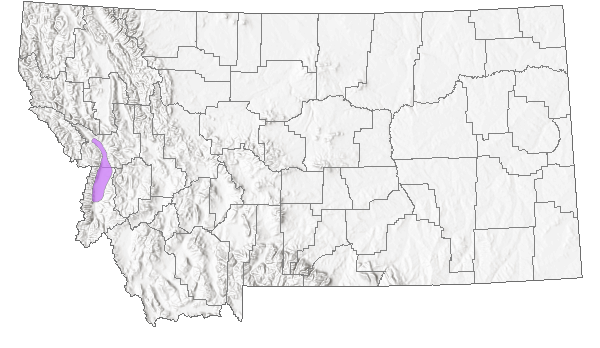
 Native
Range Comments
Throughout temperate North America to S. America. Known from Ravalli County (Lesica et al. 2012. Manual of Montana Vascular Plants. BRIT Press. Fort Worth, TX).
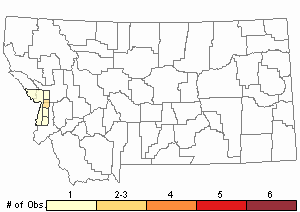
Observations in Montana Natural Heritage Program Database
Number of Observations: 7
(Click on the following maps and charts to see full sized version)
Map Help and Descriptions
Relative Density
Recency
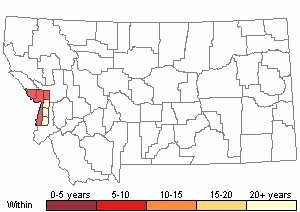
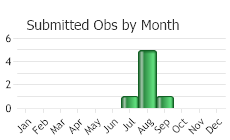
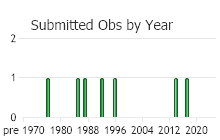
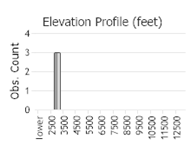 (Observations spanning multiple months or years are excluded from time charts)
Habitat
Wet, often gravelly shores of rivers, lakes and ponds in the valley zone.
National Vegetation Classification System Groups Associated with this Species
Wetland and Riparian
Alkaline - Saline Wetlands
Riparian Shrubland
Wet Meadow and Marsh
Stewardship Responsibility
Threats or Limiting Factors
STATE THREAT SCORE REASON
Threat impact not assigned because threats are not known (MTNHP Threat Assessment 2021).
References
- Literature Cited AboveLegend:
 View Online Publication
- Lesica, P., M.T. Lavin, and P.F. Stickney. 2012. Manual of Montana Vascular Plants. Fort Worth, TX: BRIT Press. viii + 771 p.
 MTNHP Threat Assessment. 2021. State Threat Score Assignment and Assessment of Reported Threats from 2006 to 2021 for State-listed Vascular Plants. Botany Program, Montana Natural Heritage Program, Helena, Montana.
- Additional ReferencesLegend: View Online Publication
Do you know of a citation we're missing?- Lesica, P., M.T. Lavin, and P.F. Stickney. 2022. Manual of Montana Vascular Plants, Second Edition. Fort Worth, TX: BRIT Press. viii + 779 p.
- Web Search Engines for Articles on "Shining Flatsedge"