View in other NatureServe Network Field Guides
NatureServe
Montana
Utah
Wyoming
Idaho
Wisconsin
British Columbia
South Carolina
Yukon
California
New York
Common Gartersnake - Thamnophis sirtalis
Native Species
Global Rank:
G5
State Rank:
S5
(see State Rank Reason below)
Agency Status
USFWS:
USFS:
BLM:
State Rank Reason (see State Rank above)
Species is relatively common within suitable habitat and widely distributed across portions of the state.
General Description
Adult Common Gartersnakes range from 16 to 42 inches in length. This snake has two color variations in Montana. The first has three yellow longitudinal stripes (one dorsal and two lateral) and a black stripe broken by red spots between the yellow stripes. The lateral stripes are located on the second and third scale rows above the belly scales. The second color variation has the same striping pattern but lacks the red dots. In both variations, the background color between stripes is black to dark olive. The belly color ranges from yellow to bluish, and some individuals of the red-sided color variation have small black spots on the edge of the belly scales. The dorsal scales are keeled, and normally there are seven scales on the upper lip. Coloration varies geographically. There are 19 dorsal scale rows at mid-body and lateral stripes on the 2nd and 3rd scale rows (also on row 4 in subspecies annectens). There are 7 upper labials, 1 preocular, and 3 postoculars. The scales are keeled, and the anal undivided. The total length of adults is usually 41 to 66 centimeters (up to 131 centimeters). Common Gartersnakes are around 12 to 23 centimeters at birth (Smith and Brodie 1982 and Conant and Collins 1991).
Diagnostic Characteristics
The Western Terrestrial Gartersnake has black spots overlapping the dorsal yellow stripe, and the background color between stripes tends to be brownish. The Plains Gartersnake has its lateral yellow stripes on the third and fourth scale rows above the belly scales, and the dorsal stripe is often orange or red. It differs from other sympatric gartersnakes by the following combination of characteristics: lateral stripe confined to the 2nd and 3rd scale rows (except in subspecies annectens), seven upper labials, tail less than 27% of total length, and 19 scale rows at mid-body.
Species Range
Montana Range
Range Descriptions
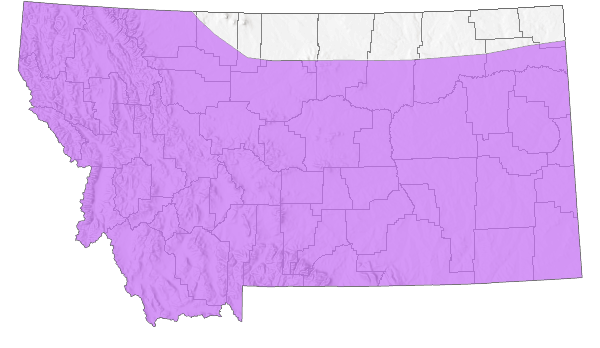
 Native
Global Range

Estimated global breeding range area is: 10,972,711 km
2 (Approximately 3% in Montana)
See information about
 iNaturalist Geomodels
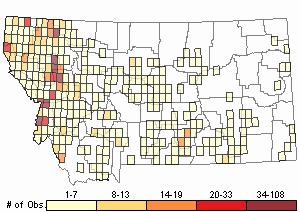
Observations in Montana Natural Heritage Program Database
Number of Observations: 1770
(Click on the following maps and charts to see full sized version)
Map Help and Descriptions
Relative Density
Recency
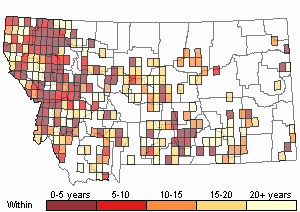

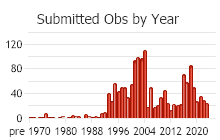
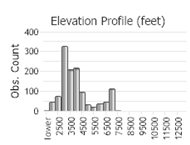 (Observations spanning multiple months or years are excluded from time charts)
Migration
The Common Gartersnake is non-migratory, although it has been observed traveling up to 17.7 kilometers between hibernacula and summer range (Gregory and Stewart 1975).
Habitat
Common Gartersnakes are found in nearly all habitats, but most commonly at lower elevations around water. Females give birth to 6 to 18 live young during summer. They eat a variety of vertebrates and invertebrates. They prefer moist habitats and are found most often along the borders of streams, ponds and lakes (Brunson and Demaree 1951, Franz 1971, and Anderson 1977). They may travel long distances (4 to 17 kilometers) from hibernacula to forage in preferred habitat (Gregory and Stewart 1975).
National Vegetation Classification System Groups Associated with this Species
Alpine
Alpine - Vegetated
Forest and Woodland
Deciduous Forest and Woodland
Low Elevation - Xeric Forest and Woodland
Montane - Subalpine Forest and Woodland
Shrubland
Foothills - Montane Shrubland
Sagebrush Shrubland
Grassland
Lowland - Prairie Grassland
Montane - Subalpine Grassland
Sparse and Barren
Sparse and Barren
Wetland and Riparian
Alkaline - Saline Wetlands
Alpine Riparian and Wetland
Peatland
Riparian and Wetland Forest
Riparian Shrubland
Wet Meadow and Marsh
Recently Disturbed or Modified
Harvested Forest
Insect-Killed Forest
Introduced Vegetation
Recently Burned
Human Land Use
Agriculture
Developed
Food Habits
Common Gartersnakes prey extensively on amphibians, especially during metamorphosis (Fitch 1965, Gregory and Stewart 1975, and Gregory 1984c). The western Montana diet varied little with the season and consisted of (% by number): Anura 46 (mostly Bufo boreas 23, Abystoma macrodactylum 13), Hirudo 41, and Oligochaeta 7. Slugs, birds and small mammals are also taken (Anderson 1977).
Ecology
Thamnophis sirtalis parietalis is noted to specialize in feeding in aquatic systems (Anderson 1977).
Reproductive Characteristics
Common Gartersnakes may mate in fall but most mate soon after emergence (late April to early June). Air temperature may trigger spring mating; mating is most intense at temperatures more than 15 degrees C. (Aleksink and Gregory 1974). Parturition is in late July to August in Kansas.
Stewardship Responsibility
References
- Literature Cited AboveLegend:
 View Online Publication
- Aleksiuk, M. and P.T. Gregory. 1974. Regulation of seasonal mating behaviour in Thamnophis sirtalis parietalis. Copeia 1974: 681-689.
- Anderson, M.E. 1977. Aspects of the ecology of two sympatric species of Thamnophis and heavy metal accumulation with the species. M.S. thesis, University of Montana, Missoula. 147 pp.
- Brunson, R.B. and H.A. Demaree, Jr. 1951. The herpetology of the Mission Mountains, Montana. Copeia (4):306-308.
 Conant, R. and J.T. Collins. 1991. A field guide to reptiles and amphibians of eastern and central North America. Third edition. Houghton Mifflin Company. Boston, MA. 450 pp.
- Fitch, H.S. 1965. An ecological study of the garter snake, Thamnophis sirtalis. University of Kansas Museum of Natural History Publication 15(10):493-564.
- Franz, R. 1971. Notes on the distribution and ecology of the herpetofauna of northwestern Montana. Bulletin of the Maryland Herpetological Society 7: 1-10.
- Gregory, P.T. 1984c. Habitat, diet and composition of assemblages of garter snakes (Thamnophis) at eight sites on Vancouver Island (Canada). Canadian Journal of Zoology 62(10): 2013-2022.
- Gregory, P.T. and K.W. Stewart. 1975. Long-distance dispersal and feeding strategy of the red-sided garter snake (Thamnophis sirtalis parietalis) in the interlake of Manitoba. Canadian Journal of Zoology 53: 238-245.
- Smith, H. M. and E.D. Brodie, Jr. 1982. Reptiles of North America. Golden Press, New York. 240 pp.
- Additional ReferencesLegend: View Online Publication
Do you know of a citation we're missing?- [VTNWI] VTN Wyoming Incorporated. No Date. Second year's analysis of terrestrial wildlife on proposed mine access and railroad routes in southern Montana and northern Wyoming, March 1979 - February 1980. VTN Wyoming Incorporated. Sheridan, WY. 62 p.
- [WESTECH] Western Technology and Engineering Incorporated. 1991. Update On the Wildlife Resources of the Little Rocky Mountains Environmental Study Area. Western Technology and Engineering, Inc., Helena, Mt.
- [WWPC] Washington Water Power Company. 1995. 1994 wildlife report Noxon Rapids and Cabinet Gorge Reservoirs. Washington Water Power Company. Spokane, WA.
- Aleksiuk, M. 1970. The effects of in vivo light and temperature acclimation on in vivo responses of heart rate to temperature in a cold-climate reptile, Thamnophis sirtalis parietalis. Canadian Journal of Zoology 48: 1155-1161.
- Aleksiuk, M. 1971a. Temperature dependent shifts in the metabolism of a cool temperate reptile Thamnophis sirtalis parietalis. Comparative Biochemistry and Physiology 39A: 495-503.
- Aleksiuk, M. 1971b. An isoenzymic basis for instantaneous cold compensation in reptiles: lactate dehydrogenase kinetics in T. sirtalis. Comparative Biochemistry and Physiology 40B: 671-681.
- Aleksiuk, M. 1976a. Metabolic and behavioral adjustments to temperature changes in the red-sided garter snake (Thamnophis sirtalis parietalis): an integrated approach. Journal of Thermal Biology I: 153-156.
- Aleksiuk, M. 1976b. Reptilian hibernation: evidence of adaptive strategies in Thamnophis sirtalis parietalis. Copeia 1976: 170-178.
- Aleksiuk, M. 1977. Cold-induced aggregative behavior in the red-sided garter snake (Thamnophis sirtalis parietalis). Herpetologica 33: 98-101.
- Aleksiuk, M. and K.W. Stewart. 1971. Seasonal changes in the body composition of the garter snake (Thamnophis sirtalis parietalis) at northern latitudes. Ecology 52: 485-490.
- Allen, E. and D. Crews. 1992. Sexual behavior and 2-deoxyglucose uptake in male red-sided Garter snakes (Thamnophis sirtalis parietalis). Brain Behavior and Evolution 40(1): 17-24.
- Andry, M.L., M.W. Luttges, and R.I. Gamow. 1971. Temperature effects on spontaneous and evoked neural activity in the garter snake. Experimental Neurology 31: 32-44.
- Arnold, S.J. 1978. Some effects of early experience on feeding responses in the common garter snake, T. sirtalis. Animal Behavior 26: 455-462.
- Arnold, S.J. 1992. Behavioural variation in natural populations: VI. Prey responses by two species of garter snakes in three regions of sympatry. Animal Behaviour 44(4): 705-719.
- Arnold, S.J. and C.R. Peterson. 1989. A test for temperature effects on the ontogeny of shape in the garter snake Thamnophis sirtalis. Physiological Zoology 62(6): 1316-1333.
- Arnold, S.J. and R.J. Wassersug. 1978. Differential predation on metamorphic anurans by garter snakes (Thamnophis): social behavior as a possible defense. Ecology 59(5): 1014-1022.
- Barry, S. J., M. R. Jennings, and H. M. Smith. 1996. Current subspecific names for western Thamnophis sirtalis. Herpetological Review 27:172-173.
- Bartlett, D., J.P. Mortola, and E.J. Doll. 1986. Respiratory mechanics and control of the ventilatory cycle in the garter snake (Thamnophis sirtalis). Respiration Physiology 64(1): 13-28.
- Barton, A.J. 1952. A new size record for the eastern gartersnake, Thamnophis sirtalis sirtalis. Copeia 1952: 190-191.
- Baxter, G.T. and M.D. Stone. 1985. Amphibians and reptiles of Wyoming. Second edition. Wyoming Game and Fish Department. Cheyenne, WY. 137 p.
- Begun, D., J.L. Kubie, M. Plough-O'Keefe, and M. Halpern. 1988. Conditioned discrimination of airborne odorants by garter snakes (Thamnophis radix and T. sirtalis sirtalis). Journal of Comparative Psychology 102(1): 35-43.
- Benton, M.J. 1980. Geographic variation in the garter snakes, T. sirtalis, of the north-central U.S., a multivariate study. Zoological Journal of the Linnean Society 68:307-323.
- Bern, C. and H.A. Herzog, Jr. 1994. Stimulus control of defensive behaviors of garter snakes (Thamnophis sirtalis): Effects of eye spots and movement. Journal of Comparative Psychology 108(4): 353-357.
- Bernardino, F.S. Jr. and G.H. Dalrymple. 1992. Seasonal activity and road mortality of the snakes of the Pa-hay-okee wetlands of Everglades National Park, USA. Biological Conservation 62(2): 71-75.
- Bittner, T.D. 2000. The evolutionary significance of melanism in the common garter snake, Thamnophis sirtalis. Unpubl. Ph.D. Dissertation, Northern Illinois University, DeKalb.
- Bittner, T.D. 2003. Polymorphic Clay Models of Thamnophis sirtalis Suggest Patterns of Avian Predation. Ohio Journal of Science 103(3): 62-66.
- Bittner, T.D., R.B. King, and J.M. Kerfin. 2002. Effects of body size and melanism on the thermal biology of garter snakes (Thamnophis sirtalis). Copeia 2: 477-482.
- Blackburn, D.G. and R.L. Lorenz. 2003a. Transmission EM of the chorioallantoic placenta of Thamnophis radix and T. sirtalis. Journal of Morphology 256(2):171-186.
- Blackburn, D.G. and R.L. Lorenz. 2003b. Transmission EM of the omphalallantoic placenta of Thamnophis radix and T. sirtalis. Journal of Morphology 256(2):187-204.
- Blaesing, M.E. 1979. Some aspects of the ecology of the eastern garter snake (Thamnophis sirtalis sirtalis) in a semi-disturbed habitat in West-Central Illinois. Journal of Herpetology 13: 177-181.
- Blanchard, F.C. 1943. A test of fecundity of the garter snake Thamnophis sirtalis sirtalis (Linnaeus) in the year of insemination. Papers of the Michigan Academy of Science, Arts and Letters 28: 313-316.
- Blanchard, F.N. and F.C. Blanchard. 1940. Factors determining the time of birth in garter snakes Thamnophis sirtali sirtalis (Linnaeus). Papers of the Michigan Academy of Science, Arts and Letters 26: 161-176.
- Blanchard, F.N. and F.C. Blanchard. 1941. The inheritance of melanism in the garter snake Thamnophis sirtalis sirtalis (Linnaeus) and some evidence of effective autumn mating. Papers of the Michigan Academy of Science, Arts and Letters 26: 161-176.
- Blanchard, F.N. and F.C. Blanchard. 1942. Mating of the garter snake, Thamnophis sirtalis (linnaeus). Papers of the Michigan Academy of Science, Arts and Letters 27: 215-234.
- Bleakney, S. 1959. Thamnophis sirtalis sirtalis (Linnaeus) in eastern Canada, redescription of T. s. pallidula Allen. Copeia 1959(1): 52-56.
- Bona-Gallo, A. and P. Licht. 1983. Effects of temperature on sexual receptivity and ovarian recrudescence in the garter snake, Thamnophis sirtalis parietalis. Herpetologica 39: 173-182.
- Boundy, J. 2001. Herpetofaunal surveys in the Clark Fork Valley region, Montana. Herpetological Natural History 8: 15-26.
- Bourguignon, T. 2002. Garter snakes, origins, care and species. Stuttgart:Verlag Eugen Ulmer. 2002.
- Bramblett, R.G., and A.V. Zale. 2002. Montana Prairie Riparian Native Species Report. Montana Cooperative Fishery Research Unit, Montana State University - Bozeman.
- Brenner, F.J., E.K. Brenner, and P.E. Brenner. 1992. Analysis of drift fence arrays as a census method for vertebrate communities on a proposed mine site. Journal of the Pennsylvania Academy of Science 65(3): 117-122.
- Brodie, E. D., Jr., B. J. Ridenhour, and E. D. Brodie III. 2002. The evolutionary response of predators to dangerous prey: Hotspots and coldspots in the geographic mosaic of coevolution between garter snakes and newts. Evolution 56:2067-2082
- Brodie, E.D. III and E.D. Brodie, Jr. 1990. Tetrodotoxin resistance in garter snakes: an evolutionary response of predators to dangerous prey. Evolution 44: 651-659.
- Brodie, E.D. III and E.D. Brodie, Jr. 1991. Evolutionary response of predators to dangerous prey: reduction of toxicity of newts and resistance of garter snakes in island populations. Evolution 45: 221-224.
- Brodie, E.D. III, C.R. Feldman, C.T. Hanifin, J.E. Motychak, D.G. Mucahy, B.L. Williams, and E.D. Brodie Jr. 2005. Parallel arms races between garter snakes and newts involving tetrodotoxin as the phenotypic interface of coevolution. Journal of Chemical Ecology 31(2):343-356.
- Brodie, E.D. III, E.D. Brodie, Jr., and J.E. Motychak. 2002. Recovery of garter snakes (Thamnophis sirtalis) from the effects of tetrodotoxin. Journal of Herpetology 36: 95-98.
- Brodie, E.D. Jr., and E.D. Brodie III. 2002. The evolutionary response of predators to dangerous prey: Garter snakes and newts. Northwestern Naturalist 83(2):65.
- Brodie, E.D., Jr. and M.S. Tumbarello. 1978. The antipredator functions of Dendrobates auratus (Amphibia, Anura, Dendrobatidae) skin secretions in regard to a snake predator (Thamnophis). Journal of Herpetology 12: 264-265.
- Bronikowski, A.M. 1997. The sources and consequences of individual growth rate variation in the western terrestrial garter snake. Ph.D. Dissertation. The University of Chicago, Chicago, IL.
- Brunson, R.B. 1955. Check list of the amphibians and reptiles of Montana. Proceedings of the Montana Academy of Sciences 15: 27-29.
- Bull, E.L. and M.P. Hayes. 2000. Livestock effects on reproduction of the Columbia spotted frog. Journal of Range Management 53: 293-296.
- Bureau of Indian Affairs, Department of the Interior. 1981. Draft Environmental Impact Statement. Unpublished report for the Crow/Shell Coal Lease, Crow Indian Reservation, Montana.
- Burger, J. 2001. The behavioral response of basking Northern water (Nerodia sipedon) and Easter Garter (Thamnophis sirtalis) snakes to pedestrians in a New Jersey park. Urban Ecosystems 5: 119-129.
- Burghardt, G.M. 1964. Stimulus control of the prey attack response in native garter snakes. Psychonomic Science 4: 37-38.
- Burghardt, G.M. 1969. Comparative prey-attack studies in newborn snakes of the genus Thamnophis. Behaviour 33: 77-114.
- Burghardt, G.M. 1970c. Intraspecific geographical variation in chemical food cue preference of newborn garter snakes (Thamnophis sirtalis). Behaviour 36: 246-257.
- Burghardt, G.M. 1975. Chemical prey preference polymorphism in newborn garter snakes, Thamnophis sirtalis. Behaviour 52: 202-225.
- Burghardt, G.M. 1992. Prior exposure to prey cues influences chemical prey preferences and prey choice in neonatal garter snakes. Animal Behaviour 44: 787-789.
- Burghardt, G.M. and M.A. Krause. 1999. Plasticity of foraging behavior in garter snakes (Thamnophis sirtalis) reared on different diets. Journal of Comparative Psychology 113: 277-285.
- Burghardt, G.M. and P.J. Chmura. 1993. Strike-induced chemosensory searching by ingestively naive garter snakes (Thamnophis sirtalis). Journal of Comparative Psychology 107(1): 116-121.
- Burghardt, G.M., H.C. Wilcoxon, and J.A. Czaplicki. 1973. Conditioning in garter snakes: aversion to palatable prey induced by delayed illness. Animal Learning and Behavior 1: 317-320.
- Burghart, G.M. and C.H. Pruitt. 1975. Role of the tongue and senses in feeding of naïve and experienced garter snakes. Physiology and Behavior 14: 185-194.
- Burt, M.D. 1928. The relation of size to maturity in the garter snakes, Thamnophis sirtalis sirtalis and T. sauritus sauritus. Copeia 1928: 8-12.
- Butts, T.W. 1997. Mountain Inc. wildlife monitoring Bull Mountains Mine No. 1, 1996. Western Technology and Engineering. Helena, MT.
- Carlsen, T. and R. Northrup. 1992. Canyon Ferry Wildlife Management Area Final Draft Management Plan. March 1992.
- Carlson, J. (Coordinator, Montana Animal Species of Concern Committee). 2003. Montana Animal Species of Concern January 2003. Helena, MT: Montana Natural Heritage Program and Montana Fish, Wildlife, and Parks. In Press. 12p.
- Carpenter, C.C. 1948. An erythristic Thamnophis sirtalis sirtalis. Herpetologica 4: 211-212.
- Carpenter, C.C. 1951. Young goldfinches eaten by garter snake. Wilson Bulletin 63: 117-118.
- Carpenter, C.C. 1952a. Comparative ecology of the common garter snake (Thamnophis s. sirtalis), the ribbon snake (Thamnophis s. sauritus), and Butler's garter snake (Thamnophis butleri) in mixed populations. Ecological Monographs 22:235-258. .
- Carpenter, C.C. 1952b. Growth and maturity of the three species of Thamnophis in Michigan. Copeia 1952: 237-243.
- Carpenter, C.C. 1955. The garter snake. Science Monthly 81: 248-252.
- Carpenter, C.C. 1956. Body temperatures in three species of Thamnophis. Ecology 37: 732-735.
- Cavitt, J.F. 2000. Tallgrass prairie snake assemblage food habits. Herpetological Review 31(1): 47-48.
- Charland, M.B and P.T. Gregory. 1995. Movements and habitat use in gravid and nongravid female garter snakes (Colubridae: Thamnophis). Journal of Zoology (London) 236(4): 543-561.
- Charland, M.B. 1991. Anesthesia and transmitter implantation effects on gravid garter snakes (Thamnophis sirtalis and Thamnophis elegans). Herpetological Review 22(2): 46-47.
- Chieffelin, C.D. and A. De Queiroz. 1991. Temperature and defense in the common garter snake: Warm snakes are more aggressive than cold snakes. Herpetologica 47(2): 230-237.
- Churchill, T.A. and K.B. Storey. 1992a. Freezing survival of the garter snake Thamnophis sirtalis parietalis. Canadian Journal of Zoology 70(1): 99-105.
- Cochran, D.C. 1961. Type specimens of reptiles and amphibians in the United States National Museum. U.S. National Museum Bulletin (220) xv + 291pp.
- Confluence Consulting Inc. 2010. Montana Department of Transportation Wetland Mitigation Monitoring Reports (various sites). MDT Helena, MT.
- Confluence Consulting Inc. 2011. Montana Department of Transportation Wetland Mitigation Monitoring Reports (various sites). MDT Helena, MT.
- Cook, F. 1964. Further comments on the proposed rejection of the neotype and type-locality of Thamnophis sirtalis (Linnaeus, 1758) (Reptilia) Z. N. (S.) 1600. Bulletin of Zoological Nomenclature 21(5): 327-328.
- Cope, E.D. 1872. Report on the recent reptiles and fishes of the survey, collected by Campbell Carrington and C.M. Dawes. pp. 467-469 In: F.V. Hayden, Preliminary report of the United States geological survey of Montana and portions of adjacent territories; being a fifth annual report of progress. 538 pp. 42nd Congress, 2nd Session, House Executive Document Number 326. Serial 1520.
- Cope, E.D. 1875. Check-list of North American Batrachia and Reptilia; with a systematic list of the higher groups, and an essay on geographical distribution. Based on the specimens contained in the U.S. National Museum. U.S. Natioanl Museum Bulletin 1: 1-104.
- Cope, E.D. 1892a. A critical review of the characters and variations of the snakes of North America. Proceedings of the United States Natural Museum 14: 589-694.
- Cope, E.D. 1900. The crocodilians, lizards, and snakes of North America. Report of the U.S. National Museum 1898: 153-1270.
- Corn, J. and P. Hendricks. 1998. Lee Metcalf National Wildlife Refuge bullfrog and painted turtle investigations: 1997. Montana Natural Heritage Program. Helena, MT. 20 pp.
- Costanzo, J.P. 1985. The bioenergetics of hibernation in the eastern garter snake Thamnophis sirtalis sirtalis. Physiological Zoology 58(6): 682-692.
- Costanzo, J.P. 1986. Influences of hibernaculum microenvironment on the winter life history of the garter snake (Thamnophis sirtalis). Ohio Journal of Science 86(5): 199-204.
- Costanzo, J.P. 1988. Recovery from ice-entombment in garter snakes. Herpetological Review 19(4): 76-77.
- Costanzo, J.P. 1989a. Conspecific scent trailing by garter snakes (Thamnophis sirtalis) during autumn: Further evidence for use of pheromones in den location. Journal of Chemical Ecology 15(11): 2531-2538.
- Costanzo, J.P. 1989b. Effects of humidity, temperature, and submergence behavior on survivorship and energy use in hibernating garter snakes, Thamnophis sirtalis. Canadian Journal of Zoology 67(10): 2486-2492.
- Costanzo, J.P., D.L. Claussen, and R.E. Lee, Jr. 1988. Natural freeze tolerance in a reptile. Cryo Letters 9(6): 380-385.
- Coues, E. and H. Yarrow. 1878. Notes on the herpetology of Dakota and Montana. Bulletin of the U.S. Geological Geographic Survey of the Territories 4: 259-291.
- Cover, J. F., Jr. and D. M. Boyer. 1988. Captive reproduction of the San Francisco garter snake Thamnophis sirtalis Tetrataenia. Herpetological Review 19: 29-30, 32-33.
- Cowan, A. 1992. An assessment of commercial and recreational management options for the red-sided garter snake in Manitoba. M.S. thesis. Manitoba, Canada: University of Manitoba. 141 p.
- Crews, D. 1976. Hormonal control of male courtship behavior and female attractivity in the garter snake (Thamnophis sirtalis). Hormones and Behavior 7: 451-460.
- Crews, D. and W.R. Gartska. 1982. The ecological physiology of a garter snake. Scientific American 247: 159-168.
- Crews, D., B. Camazine, M. Diamond, R. Mason, R.R. Tokarz, and W.R. Garstka. 1984. Hormonal independence of courtship behavior in the male garter snake. Hormones and Behavior 18: 29-41.
- Crews, D., M.A. Diamond, J. Whiitier, and R. Mason. 1985. Small male body size in garter snake (Thamnophis sirtalis parietalis) depends on testes. American Journal of Physiology 249(1 part 2): R62-R66.
- Crews, D., R. Robker, and M. Mendonca. 1993. Seasonal fluctuations in brain nuclei in the red-sided garter snake and their hormonal control. Journal of Neuroscience 13(12): 5356-5364.
- Crother, B.I. (ed.) 2008. Scientific and standard English names of amphibians and reptiles of North America north of Mexico. SSAR Herpetological Circular No. 37:1-84.
- Cutter, R. 1930a. Ike and Mike. Yellowstone Nature Notes 7(7): 41.
- Dalrymple, G.H. and N.G. Reichenbach. 1981. Interactions between the prairie garter snake (Thamnophis radix) and the common gartersnake (T. sirtalis) in Killdeer Plains, Wyandot County, Ohio. Ohio Biological Survey Biology Notes 15: 244-250.
- Dalrymple, G.H., T.M. Steiner, R.J. Nodell, and F.S. Bernardino, Jr. 1991. Seasonal activity of the snakes of Long Pine Key, Everglades National Park (Florida, USA). Copeia 1991(2): 294-302.
- Daugherty, C.H. 1979. Population ecology and genetics of Ascaphus truei: an examination of gene flow and natural selection. Ph.D. dissertation, University of Montana. Missoula, MT. 143 pp.
- Devine, M.C. 1976. Species discrimination in mate selection by free-living male garter snakes and experimental evidence for the role of pheromones. Herpetological Review 71: 79.
- Devine, M.C. 1977. Copulatory plugs, restricted mating opportunities, and reproductive competition among male garter snakes. Nature 267: 345-346.
- Dial, B.E., R.E. Gatten, Jr., and S. Kamel. 1987. Energetics of concertina locomotion in Bipes biporus (Reptilia: Amphisbaenia). Copeia 1987(2): 470-477.
- Dickinson, J.A. 1979. The effects of artificial cover availability on the ecology of the garter snake, Thamnophis s. sirtalis. M.S. Thesis, Central Michigan University.
- Dohm, M.R. and T. Garland, Jr. 1993. Quantitative genetics of scale counts in the garter snake, Thamnophis sirtalis. Copeia 1993(4): 987-1002.
- Drummond, H. 1983. Aquatic foraging in garter snakes: a comparison of specialists and generalists. Behaviour 86: 1-30.
- Dunlap, K.D. and J.W. Lang. 1990. Offspring sex ratio varies with maternal size in the common garter snake, Thamnophis sirtalis. Copeia 1990: 568-570.
- Engelstoft, C. and K.E. Ovaska. 2000. Artificial cover-objects as a method for sampling snakes (Contia tenuis and Thamnophis spp.) in British Columbia. Northwestern Naturalist 81:35-43.
- Etheridge, K. 1993. Thyroxine-induced changes in metabolic rate and cytochrome oxidase activity in Thamnophis sirtalis: Effects of nutritional status. General and Comparative Endocrinology 91(1): 66-73.
- Evans, G.O. and W.E. China. 1966. Opinion 771. Thamnophis sirtalis Linnaeus, 1758 (Reptilia): rejection under the plenary powers of the neotype specimen designated for that species by Opinion 385. Bulletin of Zoological Nomenclature 23(1): 38-40.
- Farmer, P. 1986. Chartam project baseline wildlife study. Western Technology and Engineering, Inc. Helena, MT.
- Farmer, P. and K. Burgess. 1983. Jardine area baseline terrestrial wildlife study May 15, 1981 - May 15, 1982. Western Technology and Engineering Inc. Helena, MT.
- Farmer, P. and S.B. Heath. 1987. Wildlife baseline inventory, Rock Creek study area, Sanders County, Montana. Western Technology and Engineering, Inc. Helena, MT.
- Farmer, P. J. and K. Burgess. 1984. Jardine area baseline terrestrial wildlife study. West. Tech. & Eng., Helena.
- Farr, D.R. 1988. The ecology of garter snakes, Thamnophis sirtalis and T. elegans, in southeastern British Columbia. Unpubl. M.S. Thesis, University of Victoria, BC, Canada.
- Feldman, C.R. and J.A. Wilkinson. 2000. Rana muscosa (Mountain Yellow-legged Frog). Predation. Herpetological Review 31: 102.
- Fetterolf, P.M. 1979. Common garter snake predation on ring-billed gull chicks. The Canadian Field Naturalist 93: 317-318.
- Fitch, H.S. 1940a. A biogeographical study of the ordinoides artenkreis of garter snakes (genus Thamnophis). University of California Publications in Zoology 44: 1-150.
- Fitch, H.S. 1941a. Geographic variation in garter snakes of the species Thamnophis sirtalis in the Pacific Coast region of North America. American Midland Naturalist 26 (3): 570-592.
- Fitch, H.S. 1941b. The feeding habits of California garter snakes. California Fish and Game 27: 1-32.
- Fitch, H.S. 1980b. Thamnophis sirtalis. Catalogue of American Amphibians and Reptiles 270.1-270.4.
- Fitch, H.S. 1993. Relative abundance of snakes in Kansas. Transactions of the Kansas Academy of Science 96(3-4): 213-224.
- Fitch, H.S. 2001. Further study of the garter snake, Thamnophis sirtalis, in Northeastern Kansas. Scientific Papers Natural History Museum The University of Kansas 19:1-6.
- Fitch, H.S. 2003. Tail loss in garter snakes. Herpetological Review 34(4):212-213.
- Fitch, H.S. 2003b. Reproduction in snakes of the Fitch Natural History Reservation in northeastern Kansas. Journal of Kansas Herpetology 6:21-24.
- Fitch, H.S. 2004. The effect of female size on number of eggs or young snakes. Journal of Kansas Herpetology 9:11-12.
- Fitch, H.S. 2005. Observations on wandering of juvenile snakes in northeastern Kansas. Journal of Kansas Herpetology 13:11-12.
- Fitch, H.S. and H.W. Shirer. 1971. A radiotelemetric study of spatial relationships in some common snakes. Copeia 1971(1): 118-128.
- Fitch, H.S. and T.P. Maslin. 1961. Occurrence of the garter snake, Thamnophis sirtalis, in the Great Plains and Rocky Mountains. University of Kansas Publications, Museum of Natural History 13(5): 289-308.
- Flath, D.L. 2002. Reptile and amphibian surveys in the Madison-Missouri River Corridor, Montana. Annual Progress Report. 14pp.
- Ford, N.B. 1978. Evidence for species specificity of pheromone trails in two sympatric garter snakes, Thamnophis. Herpetological Review 9: 10.
- Ford, N.B. 1979. Aspects of pheromone trailing in garter snakes (Thamnophis). Unpublished Ph.D. Dissertation, Miami University (Ohio).
- Ford, N.B. 1981. Seasonality of pheromone trailing behavior in two species of garter snake, Thamnophis (Colubridae). Southwestern Naturalist 26: 385-388.
- Ford, N.B. 1982. Species specificity of sex pheromone trails of sympatric and allopatric garter snakes (Thamnophis). Copeia 1982: 10-13.
- Foster, B.J., D.W. Sparks, and J.E. Duchamp. 2003. Urban herpetology I: New distribution records of amphibians and reptiles from Hendricks County, Indiana. Herpetological Review 34(4):395.
- Fouquette, M.J., Jr. 1954. Food competition among four sympatric species of garter snakes. Texas Journal of Science 6: 172-188.
- Fox, W. 1951. The status of the garter snake Thamnophis sirtalis tetrataenia. Copeia 1951(4): 257-267.
- Fox, W. 1952b. Seasonal variation in the male reproductive system of Pacific coast garter snakes. Journal of Morphology 90: 481-554.
- Fox, W. 1954. Genetic and environmental variation in the timing of the reproductive cycles of male garter snakes. Journal of Morphology 95: 415-450.
- Fox, W. 1955. Mating aggregations of garter snakes. Herpetologica 11: 176.
- Fuchs, J.L. and G.M. Burghardt. 1971. Effects of early feeding experience on the responses of garter snakes to food chemicals. Learning and Motivation 2(3): 271-279.
- Furilla, R.A. and D. Bartlett. 1988. Intrapulmonary receptors in the garter snake (Thamnophis sirtalis). Respiration Physiology 74(3): 311-322.
- Galbraith, DA. 2001. Arboreal courtship behaviour by eastern garter snakes, Thamnophis sirtalis sirtalis, in September in Bruce County, Ontario. Canadian Field Naturalist 115(2): 347-348.
- Garland, T., Jr. 1988. Genetic basis of activity metabolism: I. Inheritance of speed, stamina, and antipredator displays in the garter snake Thamnophis sirtalis. Evolution 42(2): 335-350.
- Garland, T., Jr. 1994. Quantitative genetics of locomotor behavior and physiology in a garter snake. In: Boake, R.B. (ed.), Quantitative Genetic Studies of Behavioral Evolution. University of Chicago Press, Chicago, Illinois.
- Garland, T., Jr. and A.F. Bennett. 1990. Quantitative genetics of maximal oxygen consumption in a garter snake. American Journal of Physiology 259: R986-R992.
- Garner, T.W.J. 1998. A molecular investigation of population structure and paternity in the common garter snake, Thamnophis sirtalis. Unpubl. M.S. Thesis, University of Victoria, Victoria, BC, Canada.
- Garner, T.W.J., P.B. Pearman, P.T. Gregory, G. Tomio, S.G. Wischniowski, and D.J. Hosken. 2004. Microsatellite markers developed from Thamnophis elegans and Thamnophis sirtalis and their utility in three species of garter snakes. Molecular Ecology Notes 4(3): 369-371.
- Garstka, W.R. and D. Crews. 1981. Female sex pheromone in the skin and circulation of a garter snake. Science 214: 681-683.
- Garstka, W.R. and D. Crews. 1985. Mate preference in garter snakes. Herpetologica 41(1): 9-19.
- Garstka, W.R., B. Camazine, and D. Crews. 1982. Interactions of behavior and physiology during the annual reproductive cycle of the red-sided garter snake (Thamnophis sirtalis parietalis). Herpetologica 38: 104-123.
- Garstka, W.R., R.R. Tokarz, M. Diamond, A. Halpert, and D. Crews. 1985. Behavioral and physiological control of yolk synthesis and deposition in the female red-sided garter snake (Thamnophis sirtalis parietalis). Hormones and Behavior 19(2): 137-153.
- Gates, M.T. 2005. Amphibian and reptile baseline survey: CX field study area Bighorn County, Montana. Report to Billings and Miles City Field Offices of Bureau of Land Management. Maxim Technologies, Billings, MT. 28pp + Appendices.
- Geddes, G.C. 2005. The heart of the matter: an unfortunate Thamnophis sirtalis. Bulletin of the Chicago Herpetological Society 40(4):65.
- Gibson, A.R. 1978. The ecological significance of a colour polymorphism in the common gargter snake, Thamnophis sirtalis (L.). Ph.D. Dissertation, University of Toronto, Toronto, Ontario.
- Gibson, A.R. and J.B. Falls. 1979. Thermal biology of the common garter snake Thamnophis sirtalis (L.). I. Temporal variation, environmental effects and sex differences. Oecologia 43: 79-97.
- Gibson, A.R. and J.B. Falls. 1988. Melanism in the common garter snake: a Lake Erie phenomenon. In: Downhower, J.F. (ed.), The Biography of the Island Region of Western Lake Erie, Ohio State University Press, Columbus. P. 231-245.
- Gibson, A.R., D.A. Smucny, and J. Kollar. 1989. The effects of feeding and ecdysis on temperature selection by young garter snakes in a simple thermal mosaic. Canadian Journal of Zoology 67(1): 19-23.
- Gillingham, J.C., and J.A. Dickenson. 1980. Postural orientation during courtship in the Eastern garter snake, Thamnophis s. sirtalis. Behavioral Neural Biology 28: 211-217.
- Gillingham, J.C., J. Rowe, and M.A. Weins. 1990. Chemosensory orientation and earthworm location by foraging eastern garter snakes (Thamnophis s. sirtalis). In: MacDonald, D.W., D. Muller-Schwarze, and S.E. Natynezuk (eds.), Chemical Signals in Vertebrates, Vol. 5. Oxford University Press, Oxford.
- Gochfeld, M. 1975. The decline of the eastern garter snake, Thamnophis s. sirtalis in a rural residential section of Westchester Co., New York. Engelhardtia 6(3):23-24.
- Graves, B.M., M. Halpern, and J.C. Gillingham. 1993. Effects of vomeronasal system deafferentation on home range use in a natural population of eastern garter snakes, Thamnophis sirtalis. Animal Behaviour 45(2): 307-311.
- Greenwell, M.G., M. Hall, and O.J. Sexton. 1984. Phenotypic basis for a feeding change in an insular population of garter snakes (Thamnophis sirtalis). Developmental Psychobiology 17(5): 457-464.
- Gregory, P.T. 1967. Feeding habits and diet overlap of three species of garter snakes (Thamnophis) on Vancouver Island. Canadian Journal of Zoology 56: 1967-1974.
- Gregory, P.T. 1971. Overwintering populations and homing of the red-sided garter snake (Thamnophis sirtalis parietalis) at a northern latitude. M.S. Thesis, University of Manitoba, Winnipeg, Man.
- Gregory, P.T. 1973. Population dynamics and summer dispersal of the red-sided garter snake (Thamnophis sirtalis parietalis). Ph.D. Thesis, University of Manitoba, Winnipeg, Canada.
- Gregory, P.T. 1974a. Life history parameters of a population of red-sided garter snakes (Thamnophis sirtalis parietalis) adapted to a rigorous and fluctuating environment. Unpubl. Ph.D. Thesis, University of Manitoba, Winnipeg, Manitoba, Canada.
- Gregory, P.T. 1974b. Patterns of spring emergence of the red-sided garter snake (Thamnophis sirtalis parietalis) in the inter-lake region of Manitoba. Canadian Journal of Zoology 52: 1063-1069.
- Gregory, P.T. 1977a. Life history observations of three species of snakes in Manitoba. Canadian Field Naturalist 91(1): 19-27.
- Gregory, P.T. 1977b. Life-history parameters of the red-sided garter snake (Thamnophis sirtalis parietalis) in an extreme environment, the Interlake region of Manitoba. National Museum of Natural Sciences. (Ottawa) Publications in Zoology No. 13. Pp. 1-44.
- Gregory, P.T. 1978. Feeding habits and diet overlap of three species of garter snakes (Thamnophis) on Vancouver Island. Canadian Journal of Zoology 56: 1967-1974.
- Gregory, P.T. 2001. Feeding, thermoregulation, and offspring viability in gravid garter snakes (Thamnophis sirtalis): What makes laboratory results believable? Copeia 2: 365-371.
- Gregory, P.T. and A.G.D. McIntosh. 1980. Thermal niche overlap in garter snakes (Thamnophis) on Vancouver Island. Canadian Journal of Zoology 58(3): 351-355.
- Gregory, P.T. and K.J. Nelson. 1991. Predation on fish and intersite variation in the diet of common garter snakes, Thamnophis sirtalis, on Vancouver Island (Canada). Canadian Journal of Zoology 69(4): 988-994.
- Gregory, P.T. and K.J. Nelson. 1992. Erratum: predation on fish and intersite variation in the diet of common garter snakes, Thamnophis sirtalis, on Vancouver Island. Canadian Journal of Zoology 70: 2501.
- Gregory, P.T. and K.W. Larsen. 1993. Geographic variation in reproductive characteristics among Canadian populations of the common garter snake (Thamnophis sirtalis). Copeia 1993(4): 946-958.
- Gregory, P.T. and K.W. Larsen. 1996. Are there any meaningful correlates of geographic life-history variation in the garter snake, Thamnophis sirtalis? Copeia 1996(1): 183-189.
- Grudzien, T.A., B.J. Huebner, A. Cvetkovic, and G.R. Joswiak. 1992. Multivariate analysis of head shape in Thamnophis sirtalis sirtalis (Serpentes: Colubridae) among island and mainland populations from northeastern Lake Michigan. American Midland Naturalist 127(2): 339-347.
- Halpern, M. and J.L. Kubie. 1980. Chemical access to the vomeronasal organs of garter snakes. Physiological Behavior 24: 367-371.
- Halpern, M. and N. Frumin. 1979. Roles of the vomeronasal and olfactory systems in prey attack and feeding in adult garter snakes. Physiological Behavior 22: 1183-1189.
- Halpert, A.P., W.R. Garstka, and D. Crews. 1983. Sperm transport and storage and its relation to the annual sexual cycle of the female red-sided garter snake, Thamnophis sirtalis parietalis. (MS).
- Hamilton, W.J., Jr. 1951. The food and feeding behavior of the garter snake in New York. American Midland Naturalist 46(2): 385-390.
- Hammerson, G.A. 1999. Amphibians and reptiles in Colorado. University Press of Colorado & Colorado Division of Wildlife. Denver, CO. 484 p.
- Hanauska-Brown, L., B.A. Maxell, A. Petersen, and S. Story. 2014. Diversity Monitoring in Montana 2008-2010 Final Report. Montana Fish, Wildlife & Parks. Helena, MT. 78 pp.
- Hart, D.R. 1975. A quantitative niche comparison of the western plains garter snake (Thamnophis radix haydeni) and the red-sided garter snake (Thamnophis sirtalis parietalis) in allopatric and sympatric regions of Manitoba's interlake district. M.S. Thesis, University of Manitoba. 76 p.
- Hart, D.R. 1979. Niche relationships of Thamnophis radix haydeni and Thamnophis sirtalis parietalis in the interlake district of Manitoba. Tulane Students of Zoology and Botany 21(2): 125-140.
- Hawley, A.W. and M. Aleksiuk. 1976. The influence of photoperiod and temperature on seasonal testicular recrudescence in the red-sided garter snake (Thamnophis sirtalis parietalis). Comparative Biochemistry and Physiology 53A: 215-221.
- Hawley, A.W.L. and M. Aleksiuk. 1975. Thermal regulation of spring mating behavior in the red-sided garter snake (Thamnophis sirtalis parietalis). Canadian Journal of Zoology 53: 768-776.
- Hawley, A.W.L. and M. Aleksiuk. 1976. Sexual receptivity in the female red-sided garter snake (Thamnophis sirtalis parietalis). Copiea 1976: 401-404.
- Hayes, F.E. 1989. Antipredator behavior of recently metamorphosed toads (Bufo americanus americanus) during encounters with garter snakes (Thamnophis sirtalis sirtalis). Copeia 1989(4): 1011-1015.
- Hayward, J.L. 2002. Common garter snake predation on ring-billed gull chicks in Washington. Northwestern Naturalist 83:25-26.
- Hebard, W.B. 1950. Relationships and variation in the garter snakes, genus Thamnophis, of the Puget Sound region of Washington state. Herpetologica 6: 97-101.
- Heckrotte, C. 1967. Relations of body temperature, size, and crawling speed of the common garter snake, Thamnophis s. sirtalis. Copeia 1967(4): 759-763.
- Heinen, J.T. 1993. Substrate choice and predation risk in newly metamorphosed American toads Bufo americanus: An experimental analysis. American Midland Naturalist 130(1): 184-192.
- Heinen, J.T. 1994. Antipredator behavior of newly metamorphosed American toads (Bufo a. americanus), and mechanisms of hunting by eastern garter snakes (Thamnophis S. sirtalis). Herpetologica 50(2): 137-145.
- Heinen, J.T. 1995. Predator cues and prey responses: A test using eastern garter snakes (Thamnophis S. sirtalis) and American toads (Bufo A. americanus). Copeia 1995(3): 738-741.
- Heinen, J.T. and G. Hammond. 1997. Antipredator behaviors of newly metamorphosed green frogs (Rana clamitans) and leopard frogs (R. pipiens) in encounters with eastern garter snakes (Thamnophis s. sirtalis). American Midland Naturalist 137(1): 136-144.
- Hemming, F. 1956. The specific names for the common North American snakes known respectively as the common garter snake and the eastern ribbon snake. Opin. Declarations Int. Commision on Zoological Nomenclature 12(6): 217-223.
- Hendricks, P. 1997. Lee Metcalf National Wildlife Refuge preliminary amphibian and reptile investigations: 1996. Montana Natural Heritage Program, Helena, MT. 21 p.
- Hendricks, P. 1999a. Amphibian and reptile survey of the Bureau of Land Management Miles City District, Montana. Montana Natural Heritage Program, Helena, MT. 80 p.
- Hendricks, P. 2000. Amphibian and reptile survey of the Thompson Chain of Lakes. A report to the Montana Department of Fish, Wildlife, and Parks. Montana Natural Heritage Program, Helena, MT. 15 p.
- Hendricks, P. and J.D. Reichel. 1996a. Amphibian and reptile survey of the Bitterroot National Forest: 1995. Montana Natural Heritage Program. Helena, MT. 95 p.
- Hendricks, P. and J.D. Reichel. 1998. Amphibian and reptile survey on Montana refuges: 1996. Montana Natural Heritage Program, Helena, MT. 19 p.
- Hendricks, P., S. Lenard, D.M. Stagliano, and B.A. Maxell. 2013. Baseline nongame wildlife surveys on the Fort Peck Indian Reservation. Report to the Assiniboine and Sioux Tribes of the Fort Peck Indian Reservation. Montana Natural Heritage Program, Helena, MT. 83 p.
- Hermes, L.M. and K.B. Storey. 1993. Antioxidant defenses in the tolerance of freezing and anoxia by garter snakes. American Journal of Physiology 265(3 PART 2): R646-R652.
- Herzog, H.A., Jr. 1990. Experimental modification of defensive behaviors in garter snakes, Thamnophis sirtalis. Journal of Comparative Psychology 104: 334-339.
- Herzog, H.A., Jr. and J.M. Schwartz. 1990. Geographical variation in the anti-predator behavior of the neonate garter snake, Thamnophis sirtalis. Animal Behaviour 40(3):597-601.
- Herzog, H.A., Jr., B.B. Bowers, and G.M. Burghardt. 1992. Development of antipredator responses in snakes: V. Species differences in ontogenetic trajectories. Developmental Psychobiology 25(3): 199-211.
- Hilliard, J., H. Minkus, and M. Weber. 1997. Amphibian survey of the Birch Creek drainage, Beaverhead County. Wildland Studies Project, San Francisco State University, San Francisco, CA. 12 p.
- Hnida, J.A. and R.J. Carpenter. 2004. Thamnophis sirtalis parietalis (Red-sided Garter Snake). Endoparasites. Herpetological Review 35(1):75.
- Hoffman, L.H. 1970. Placentation in the garter snake, Thamnophis sirtalis. Journal of Morphology 131: 57-88.
- Holtzman, D.A., E. Gordon, and M. Halpern. 1993. Developmental changes in cytochrome oxidase histochemistry in the main and accessory olfactory bulbs of embryonic and neonatal garter snakes (Thamnophis sirtalis spp.). Journal of Morphology 218(3): 323-332.
- Holtzmann, D.A. 2001. Thamnophis sirtalis sirtalis (eastern garter snake) courtship behavior. Herpetological Review 32(2): 110.
- Hoskins, M.A.H. and M. Aleksiuk. 1973. Effects of temperature, photoperiod, and season on in vitro rates of tissues from Thamnophis sirtalis parietalis, a cold climate reptile. Comparative Biochemistry and Physiology 45A(3): 737-756.
- Hossack, B., D. Pilliod, and P.S. Corn. 2001a. Reptile and amphibian inventory at Grant-Kohrs Ranch National Historic Site and Little Bighorn Battlefield National Monument. USGS Northern Rocky Mountain Science Center, Aldo Leopold Wilderness Research Institute, Missoula, MT. 6 p.
- Hossack, B., D. Pilliod, and P.S. Corn. 2001b. Preliminary amphibian surveys of the National Bison Range, Lost Trail National Wildife Refuge, and Swan River National Wildlife Refuge: 2001. USGS Northern Rocky Mountain Science Center, Aldo Leopold Wilderness Research Institute, Missoula, MT. 15 p.
- Humphris, Michael., 1993, Wildlife Monitoring Report. Spring Creek Coal Company 1993 Mining Annual Report. Appendix I. April 11, 1993.
- Humphris, Michael., 1994, Wildlife Monitoring Report. Spring Creek Coal Company 1994 Mining Annual Report. Appendix I. April 1994.
- Inger, R.F. 1946. Restriction of the type locality of Thamnophis sirtalis. Copeia 1946(4): 254.
- Jacobs, G.H., J.A. Fenwick, M.A. Crognale, and J.F. Deegan. 1992. The all-cone retina of the garter snake: Spectral mechanisms and photopigment. Journal of Comparative Physiology A 170(6): 701-707.
- Janzen, F.J., J.G. Krenz, T.S. Haselkorn, E.D. Brodie, and E.D. Brodie. 2002. Molecular phylogeography of common garter snakes (Thamnophis sirtalis) in western North America: implications for regional historical forces. Molecular Ecology 11(9): 1739-1752.
- Jayne, B.C. and A.F. Bennett. 1989. The effect of tail morphology on locomotor performance of snakes: A comparison of experimental and correlative methods. Journal of Experimental Zoology 252(2): 126-133.
- Jayne, B.C. and A.F. Bennett. 1990. Selection on locomotor performance capacity in a natural population of garter snakes. Evolution 44(5): 1204-1229.
- Joslin, Gayle, and Heidi B. Youmans. 1999. Effects of recreation on Rocky Mountain wildlife: a review for Montana. [Montana]: Montana Chapter of the Wildlife Society.
- Joy, J.E. and D. Crews. 1985. Social dynamics of group courtship behavior in male red-sided garter snakes (Thamnophis sirtalis parietalis). Journal of Comparative Psychology 99(2): 145-149.
- Joy, J.E. and D. Crews. 1987. Hibernation in garter snakes (Thamnophis sirtalis parietalis): Seasonal cycles of cold tolerance. Comparative Biochemistry and Physiology A Comparative Physiology 87(4): 1097-1102.
- Joy, J.E. and D. Crews. 1988. Male mating success in red-sided garter snakes: size is not important. Animal Behavior 36(6): 1839-1841.
- Justy, G.M. and F.F. Mallory. 1985. Thermoregulatory behavior in the northern water snake, Nerodia sipedon sipedon, and the eastern garter snake, Thamnophis sirtalis sirtalis. Canadian Field Naturalist 99(2): 246-249.
- Kephart, D.G. 1981. Populaton ecology and population structure of Thamnophis elegans and Thamnophis sirtalis. Ph.D. Dissertation, Univeristy of Chicago; 1981.
- Kiesecker, J.M., D.P. Chivers, and A.R. Blaustein. 1996. The use of chemical cues in predator recognition by western toad tadpoles. Animal Behaviour 52(6): 1237-1245.
- King, R.B. 1988. Polymorphic populations of the garter snake Thamnophis sirtalis near Lake Erie (Canada, USA). Herpetologica 44(4): 451-458.
- King, R.B. 1989. Body size variation among island and mainland snake populations. Herpetologica 45(1): 84-88.
- King, R.B. 2003. Mendelian Inheritance of Melanism in the Garter Snake Thamnophis sirtalis. Herpetologica 59(4): 484-489.
- Kissner, K.J., G. Blouin-Demers, and P.J. Weatherhead. 2000. Sexual dimorphism in malodorousness of musk secretions of snakes. Journal of Herpetology 34(3): 491-493.
- Knight, G.E. and G. Burnstock. 1993. Acetylcholine induces relaxation via the release of nitric oxide from endothelial cells of the garter snake (Thamnophis sirtalis parietalis) aorta. Comparative Biochemistry and Physiology C 106(2): 383-388.
- Knight, G.E. and G. Burnstock. 1995. Responses of the aorta of the garter snake (Thamnophis sirtalis parietalis) to purines. British Journal of Pharmacology 114(1): 41-48.
- Koch, E.D. and C.R. Peterson. 1989. A preliminary survey of the distribution of amphibians and reptiles in Yellowstone National Park. pp. 47-49. In: Rare, sensitive and threatened species of the Greater Yellowstone Ecosystem, T.W. Clark, A.H. Harvey, R.D. Dorn, D.C. Genter, and C. Groves (eds.), Northern Rockies Conservation Cooperative , Montana Natural Heritage Program, The Nature Conservancy, and Mountain West Environmental Services. 153 p.
- Koch, E.D. and C.R. Peterson. 1995. Amphibians and reptiles of Yellowstone and Grand Teton national parks. University of Utah Press, Salt Lake City, UT. 188 p.
- Koch, E.D., G. Williams, C.R. Peterson and P.S. Corn. 1996. Conference on declining and sensitive amphibians in the Northern Rockies and the Pacific Northwest: a summary paper. Idaho Herpetological Society Technical Bulletin and U.S. Fish and Wildlife Service Report, Boise, Idaho.
- Krause, M. A. and G.M. Burghardt. 2001. Neonatal plasticity and adult foraging behavior in garter snakes (Thamnophis sirtalis) from two nearby but ecologically dissimilar habitats. Herpetological Monographs (15): 100-123.
- Krause, M. A., G.M. Burghardt, and J.C. Gillingham. 2003. Body size plasticity and local variation of relative head and body size sexual dimorphism in garter snakes (Thamnophis sirtalis). Journal of Zoology 261(4): 399-407.
- Krause, M.A. 2000. Plasticity of morphology, chemoreception, and predatory behavior in garter snakes (Thamnophis sirtalis). Ph.D. Dissertation, University of Tennessee, Knoxville.
- Krohmer, R.W. and D. Crews. 1989. Control of length of the courtship season in the red-sided garter snake, Thamnophis sirtalis parietalis: The role of temperature. Canadian Journal of Zoology 67(4): 987-993.
- Krohmer, R.W., M. Grassman, and D. Crews. 1987. Annual reproductive cycle in the male red-sided garter snake, Thamnophis sirtalis parietalis: Field and laboratory studies. General and Comparative Endocrinology 68(1): 64-75.
- Kubie, J.L. and M. Halpern. 1979. Chemical senses involved in garter snake prey trailing. Journal of Comparative Physiological Psychology 93: 648-667.
- Kwaga, J. and J.O. Iversen. 1993. Isolation of Yersinia enterocolitica (0:5,27 biotype 2) from a common garter snake. Journal of Wildlife Diseases 29(1): 127-129.
- Lagler, K.F. and J.G. Salyer. 1945. Influence of availability on the feeding habits of the common garter snake. Copeia 1945(3): 159-162.
- Land & Water Consulting, Inc., Missoula, MT., 2002, Montana Dept. of Transportation Wetland Mitigation Monitoring Report, Year 2001: Beaverhead Gateway, Dillon, Montana. Proj. No. 130091.011. July 2002. In 2001 Wetland Mitigation Monitoring Reports, Vol. I.
- Land & Water Consulting, Inc., Missoula, MT., 2002, Montana Dept. of Transportation Wetland Mitigation Monitoring Report, Year 2001: Cow Coulee, Townsend, Montana. Proj. No. 130091.013. July 2002. In 2001 Wetland Mitigation Monitoring Reports, Vol. I.
- Land & Water Consulting, Inc., Missoula, MT., 2002, Montana Dept. of Transportation Wetland Mitigation Monitoring Report, Year 2002: Beaverhead Gateway, Dillon, Montana. Proj. No. 130091.011. February 2003. In 2002 Wetland Mitigation Monitoring Reports, Vol. I.
- Land & Water Consulting, Inc., Missoula, MT., 2002, Montana Dept. of Transportation Wetland Mitigation Monitoring Report, Year 2002: Cow Coulee, Townsend, Montana. Proj. No. 130091.013. February 2003. In 2002 Wetland Mitigation Monitoring Reports, Vol. I.
- Langkilde, T., R. Shine, and R.T. Mason. 2004. Predatory attacks to the head vs. body modify behavioral repsonses of garter snakes. Ethology 110(12):937-947.
- Larsen, K.W. 1986. Ecology of the common garter snake, Thamnophis sirtalis, at the northern limit of its range. Unpubl. MS Thesis, University of Victoria, Victoria, B.C.
- Larsen, K.W. 1987. Movements and behavior of migratory garter snakes, Thamnophis sirtalis. Canadian Journal of Zoology 65(9): 2241-2247.
- Larsen, K.W. and P.T. Gregory. 1989. Population size and survivorship of the common garter snake, Thamnophis sirtalis, near the northern limit of its distribution. Holartic Ecology 12(2): 81-86.
- Larsen, K.W., P.T. Gregory, and R. Antoniak. 1993. Reproductive ecology of the common garter snake Thamnophis sirtalis at the Northern limit of its range. American Midland Naturalist 129(2): 336-345.
- Lawson, P.A. 1989. Orientation abilities and mechanisms in a northern migratory population of the common garter snake (Thamnophis sirtalis). Musk-Ox 37: 110-115.
- Lawson, P.A. 1994. Orientation abilities and mechanisms in nonmigratory populations of garter snakes (Thamnophis sirtalis and T. ordinoides). Copeia 1994(2): 263-274.
- Lawson, R. and R.B. King. 1996. Gene flow and melanism in Lake Erie garter snake populations. Biological Journal of the Linnean Society 59(1): 1-19.
- LeMaster, M.P. and R.T. Mason. 2001. Evidence for a female sex pheromone mediating male trailing behavior in the redsided garter snake, Thamnophis sirtalis parietalis. Chemoecology 11(4): 149-152.
- LeMaster, M.P. and R.T. Mason. 2003. Pheromonally Mediated Sexual Isolation Among Denning Populations of Red-Sided Garter Snakes, Thamnophis sirtalis parietalis. Journal of Chemical Ecology 29(4): 1027-1043.
- LeMaster, M.P., I.T. Moore, and R.T. Mason. 2001. Conspecific trailing behaviour of red-sided garter snakes, Thamnophis sirtalis parietalis, in the natural environment. Animal Behaviour 61: 827-833.
- Leonard, W.P. and N.P. Leonard. 1996. Thamnophis sirtalis pickeringii (Puget Sound garter snake). Foraging and arboreality. Herpetological Review 27(2): 84.
- Logier, E.B.S. 1929. Melanism in the garter snake, Thamnophis sirtalis, in Ontario. Copeia 1929: 83-84.
- Low, Judy. 2005. Synthetic netting nabs serpents. Journal of Kansas Herpetology 13:9.
- Lutterdchmidt, D.I., M.P. LeMaster, and R.T. Mason. 2005. Minimal over-wintering temperaturess of red-sided garter snakes: A possible cue for emergence? Abstract. Northwestern Naturalist 86:106.
- Lyman-Henley, L.P. and G.M. Burghardt. 1995. Diet, litter, and sex effects on chemical prey preference, growth, and site selection in two sympatric species of Thamnophis. Herpetological Monographs 0(9): 140-160.
- Lysenko, S. and J.E. Gillis. 1980. The effect of ingestive status on the thermoregulatory behavior of Thamnophis sirtalis sirtalis and Thamnophis sirtalis parietalis. Journal of Herpetology 14: 155-159.
- Macartney, J.M. and P.T. Gregory. 1981. Differential susceptibility of sympatric garter snake species to amphibian secretions. American Midland Naturalist 106: 271-281.
- Maclay, B.B.K., M.A. Hunter, and M.P. Hayes. 2004. Thamnophis sirtalis coninnus (Red-spotted garter Snake). Predation. Herpetological Review 35(1):74.
- MacMillan, S. 1995. Restoration of an extirpated red-sided garter snake Thamnophis sirtalis parietalis population in the interlake region of Manitoba, Canada. Biological Conservation 72(1): 13-16.
- Manier, M.K. 2005. Ecological correlates of population genetic structure for two coexisting garter snake species. Abstract. Northwestern Naturalist 86:106.
- Manier, M.K. and S.J. Arnold. 2005. Population genetic analysis indentifies source-sink dynamics for two sympatric garter snake species (Thamnophis elegans and Thamnophis sirtalis). Molecular Ecology 14:3965-3976.
- Manville, R.H. 1957. Amphibians and reptiles of Glacier National Park, Montana. Copeia 1957: 308-309.
- Marnell, L. E. 1997. Herpetofauna of Glacier National Park. Northwestern Naturalist 78:17-33.
- Martof, B.S. 1954. Variation in a large litter of garter snakes, Thamnophis sirtalis sirtalis. Copeia 1954(2): 100-105.
- Mason, R.T. 1993. Chemical ecology of the red-sided garter snake, Thamnophis sirtalis parietalis. Brain Behavior and Evolution 41: 261-268.
- Mason, R.T. and D. Crews. 1985. Female mimicry in garter snakes. Nature (London) 316: 59-60.
- Mason, R.T. and D. Crews. 1986. Pheromone mimicry in garter snakes, pp. 279-283. In: Duvall, D., D. Muller-Schwarze, and R.M. Silverstein (eds.), Chemical Signals in Vertebrates, Vol. 4. Plenum Publ. Co., New York.
- Matity, J.G., D.P. Chivers, and R.J.F. Smith. 1994. Population and sex differences in antipredator responses of breeding fathead minnows (Pimephales promelas) to chemical stimuli from garter snakes (Thamnophis radix and T. sirtalis). Journal of Chemical Ecology 20(8): 2111-2121.
- Matthews, W.L. 1980a. Wibaux-Beach comparison study: Sydney, Glendive and Plevna Study Areas. Bureau of Land Management, Miles City, MT. 50 p.
- Mattlin, R.H. 1948. A large litter of Thamnophis s. sirtalis. Herpetologica 4: 149.
- Maxell, B.A. 2002a. Amphibian and aquatic reptile inventories in watersheds in the South and Middle Forks of the Flathead River drainage that contain lakes being considered for application of piscicides and subsequent stocking of west slope cutthroat trout. Report to the Region 1 Office of the U.S. Forest Service and the Montana Department of Fish, Wildlife, and Parks. Montana Cooperative Wildlife Research Unit and Wildlife Biology Program, University of Montana, Missoula, MT. 62 pp.
- Maxell, B.A., J.K. Werner, P. Hendricks, and D.L. Flath. 2003. Herpetology in Montana: a history, status summary, checklists, dichotomous keys, accounts for native, potentially native, and exotic species, and indexed bibliography. Society for Northwestern Vertebrate Biology, Northwest Fauna Number 5. Olympia, WA. 135 p.
- Maxim Technologies, Inc., 2002, Western Energy Company Rosebud Mine, Colstrip, Montana: 2002 Annual Wildlife Monitoring Report; December 1, 2001 - November 30, 2002. Febr. 24, 2002.
- McCartney, M.J., K.W. Larson, and P.T. Gregory. 1989. Body temperatures and movements of hibernating snakes (Crotalus and Thamnophis) and thermal gradients of natural hibernacula. Canadian Journal of Zoology 67: 108-114.
- McEneaney, T. and J. Jensen. 1974. The reptiles and amphibians of the Charles M. Russell National Wildlife Range - 1974. Charles M. Russell National Wildlife Refuge. Lewistown, MT. 3 p.
- Mendonca, M.T. and D. Crews. 1989. Effect of fall mating on ovarian development in the red-sided garter snake. American Journal of Physiology 257(6): 1548-1550.
- Mendonca, M.T. and D. Crews. 1990. Mating-induced ovarian recrudescence in the red-sided garter snake. Journal of Comparative Physiology A Sensory Neural and Behavioral Physiology 166(5): 629-632.
- Mendonca, M.T. and D. Crews. 1996. Effects of ovariectomy and estrogen replacement on attractivity and receptivity in the red-sided garter snake (Thamnophis sirtalis parietalis). Journal of Comparative Physiology A 178(3): 373-381.
- Mendonca, M.T., A.J. Tousignant, and D. Crews. 1995. Seasonal changes and annual variability in daily plasma melatonin in the red-sided garter snake (Thamnophis sirtalis parietalis). General and Comparative Endocrinology 100(2): 226-237.
- Mendonca, M.T., A.J. Tousignant, and D. Crews. 1996a. Courting and noncourting male red-sided garter snakes, Thamnophis sirtalis parietalis: Plasma melatonin levels and the effects of pinealectomy. Hormones and Behavior 30(2): 176-185.
- Mendonca, M.T., A.J. Tousignant, and D. Crews. 1996b. Pinealectomy, melatonin, and courtship behavior in male red-sided garter snakes (Thamnophis sirtalis parietalis). Journal of Experimental Zoology 274(1): 64-74.
- Mendonca, M.T., D. Daniels, C. Faro, and D. Crews. 2003. Differential Effects of Courtship and Mating on Receptivity and Brain Metabolism in Female Red-Sided Garter Snakes (Thamnophis sirtalis parietalis). Behavioral Neuroscience 117(1): 144-149.
- Miller, J. D. 1975. Interspecific food relationships of anurans in northwestern Montana and fluoride accumulation in amphibians and reptiles in northwestern Montana. M.S. thesis. University of Montana, Missoula, MT. 105 p.
- Montana Dept. of Transportation., 200?, Montana Dept. of Transportation Biological Resources Report: Wetland mitigation east of Browning. Montana Wetland ?? Proj. No. NH 0002(232) CN 0703. In Perry Ranch - East of Browning Wetland Mitigation Site, Glacier County. US#3. Man.? Fin Dist3 Admin.Dist3
- Moore, I.T., M.P. LeMaster, and R.T. Mason. 2000a. Behavioural and hormonal responses to capture stress in the male red-sided garter snake, Thamnophis sirtalis parietalisl. Animal Behaviour 59(3): 529.
- Moore, I.T., M.P. LeMaster, and R.T. Mason. 2000b. Relationships between Annual Cycles of Testosterone, Corticosterone, and Body Condition in Male Red-spotted Garter Snakes, Thamnophis sirtalis concinnus. Physiological and Biochemical Zoology 73(3): 307.
- Motychak, J.E., E.D. Brodie, Jr., and E.D. Brodie III. 1999. Evolutionary response of predators to dangerous prey: preadaptation and the evolution of tetrodotoxin resistance in garter snakes. Evolution 53: 1528-1535.
- Munro, D.F. 1948. Mating behavior and seasonal cloacal discharge of a female Thamnophis sirtalis parietalis. Herpetologica 4: 185-188.
- Nelson, K.J. and P.T. Gregory. 2000. Activity patterns of garter snakes, Thamnophis sirtalis, in relation to weather conditions at a fish hatchery on Vancouver Island, British Columbia. Journal of Herpetology 34(1): 32-40.
- Nicholson, K.E. ed. 2025. Scientific and standard English names of amphibians and reptiles of North America north of Mexico, with comments regarding confidence in our understanding. Ninth Edition. Society for the Study of Amphibians and Reptiles. 87 p.
- Noble, G.K. 1937. Sense organs involved in courtship of Storeria, Thamnophis and other snakes. Bulletin of the American Museum of National History 73: 673-725.
- Northrop, Devine & Tarbell, Inc. 1994. Cabinet Gorge and Noxon Rapids hydroelectric developments: 1993 wildlife study. Unpublished report to the Washington Water Power Company, Spokane. Vancouver, Washington and Portland, Maine. 144 pp. plus appendices.
- O'Donnell, R.P., N.B. Ford, R. Shine, and R.T. Mason. 2004. Male red-sided garter snakes, Thamnophis sirtalis parietalis, determine female mating status form pheromone trails. Animal Behaviour 68(4):677-683.
- Oechsli, L.M. 2000. Ex-urban development in the Rocky Mountain West: consequences for native vegetation, wildlife diversity, and land-use planning in Big Sky, Montana. M.Sc. Thesis. Montana State University, Bozeman. 73 p.
- Olson, D.J. and R.E. Warner. 2001. Grassland snakes diet. Herpetological Review 32(3): 186-187.
- Olson, D.J. and R.E. Warner. 2003. Comparison of artificial cover and line transects for the capture of grassland snakes. Herpetological Review 34(3):215-218.
- Peterson, C.C., B.M. Walton, and A.F. Bennett. 1998. Intrapopulation variation in ecological energetics of the garter snake Thamnophis sirtalis, with analysis of the precision of doubly labeled water measurements. Physiological Zoology 71: 333-349.
- Peterson, C.C., B.M. Walton, and A.F. Bennett. 1999. Metabolic costs of growth in free-living garter snakes and the energy budgets of ectotherms. Functional Ecology 13: 500-507.
- Pfrender, M., R.T. Mason, J.T. Wilmslow, and R. Shine. 2001. Thamnophis sirtalis parietalis (red-sided gartersnake) male-male copulation. Herpetological Review 32(1): 52.
- Pilliod, D.S. and T.C. Esque. 2023. Amphibians and reptiles. pp. 861-895. In: L.B. McNew, D.K. Dahlgren, and J.L. Beck (eds). Rangeland wildlife ecology and conservation. Cham, Switzerland: Springer. 1023 p.
- Placyk, J.S. and G.M. Burghardt Jr. 2005. Geographic variation in the frequency of scarring and tail stubs in eastern gartersnakes (Thamnophis s. sirtalis) from Michigan, USA. Amphibia-Reptilia 26(3):353-358.
- Poly, W.J. and A.K. Wilson. 2003. Thamnophis sirtalis sirtalis (Eastern Garter Snake). Predation. Herpetological Review 34(4):378.
- Porter, W.P. and C.R. Tracy. 1974. Modeling the effects of temperature changes on the ecology of the garter snake and leopard frog. Pages 594-609. In: Gibbons, J.W. and R.R. Sharitz (eds.). Thermal ecology symposium: U.S. Atomic Energy Commission Conference 730505. Government Printing Office, Washington, D.C.
- Pough, F.H. 1977. Ontogenetic change in blood oxygen capacity and maximum activity in garter snakes (Thamnophis sirtalis). Journal of Comparative Physiology B116: 337-345.
- Powder River Eagle Studies, Inc., Gillette, WY., 2000, Spring Creek Mine 1999 Wildlife Monitoring. March 2000.
- Powder River Eagle Studies, Inc., Gillette, WY., 2000, Spring Creek Mine 2000 Wildlife Monitoring. March 2000.
- Rahn, H. 1940. Sperm viability in the uterus of the garter snake, Thamnophis. Copeia 1940: 109-115.
- Rauch, J.C. 1978. Integumentary bloodvascular system in garter snakes (Thamnophis sirtalis parietalis and Thamnophis radix). Canadian Journal of Zoology 56(3): 469-476.
- Rauscher, R.L. 2000. Amphibian and reptile survey on selected Montana Bureau of Reclamation impoundments. Unpublished report, Montana Fish, Wildlife & Parks Non-game Program. 12 pp + maps, tables.
- Rehmeier, R.L. and R.S. Matlack. 2004. Thamnophis sirtalis (common garter snake) Diet. Journal of Kansas Herpetology 11:15.
- Reichel, J. and D. Flath. 1995. Identification of Montana's amphibians and reptiles. Montana Outdoors 26(3):15-34.
- Reichel, J. D. In prep. Amphibian and reptile survey in southwest Montana: 1996. Unpublished report.
- Reichel, J.D. 1995a. Preliminary amphibian and reptile survey of the Lewis & Clark National Forest: 1994. Montana Natural Heritage Program. Helena, MT. 92 p.
- Reichel, J.D. 1996. Preliminary amphibian and reptile survey of the Helena National Forest: 1995. Montana Natural Heritage Program. Helena, MT. 87 pp.
- Reichel, J.D. 1997a. Amphibian, reptile and northern bog lemming survey on the Rocky Mountain Front: 1996. Montana Natural Heritage Program, Helena, MT. 81 p.
- Reichenbach, N.G. and G.H. Dalrymple. 1986. Energy use, life histories, and the evaluation of potential competition in two species of garter snake. Journal of Herpetology 20(2): 133-153.
- Ridenhour, B.J., E.D. Brodie, Jr., and E.D. Brodie III. 1999. Effects of repeated injection of tetrodotoxin on growth and resistance to tetrodotoxin in the garter snake Thamnophis sirtalis. Copeia 1999: 531-535.
- Rivera, G., A.H. Savitzky, and J.A. Hinkley. 2005. Mechanical properties of the integument of the common gartersnake, Thamnophis sirtalis (Serpentes: Colubridae). Journal of Experimental Biology 208(15):2913-2922.
- Rodgers, T. L. and W. L. Jellison. 1942. A collection of amphibians and reptiles from western Montana. Copeia (1):10-13.
- Roedel, M.D. and P. Hendricks. 1998a. Amphibian and reptile survey on the Bureau of Land Management Lewistown District: 1995-1998. Montana Natural Heritage Program, Helena, MT. 53 p.
- Roedel, M.D. and P. Hendricks. 1998b. Amphibian and reptile inventory on the Headwaters and Dillon Resource Areas in conjunction with Red Rocks Lakes National Wildlife Refuge: 1996-1998. Montana Natural Heritage Program, Helena, MT. 46 p.
- Rossman, D.A., N.B. Ford, and R.A. Seigel. 1996. The garter snakes: evolution and ecology. Norman: University of Oklahoma Press.
- Ruben, J.A. 1976b. Reduced nocturnal heat loss associated with ground litter burrowing by the California red-sided garter snake Thamnophis sirtalis infernalis. Herpetologica 32: 323-325.
- Russell, A. P. and A. M. Bauer. 1993. The amphibians and reptiles of Alberta. University of Calgary Press. Calgary, Alberta. 264 p.
- Ruthven, A.G. 1908. Variations and genetic relationships of the garter snakes. Bulletin of the U.S. National Museum 61: xii + 201pp.
- Sattler, P., and S. Guttman. 1976. An electrophoretic analysis of Thamnophis sirtalis from western Ohio. Copeia 1976: 352-356.
- Say, T. 1823. In James, Stephen H. Long's Expedition of the Rocky Mountains. 1819-1820. Volume 1, p. 186.
- Schaeffel, F. and A. De Queiroz. 1990. Alternative mechanisms of enhanced underwater vision in the garter snakes Thamnophis melanogaster and Thamnophis couchii. Copeia 1990(1): 50-58.
- Schonberger, C.F. 1945. Food of some amphibians and reptiles of Oregon and Washington. Copeia 1945: 120-121.
- Schwartz, J.M., G.F. McCracken, and G.M. Burghardt. 1989. Multiple paternity in wild populations of the garter snake, Thamnophis sirtalis. Behavioral Ecology and Sociobiology 25(4): 269-274.
- Scribner, S.J. and P.J. Weatherhead. 1995. Locomotion and antipredator behaviour in three species of semi-aquatic snakes. Canadian Journal of Zoology 73(2): 321-329.
- Scudder-Davis, R.M. and G.M. Burghardt. 1987. Diet and growth in juveniles of the garter snakes Thamnophis sirtalis infernalis and Thamnophis radix radix. Growth 51(1): 74-85.
- Seigel, R.A., and H.S. Fitch. 1985. Annual variation in reproduction in snakes in a fluctuating environment. Journal of Animal Ecology 54(2): 497-506.
- Setser, K. and J.F. Cavitt. 2003. Effects of burning on snakes in Kansas, USA tallgrass prairie. Natural Areas Journal 23(4):315-319.
- Sexton, O.J. and J.E. Bramble. 1994. Post-hibernation behavior of a population of garter snakes (Thamnophis sirtalis). Amphibia-Reptilia 15(1): 9-20.
- Shine, R. and R. Mason. 2001. Serpentine cross-dressers. Natural History 110(1): 56-61.
- Shine, R. and R.T. Mason. 2005a. Do a male garter snake's energy stores limit his reproductive effort? Canadian Journal of Zoology 83(10):1265-1270.
- Shine, R. and R.T. Mason. 2005b. Does large body size in males evolve to facilitate forcible insemination? A study on garter snakes. Evolution 59(11):2426-2432.
- Shine, R., B. Phillips, H. Waye, M. LeMaster, and R.T. Mason. 2001. Benefits of female mimicry in snakes. Nature 414:267.
- Shine, R., B. Phillips, H. Waye, M. LeMaster, and R.T. Mason. 2004. Species-isolating mechanisms in a mating system with male mate choice (garter snakes, Thamnophis spp.). Canadian Journal of Zoology 82(7):1091-1098.
- Shine, R., M. Lemaster, M.Wall, T. Langkilde, and R. Mason. 2004. Why did the snake cross the road? Effects of roads on movement and location of mates by garter snakes (Thamnophis sirtalis parietalis). Ecology and Society 9(1): 9.
- Shine, R., M. Wall, T. Langkilde, and R.T. Mason. 2005a. Battle of the sexes: forcibly inseminating male garter snakes target courtship to more vulnerable females. Animal Behaviour 70(5):1133-1140.
- Shine, R., M. Wall, T. Langkilde, and R.T. Mason. 2005b. Do female garter snakes evade males to avoid harassment or to enhance mate quality? American Naturalist 165(6):660-668.
- Shine, R., M. Wall, T. Langkilde, and R.T. Mason. 2005c. Scaling the heights: thermally driven arboreality in garter snakes. Journal of Thermal Biology 30(3):179-185.
- Shine, R., M.J. Elphrick, P.S. Harlow, I.T. Moore, M.P. LeMaster, and R.T. Mason. 2001. Movements, mating, and dispersal of red-sided gartersnakes (Thamnophis sirtalis parietalis) from a communal den in Manitoba. Copeia 2001:82-91.
- Shine, R., M.M. Olsson, and R.T. Mason. 2000a. Chastity belts in garter snakes: the functional significance of mating plugs. Biological Journal of the Linnean Society 70: 377-390.
- Shine, R., M.M. Olsson, M.P. LeMaster, I.T. Moore, and R.T. Mason. 2000a. Are snakes right handed? Asymetry in hemipenis size and usage in garter snakes (Thamnophis sirtalis). Behavioral Ecology 11(4): 411-415.
- Shine, R., M.M. Olsson, M.P. LeMaster, I.T. Moore, and R.T. Mason. 2000b. Body size enhances mating success in male garter snakes. Animal Behaviour Forum 59: F4-F11.
- Shine, R., M.M. Olsson, M.P. Lemaster, I.T. Moore, and R.T. Mason. 2000c. Effects of sex, body size, temperature, and location on the antipredator tactics of free-ranging gartersnakes (Thamnophis sirtalis, Colubridae). Behavioral Ecology 11: 239-245.
- Shine, R., P. Harlow, and R.T. Mason. 2000. The transvestite serpent: why do male garter snakes court (some) other males. Animal Behaviour 59(2): 349.
- Shine, R., P.S. Harlow, M.J. Elphick, M.M. Olsson, and R.T. Mason. 2000. Conflicts between courtship and thermoregulation: the thermal ecology of amorous male garter snakes (Thamnophis sirtalis parietalis, Colubridae). Physiological and Biochemical Zoology 73: 508-516.
- Shine, R., R.P. O'Donnell, T. Langkilde, M.D. Wall, and R.T. Mason. 2005. Snakes in search of sex: the relation between mate-locating ability and mating success in male garter snakes. Animal Behaviour 69(6):1251-1258.
- Shine, R., T. Langkilde, M. Wall, and R.T. Mason. 2005a. Alternative male mating tactics in garter snakes, Thamnophis sirtalis parietalis. Animal Behaviour 70(2):387-396.
- Shine, R., T. Langkilde, M. Wall, and R.T. Mason. 2005b. The fitness correlates of scalation asymmetry in garter snakes Thamnophis sirtalis parietalis. Functional Ecology 19(2):306-314.
- Shively, S.H. and J.C. Mitchell. 1994. Thamnophis sirtalis sirtalis (eastern garter snake). Albinism. Herpetological Review 25(1): 30.
- Skinner, M.P. 1924. The Yellowstone Nature Book. A.C. McClurg Company, Chicago, IL. 221 p.
- Smith, D.A., I.K. Barker, and O.B. Allen. 1988a. The effect of ambient temperature and type of wound on healing of cutaneous wounds in the common garter snake (Thamnophis sirtalis). Canadian Journal of Veterinary Research 52(1): 120-128.
- Smith, D.A., I.K. Barker, and O.B. Allen. 1988b. The effect of certain topical medications on healing of cutaneous wounds in the common garter snake (Thamnophis sirtalis). Canadian Journal of Veterinary Research 52(1): 129-133.
- Smith, D.L. 1972. Movements of eastern garter snakes (Thamnophis sirtalis sirtalis) tagged with radioactive cobalt. Unpubl. Ed.D. Thesis, Ball State University, Muncie, Indiana.
- Smith, H. 1942. The synonomy of the garter snakes (Thamnophis), with notes on Mexican and Central American species. Zoologica 27: 97-123.
- Smith, M.T. and R.T. Mason. 1997. Gonadotropin antagonist modulates courtship behavior in male red-sided garter snakes, Thamnophis sirtalis parietalis. Physiology & Behavior 61(1): 137-143.
- Smith, M.T., F.L. Moore, and R.T. Mason. 1997. Neuroanatomical distribution of chicken-I gonadotropin-releasing hormone (cGnRH-I) in the brain of the male red-sided garter snake. Brain Behavior and Evolution 49(3): 137-148.
- Smith, P.W. 1956. The geographical distribution and constancy of the semifasciata pattern in the eastern garter snake. Herpetologica 12: 81-84.
- Sode, F. 1991. Oxygen binding characteristics of whole-blood and hemoglobin from the snake Thamnophis sirtalis. Comparative Biochemistry and Physiology B 100(4): 697-704.
- Sperry, W.I. 1903. Variation in the common garter snake (Thamnophis sirtalis). 5th Report of the Michigan Academy of Science 175-179.
- Spring Creek Coal Company., 1992, Wildlife Monitoring Report. Spring Creek Coal Company 1992 Mining Annual Report. Appendix I.
- St. John, A.D. 2002. Reptiles of the northwest: California to Alaska, Rockies to the coast. Lone Pine Publishing, Renton, WA. 272 p.
- Stearns-Roger Inc., 1975, Environmental baseline information of the Mount Vernon Region, Montana. January 31, 1975.
- Stebbins, R. C. 2003. A field guide to western reptiles and amphibians. 3rd Edition. Houghton Mifflin Company, Boston and New York. 533 p.
- Stewart, F.R. 1968. Some observations on the natural history of two Oregon garter snakes. Journal of Herpetology 2: 71-86.
- Stewart, G.R. 1965. Thermal ecology of the garter snakes Thamnophis sirtalis concinnus (Hallowell) and Thamnophis ordinoides (Baird and Girard). Herpetologica 21: 81-102.
- Stewart, G.R. 1972. An unusual record of sperm storage in a female garter snake ( genus Thamnophis). Herpetologica 28: 346-347.
- Storm, R. M., and W. P. Leonard (eds.). 1995. Reptiles of Washington and Oregon. Seattle Audubon Society. Seattle, WA. 176 pp.
- Takats, L. 2002. Red-sided garter snake (Thamnophis sirtalis parietalis) relocation and education project. Final Report. Alberta Species at Risk Report 30:1-17.
- Tanner, V.M. 1949. Notes on the number, length, and weight of young garter snakes. Great Basin Naturalist 9(3-4):51-54.
- Tanner, W.W. 1988b. Status of Thamnophis sirtalis in Chihuahua, Mexico (Reptilia: Colubridae). Great Basin Naturalist 48(4): 499-507.
- Taylor, B.M. and P.M.C. Davies. 1981. Changes in the weight dependence of metabolism during the sloughing cycle of the snake Thamnophis sirtalis parietalis. Comparative Physiology 69: 113-119.
- Teather, K.L. 1991. The relative importance of visual and chemical cues for foraging in new born blue-striped garter snakes (Thamnophis sirtalis similis). Behaviour 117(3-4): 255-261.
- ter Borg, J.P. 2005. The common garter snake (Thamnophis sirtalis), a simple manual. Lacerta 63(5):208-218.
- Test, F.C. 1893. Annotated list of reptiles and batrachians collected. In B.W. Evermann. A reconnaisance of the streams and lakes of western Montana and northwestern Wyoming. Bulletin of United States Fish Commission 11(1891): 57-59.
- Thompson, Richard W., Western Resource Dev. Corp., Boulder, CO., 1996, Wildlife baseline report for the Montana [Montanore] Project, Lincoln and Sanders counties, Montana. In Application for a Hard Rock Operating Permit and Proposed Plan of Operation, Montanore Project, Lincoln and Sanders Counties, Montana. Vol. 5. Stroiazzo, John. Noranda Minerals Corp., Libby, MT. Revised September 1996.
- Timken, R. No Date. Amphibians and reptiles of the Beaverhead National Forest. Western Montana College, Dillon, MT. 16 p.
- Tinkle, D.W. 1957. Ecology, maturation, and reproduction of Thamnophis sirtalis proximus. Ecology 38: 69-77.
- Todd, F. 1965. Scale variation among garter snakes with particular emphasis on the upper and lower labials. Unpublished research project for Dr. R.B. Brunson. 27 pp.
- Tucker, J.K., D.W. Soergel, and J.B. Hatcher. 1995. Flood-associated activities of some reptiles and amphibians at Carlyle Lake, Fayette County, Illinois. Transactions of the Illinois State Academy of Science 88(1-2): 73-81.
- Turner, F.B. 1951. A checklist of the reptiles and amphibians of Yellowstone National Park with incidental notes. Yellowstone Nature Notes 25(3): 25-29.
- Turner, F.B. 1955. Reptiles and amphibians of Yellowstone National Park. Yellowstone Interpretive Series No. 5. Yellowstone Library and Museum Association. Yellowstone National Park, WY. 40 p.
- Urban, Larry, 2002, Biological Resources Report: Wagner Pit Wetland Restoration Site. Proj. No. STPX 56(50) CN 4645. February 23, 2002. In Wgner Pit WS#13 Upper Yellowstone, Yellowstone County. Fin. Dist. 5 AdminDist 5.
- Van Denburgh, J. and J.R. Slevin. 1918. The garter-snakes of Western North America. Proceedings of the California Academy of Sciences, Series 8(6): 181-270.
- Velhagen, W.A. and A.H. Savitzky. 1998. Evolution of embryonic growth in thamnophiine snakes. Copeia 1998: 549-558.
- Vincent, T.K. 1971. Resistance to cold stress in the red-sided garter snake Thamnophis sirtalis parietalis. M.S. Thesis, University of Manitoba, Winnipeg, Canada.
- Vincent, T.K. 1976. Cold resistance in the garter snake Thamnophis sirtalis parietalis. Ph.D. Thesis, University of Regina, Regina, Sask.
- Vincent, T.K. and D.M. Secoy. 1978. The effects of annual variation in temperature on the cold resistance in a northern population of the red-sided garter snake, Thamnophis sirtalis parietalis (Reptilia, Serpentes, colubridae). Journal of Herpetology 12: 291-294.
- Vitt, L.J., J.P. Caldwell, and D.B. Shepard. 2005. Inventory of amphibians and reptiles in the Billings Field Office Region, Montana. Sam Noble Oklahoma Museum of Natural History and Department of Zoology, University of Oklahoma, Norman, OK. 33 pp.
- Waage, B.C. 1998. Western Energy Company Rosebud Mine 1997 annual wildlife monitoring report December 1, 1996 to November 30, 1997 survey period. Western Energy Company, Colstrip, MT.
- Waage, Bruce C., 1996, Western Energy Company Rosebud Mine, Colstrip, Montana: 1995 Annual Wildlife Monitoring Report; December 1, 1994 - November 30, 1995. February 28, 1996.
- Waage, Bruce C., 1998, Western Energy Company Rosebud Mine, Colstrip, Montana: 1997 Annual Wildlife Monitoring Report; December 1, 1996 - November 30, 1997 Survey Period. March 23, 1998.
- Waage, Bruce C., 2000, Western Energy Company Rosebud Mine, Colstrip, Montana: 1999 Annual Wildlife Monitoring Report; December 1, 1998 - November 30, 1999. February 2000.
- Waage, Bruce C., 2001, Western Energy Company Rosebud Mine, Colstrip, Montana: 2000 Annual Wildlife Monitoring Report; December 1, 1999 - November 30, 2000. March 30, 2001.
- Wallace, G.J. 1938. A garter snake with a brood of 73 young. Copeia 1938: 205.
- Wang, D. and C.M. Halpern. 1992. Immunological analysis of chemoattractive proteins from earthworm to garter snakes. Comparative Biochemistry and Physiology B 101(4): 601-610.
- Watkins, T.B. 1996. Predator-mediated selection on burst swimming performance in tadpoles of the Pacific tree frog, Pseudacris regilla. Physiological Zoology 69(1): 154-167.
- Waye, H.L. and P.T. Gregory. 1998. Determining the age of garter snakes (Thamnophis spp.) by means of skeletochronology. Canadian Journal of Zoology 76: 288-294.
- Waye, H.L., D.I. Lutterschmidt, and R.T. Mason. 2002. Metabolic costs of hibernation and mating in Thamnophis sirtalis parietalis. Northwestern Naturalist 83(2):88.
- Weil, M.R. 1895. Comparison of plasma and testicular testosterone levels during the active season in the common garter snake, Thamnophis sirtalis. Comparative Biochemistry and Physiology A 81(3): 585-588.
- Weisel, G.F. 1952. Animal names, anatomical terms, and some ethnozoology of the Flathead Indians. Journal of the Washington Academy of Sciences 42(11): 345-355.
- Werner, J.K. and J.D. Reichel. 1994. Amphibian and reptile survey of the Kootenai National Forest: 1994. Montana Natural Heritage Program. Helena, MT. 104 p.
- Werner, J.K. and J.D. Reichel. 1996. Amphibian and reptile monitoring/survey of the Kootenai National Forest: 1995. Montana Natural Heritage Program. Helena, MT. 115 pp.
- Werner, J.K. and T. Plummer. 1995a. Amphibian and reptile survey of the Flathead Indian Reservation 1993-1994. Salish Kootenai College, Pablo, MT. 55 pp.
- Werner, J.K. and T. Plummer. 1995b. Amphibian monitoring program on the Flathead Indian Reservation 1995. Salish Kootenai College, Pablo, MT. 46 p.
- Werner, J.K., B.A. Maxell, P. Hendricks and D.L. Flath. 2004. Amphibians and Reptiles of Montana. Mountain Press Publishing Company: Missoula, MT. 262 pp.
- Werner, J.K., T. Plummer, and J. Weaslehead. 1998a. Amphibians and reptiles of the Flathead Indian Reservation. Intermountain Journal of Sciences 4(1-2): 33-49.
- WESTECH Env. Services, Inc., Helena, MT., 2000, Reconnaissance of Wildlife and Fisheries Resources at the Ruby Garnet Alder Gulch Property. May 24, 2000. In Application for an Operating Permit and Proposed Plan of Operations, Alder Gulch Mine Project, Mad
- Westech, Inc. [Western Technology and Engineering]. No date. Preliminary wildlife reconnaissance, Ruby and Little Ben mine areas, Little Rocky Mountains, Montana. Technical Report for Zortman and Landusky Mining Companies.
- Western Technology & Engineering, Inc. (WESTECH)., 1991, 1991 Bull Mountains Mine No. 1 Terrestrial Wildlife Monitoring Study. In Meridian Minerals Company Bull Mountains Mine No. 1 Permit Application, Musselshell County, Montana. Vol. 7 of 14: Section 26
- White, M. and J.A. Kolb. 1974. A preliminary study of Thamnophis near Sagehen Creek, California. Copeia 1974(1): 126-136.
- Whittier, J.M. 1992. Effects of sex steroid implants on reproductive tissues of female garter snakes (Thamnophis sirtalis). Journal of Morphology 214(1): 43-48.
- Whittier, J.M. and C.S. O'connor. 1991. Prostaglandin F-2alpha, sexual behavior and ovarian estrogen synthesis in garter snakes (Thamnophis sirtalis parietalis). Comparative Biochemistry and Physiology A 100(4): 881-886.
- Whittier, J.M. and D. Crews. 1986. Effects of prostaglandin F-2alpha on sexual behavior and ovarian function in female garter snakes (Thamnophis sirtalis parietalis). Endocrinology 119(2): 787-792.
- Whittier, J.M. and D. Crews. 1989. Mating increases plasma levels of prostaglandin F-2alpha in female garter snakes. Prostaglandins 37(3): 359-366.
- Whittier, J.M. and D. Crews. 1990. Body mass and reproduction in female red-sided garter snakes (Thamnophis sirtalis parietalis). Herpetologica 46(2): 219-226.
- Whittier, J.M. and R.T. Mason. 1996. Plasma triglyceride and beta-hydroxybutyric acid levels in red-sided garter snakes (Thamnophis sirtalis parietalis) at emergence from hibernation. Experientia 52(2): 145-148.
- Whittier, J.M., R.T. Mason, and D. Crews. 1985. Mating in the red-sided garter snake, Thamnophis sirtalis parietalis: Differential effects on male and female sexual behavior. Behavioral Ecology and Sociobiology 16(3): 257-262.
- Whittier, J.M., R.T. Mason, and D. Crews. 1987. Plasma steroid hormone levels of female red-sided garter snakes, Thamnophis sirtalis parietalis: relationship to mating and gestation. General and Comparative Endocrinology 67: 33-43.
- Whittier, J.M., R.T. Mason, D. Crews, and P. Licht. 1987. Role of light and temperature in the regulation of reproduction in the red-sided garter snake, Thamnophis sirtalis parietalis. Canadian Journal of Zoology 65(8): 2090-2096.
- Wilde, W.S. 1938. The role of Jacobson's organ in the feeding reaction of the common garter snake, Thamnophis sirtalis sirtalis (Linn.). Journal of Experimental Zoology 77: 445-464.
- Wilkinson, R.S., P.M. Nemeth, B.W.C. Rosser, and H.L. Sweeney. 1991. Metabolic capacity and myosin expression in single muscle fibers of the garter snake. Journal of Physiology (Cambridge) 440: 113-130.
- Williams, B.L., E.D. Brodie, Jr., and E.D. Brodie III. 2002. Comparisons between toxic effects of tetrodotoxin administered orally and by intraperitoneal injection to the garter snake Thamnophis sirtalis. Journal of Herpetology 36: 112-115.
- Williams, B.L., E.D. Brodie, Jr., and E.D. Brodie III. 2004. A resistant predator and its toxic prey: persistence of newt toxin leads to poisonous (not venomous) snakes. Journal of Chemical Ecology 30:1901-1919.
- Wilson, A.G. and E.M. Simon. 1988. Supplementary report on the status of the Coeur d'Alene salamander (Plethodon idahoensis) in Montana. Report to the Montana Natural Heritage Program, Helena.
- Wilson, A.G. Jr. and E.M. Wilson. 1996. Plethodon idahoensis (Coeur d' Alene salamander). Snake predation. Herpetological Review 27: 138.
- Wilson, A.G., Jr. and E.M. Wilson. 1996. Caudata: Plethodon idahoensis (Coeur d'Alene salamander). Snake predation. Herpetological Review 27(3): 138.
- Wirsing, A.J., J.D. Roth, and D.L. Murray. 2005. Can prey use dietary cues to distinguish predators? A test involving three terrestrial amphibians. Herpetologica 61(2):104-110.
- Wood, J.T. 1945. Variation in length of newly-born garter snakes. Copeia 1945: 118.
- Wood, W.F., J.M. Parker, and P.J. Weldon. 1995. Volatile components in scent gland secretions of garter snakes (Thamnophis spp.). Journal of Chemical Ecology 21(2): 213-219.
- Wurst, G.Z., A.K. Pearson, and P. Licht. 1989. Pituitary gland of the garter snake (Thamnophis): morphology and immunocytochemistry. Journal of Morphology 200(2): 131-140.
- Yarrow, H.C. 1882. Check list of North American reptilia and batrachia, with catalogue of specimens in the U.S. National Museum. United States National Museum Bulletin 24. 249 p.
- Yeager, D.C. 1929. Reptiles of Yellowstone Park with notes on the Amphibia. Yellowstone Nature Notes. Yellowstone National Park Library, Mammoth, WY. 12 p.
- Young, B.A. 1988. The arthrology of the head of the red-sided garter snake, Thamnophis sirtalis parietalis. Netherlands Journal of Zoology 38(2-4): 166-206.
- Young, B.A. 1989. Ontogenetic changes in the feeding system of the red-sided garter snake, Thamnophis sirtalis parietalis: I. Allometric analysis. Journal of Zoology 218(3): 365-382.
- Zackheim, K. 1973. Exhibit H: Wildlife Study. In Ash Grove Cement Co. files.
- Zehr, D.R. 1962. Stages in the development of the common garter snake, Thamnophis sirtalis. Copeia 1962(2): 322-329.
- Zisook, R., K. Almond, and B. Sharpe. 1996. Amphibian survey of the Birch Creek drainage, Beaverhead County. Wildland Studies Project. San Francisco State University, San Francisco, CA. 9 p.
- Zwart, P., G.M. Dorrestein, F.C. Stades, and B.H. Broer. 1979. Vasectomy in the garter snake (Thamnophis sirtalis radix). Journal of Zoological Animal Medicine 10(1): 17-21.
- Web Search Engines for Articles on "Common Gartersnake"
- Additional Sources of Information Related to "Reptiles"