View in other NatureServe Network Field Guides
NatureServe
Montana
Utah
Wyoming
Idaho
Wisconsin
British Columbia
South Carolina
Yukon
California
New York
Pygmy Rabbit - Sylvilagus idahoensis
Other Names:
Brachylagus idahoensis
State Rank Reason (see State Rank above)
Species is uncommon within suitable Steppe ecosystems in southwestern Montana. Current trend is unknown, but ongoing research should provide insight into the status of these populations. Threats include habitat loss from clearing of sagebrush for agriculture and invasive grass species and disease.
General Description
The body size of Pygmy Rabbits is smaller than any other North American leporid. The hind legs are very short, and the hind feet comparatively broad and heavily haired. The ears are short, rounded and densely haired inside and out, and are edged with buff. Whiskers are black and white. The tail is small and inconspicuous, and buff on all surfaces. The upper parts are buffy-gray, the nape and anterior surfaces of the legs are cinnamon-buff; by winter pelage becomes worn and appears silver-gray. On the skull the supraorbital processes are relatively long both anteriorly and posteriorly; auditory bullae are inflated. Molariform teeth are relatively small, with the first upper one possessing but a single reentrant angle. There are 28 teeth in the skull (dental formula: I 2/1, C 0/0, P 3/2, M 3/3). Body measurements are: total length 232 to 305 millimeters, tail 15 to 24 millimeters, hind foot 66 to 76 millimeters, adult mass 246 to 458 grams (Green and Flinders 1980a, Verts and Carraway 1998, Foresman 2012).
Diagnostic Characteristics
Pygmy Rabbits have an entirely gray-brown tail, lacking the white underside of the tail that is present in all cottontail (Sylvilagus) species. This and the small body size (ears less than 50 millimeters, hind foot less than 75 millimeters) help eliminate confusion with adult and juvenile cottontails as well as jack rabbits and hares. The presence of a nonfused interparietal bone on the skull distinguish Pygmy Rabbits from the jack rabbits and hares (Lepus); long anterior supraorbital processes and the first upper cheek tooth with only one reentrant angle on the anterior surface distinguish the skull of the Pygmy Rabbit from the cottontails (Green and Flinders 1980a, Foresman 2001, 2012).
Species Range
Montana Range
Range Descriptions
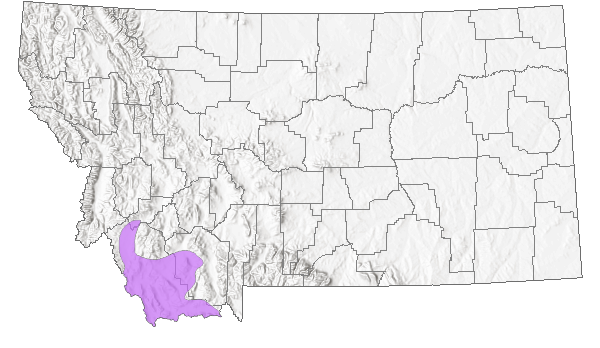
 Native
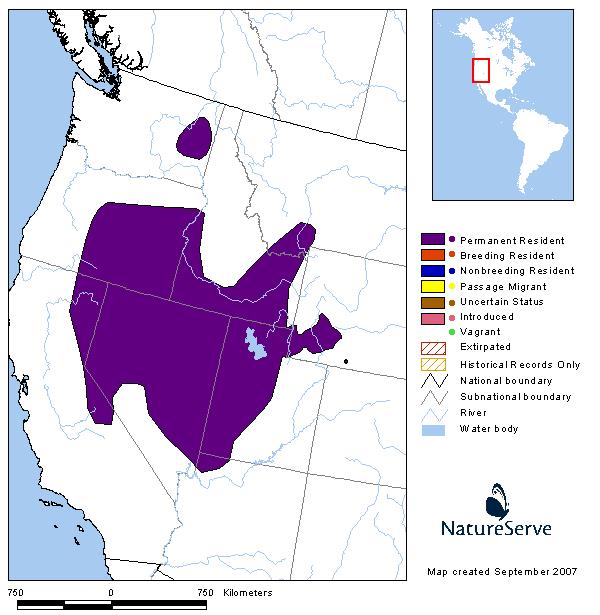
Western Hemisphere Range
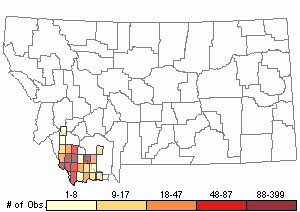
Observations in Montana Natural Heritage Program Database
Number of Observations: 1452
(Click on the following maps and charts to see full sized version)
Map Help and Descriptions
Relative Density
Recency
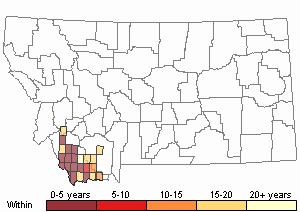
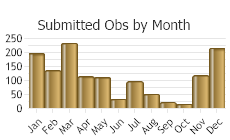
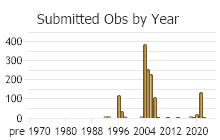
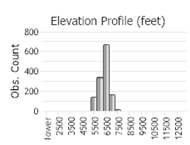 (Observations spanning multiple months or years are excluded from time charts)
Migration
Little information is available on movements. At one site, Pygmy Rabbits had to cross about 500 meters of relatively open terrain to occupy a coulee-bottom stringer of dense sagebrush (Rauscher 1997). Information from other portions of its range suggest that Pygmy Rabbits are non-migratory with daily winter movements usually less than 100 meters (averaged 30 meters in Wyoming). A radio-collared individual moved 3.5 kilometers between burrow systems in February, and evidence indicated other individuals moved at least 2.0 kilometers (Katzer and Parker 1998).
Habitat
Occupied habitats in Montana include shrub-grasslands on alluvial fans, floodplains, plateaus, high mountain valleys, and mountain slopes, where suitable sagebrush cover and soils for burrowing are available. Some occupied sites may support a relatively sparse cover of sagebrush and shallow soils, but these usually support patches of dense sagebrush and deeper soils. Big sagebrush was the dominant shrub at all occupied sites, averaging 21.3 to 22.6% coverage; bare ground averaged 33% and forbs 5.8%. Average height of sagebrush in occupied sites was 0.4 meter (Rauscher 1997). In southwestern Wyoming, Pygmy Rabbits selectively used dense and structurally diverse stands of sagebrush that accumulated a relatively large amount of snow; the subnivean environment provided access to a relatively constant supply of food and protection from predators and thermal extremes (Katzner and Parker 1997).
Pygmy Rabbits dig burrows extending to a depth of 1 meter and they form chambers as part of the burrow system. Burrows have been excavated but no nests have been found and the location of nests is not known (Green and Flinders 1980a).
National Vegetation Classification System Groups Associated with this Species
Shrubland
Sagebrush Shrubland
Food Habits
Big sagebrush (Artemisia tridentata) is the primary food source (up to 99% of the winter diet), but grasses and forbs are eaten in mid- to late summer, and can comprise up to 40% of the diet during that season. They sometimes climb into tops of sagebrush to feed (Green and Flinders 1980a, 1980b, Lyman 1991, Verts and Carraway 1998). Diet in Montana has not been reported, although samples have been collected for analysis (Rauscher 1997); browsing on big sagebrush near burrows was noted, however.
Ecology
Pygmy Rabbits may be active at any time of day, but mostly early in the morning and late in the afternoon. They make extensive use of burrows, largely of their own construction. Burrows have several entrances (typically 4 or 5 but as few as 2 and up to 10), and usually are located at the base of sagebrush plants. Use of burrows is variable but greatest with juveniles. Individuals occupy more than one burrow and share several (Green and Flinders 1980a). One Montana female was captured at four different burrows, and at one burrow two adult females, one adult male, and one juvenile were captured (Rauscher 1997). During the day, they use forms under vegetation in a manner similar to other rabbits and hares (Green and Flinders 1980a). In southwestern Wyoming, winter home range size was 548 to 18,464 square meters (mean 2568 square meters and 10,204 square meters in two different years) (Katzner and Parker 1997).
Annual mortality can be quite high, but has not been quantified satisfactorily. Predators include weasels (Mustela spp.), Coyote, Red Fox, Bobcat, Northern Harrier, Long-eared Owl, and Great Horned Owl (Green and Flinders 1980a, Verts and Carraway 1998). Predators reported in Montana include Coyote and Long-tailed Weasel (Rauscher 1997).
Population density fluctuates dramatically among years. Densities have been estimated as low as 0.7 to 1.4 per hectare in Utah and up to 45.0 per hectare in ideal habitat in Idaho (Green and Flinders 1980a, Verts and Carraway 1998). The density estimate at one Montana site was 3.0 per hectare (Rauscher 1997).
Reproductive Characteristics
Few data are available on Pygmy Rabbit reproductive biology. Females become reproductively active sometime prior to May, by which time females are pregnant or have already given birth. Gestation probably lasts about 27 to 30 days. Two litters per year may be produced; size of two litters from near Bannack was 5 and 7 fetuses. Lactation continues into August. Adult males become scrotal prior to May and remain so into July. Juveniles were captured between May 8 and August 8 (Rauscher 1997). Data from other sources in the species' range indicate the breeding period extends from late winter to early summer. Testis size in males increased from December to April; pregnant females are encountered from February to May. Average litter size was 6 young, the range being 4 to 8 (Ingles 1965, Green and Flinders 1980a, Verts and Carraway 1998). This species may give birth underground.
Management
No special management activities have been developed or implemented in Montana specifically for Pygmy Rabbits. The loss of habitat from conversion to cropland and pasture is probably not great in southwestern Montana. Burning and other methods of sagebrush removal, however, have been used in past and recent years to improve rangeland for livestock. Such activity will make the landscape unsuitable for Pygmy Rabbits. This species is found where grazing occurs, so long as sagebrush cover is maintained, but overgrazing could result in loss of forbs and grasses that are summer foods to Pygmy Rabbits, and livestock could damage sagebrush structure by trampling plants and thinning the shrub canopy. Dense stands of sagebrush along streams, fence lines, and borrow ditches are probably essential avenues for dispersal of pygmy rabbits. If sagebrush is removed, it may isolate or eliminate Pygmy Rabbits in some areas, unless it is done in such a way as to maintain a mosaic of patches of relatively large size isolated only by narrow expanses of unsuitable habitat. All areas within the range of the Pygmy Rabbit in Montana where sagebrush removal is planned should first be evaluated for impact to this species (Rauscher 1997).
Stewardship Responsibility
References
- Literature Cited AboveLegend:
 View Online Publication
 Foresman, K. R. 2001. Key to the mammals of Montana. University of Montana Bookstore, Missoula, Montana. 92 pp.
- Foresman, K.R. 2012. Mammals of Montana. Second edition. Mountain Press Publishing, Missoula, Montana. 429 pp.
- Green, J. S. and J. T. Flinders. 1980. Brachylagus idahoensis. Mammalian Species 125:1-4.
- Green, J.S. and J.T. Flinders. 1980. Habitat and dietary relationships of the pygmy rabbit. Journal of Range Management 33 (2): 136-142.
- Ingles, L.G. 1965. Mammals of the Pacific states. Stanford University Press, Stanford, California. 506 pp.
- Katzner, T. E. and K. L. Parker. 1997. Vegetative characteristics and size of home ranges used by pygmy rabbits (Brachylagus idahoensis) during winter. Journal of Mammalogy 78:1063-1072.
- Katzner, T. E. and K. L. Parker. 1998. Long-distance movements from established burrow sites by pygmy rabbits (Brachylagus idahoensis) in southwestern Wyoming. Northwestern Naturalist 79:72-74.
- Lyman, R. L. 1991. Late quaternary biogeography of the pygmy rabbit (Brachylagus idahoensis) in eastern Washington. Journal of Mammalogy 72:110-117.
- Rauscher, Ryan 1997. Status and distribution of the pygmy rabbit in Montana. Montana Department of Fish, Wildlife and Parks, Non-game program. Unpublished report, 19 pp plus appendices.
- Verts, B. J. and L. N. Carraway. 1998. Land mammals of Oregon. University of California Press, Berkeley. xvi + 668 pp.
- Additional ReferencesLegend: View Online Publication
Do you know of a citation we're missing?- Bowey, Chuck, Gary Hammond, Jina Mariani, and Patty Williams. 1996. Pygmy Rabbit Study: Coyote Creek Prescribed Burn. USFS
- Bowey, Chuck. 1997. Biological evaluation/assessment: Kate Creek prescribed burn. USFS.
- Bowey, Chuck. 1998. Biological evaluation/assessment: Upper Kate Creek prescribed burn. USFS.
- Campbell, T.M., Clark, T.W. and Groves, C.R. 1982. First record of pygmy rabbits (Brachylagus idahoensis) in Wyoming. Great Basin Nat. 42:100.
- Clark, S.G. and M.R. Stromberg. 1987. Mammals in Wyoming. University of Kansas Museum of Natural History, Public Education Series Number 10. xii + 314 pp.
- Davis, W. B. 1939. Recent mammals of Idaho.
- Davis, W.B. 1937. Some mammals from western Montana and eastern Idaho. The Murrelet 18(2): 22-27.
- Diersing, V. E. 1984. Lagomorphs. Pages 241-254 in Anderson, S., and J. K. Jones, Jr., eds. Orders and families of Recent mammals of the world. John Wiley & Sons,N.Y. xii + 686 pp.
- Dilts, T.E., K.A. Zeller, S.A. Cushman, E.S. Larrucea, M.M. Crowell, N.W. Byer, K.T. Shoemaker, M.D. Matocq. 2023. Pygmy rabbit habitat network reveals threats and opportunities for management and conservation. Landscape Ecology. Vol. 38: pp. 1971-1989.
- Elliott, Joe C. and Hydrometrics, Inc., Helena, MT., 1994, Supplement to wildlife baseline investigation life-of-mine expansion plan: Regal Mine, Barretts Minerals, Inc., Madison County, Montana. August 2000. In Life-of Mine Expansion Plan: Barretts Minerals, Inc., Regal Mine, Madison County, Montana. Vol. 2. App. C: Baseline Wildlife Reconnaissance. December 1999.
- Estes-Zumpf, W.A. and J.L. Rachlow 2005. Natal Dispersal of Juvenile Pygmy Rabbits: Preliminary Results. Department of Fish and Wildlife Resources, University of Idaho, Moscow, ID. Presentation during The Montana Chapter of The Wildlife Society, Annual Conference. Helena, Montana. March 2, 2005.
- Foresman, K.R. 2001. The wild mammals of Montana. American Society of Mammalogists, Special Publication Number 12. Lawrence, KS. 278 pp.
- Green, J.S. and Flinders, J.T. Habitat and dietary relationships of the pygmy rabbit. J. Range Manage. 33(2):136-142.
- Heady, L.T., K.I. Gabler, and J.W. Laundre. 2001. Habitat Selection by Pygmy Rabbits in Southeast Idaho. BLM Technical Bulletin No. 01-7.
- Hoffmann, R.S. and D.L. Pattie. 1968. A guide to Montana mammals: identification, habitat, distribution, and abundance. Missoula, MT: University of Montana. 133 p.
- Hoffmann, R.S., P.L. Wright, and F.E. Newby. 1969. The distribution of some mammals in Montana. I. Mammals other than bats. Journal of Mammalogy 50(3): 579-604.
- Johnson, M.K. and R.M. Hansen. 1979. Foods of cottontails and woodrats in southcentral Idaho. Journal of Mammalogy. 60(1): 213-215.
- Jones, J. K., Jr., R. S. Hoffman, D. W. Rice, C. Jones, R. J. Baker, and M. D. Engstrom. 1992. Revised checklist of North American mammals north of Mexico, 1991. Occasional Papers, The Museum, Texas Tech University, 146:1-23.
- Joslin, Gayle, and Heidi B. Youmans. 1999. Effects of recreation on Rocky Mountain wildlife: a review for Montana. [Montana]: Montana Chapter of the Wildlife Society.
- Kleist, N.J. 2022. Annotated bibliography of scientific research on pygmy rabbits published from 1990 to 2020. Reston, VA: U.S. Geological Survey, Open-File Report 2022-1003. 75 p.
- Lenard, S, C. Currier, and P. Hendricks. 2004. Pygmy Rabbit Surveys and Habitat Modeling. Report to the USDI Bureau of Land Management. Montana Natural Heritage Program. Helena, MT. 5pp
- Lenard, S., P. Hendricks, C. Currier, and B. A. Maxell. 2005. Pygmy Rabbit Distribution in Beaverhead and Madison Counties. A report to the Bureau of Land Management, Dillon Field Office. Montana Natural Heritage Program, Helena, MT. 21 pp. plus appendices.
- Multiple Authors. 1992. Abstracts from Montana Rare Animal Meeting. Lewistown, MT. November 5-6, 1992. 20 p.
- NatureServe. 2005. Online search for element information on population/occurrence delineation of pygmy rabbit (Brachylagus idahoensis).
- Orr, R. T. 1940. The rabbits of California. Occasional Papers of the California Academy of Science 19:1-227.
- Rachlow, J. and L. Svancara. 2003. Pygmy Rabbit Habitat in Idaho. Idaho State office of the Bureau of Land Management, Boise, Idaho. 28pp.
- Rauscher, R. L. 1996. Status & distribution of the pygmy rabbit in Montana.
- Reid, F. 2006. Peterson Field Guide to Mammals of North America, 4th Edition. Houghton Mifflin Company: Boston and New York, 608 pp.
- Simons, E.M. and J. W. Laundre. 2004. A Large-Scale Regional Assessment of Suitable Habitat for Pygmy Rabbits in Southwestern Idaho. Northwest Science, Vol. 78, No.1: 33-41.
- USFWS. 2003. Endangered and Threatened Wildlife and Plants; Final Rule to List the Columbia Basin Distinct Population Segment of the Pygmy Rabbit (Brachylagus idahoensis) as Endangered . Federal Register: March 5, 2003 (Volume 68, Number 43)] Page 10388-10409.
- Washington Department of Wildlife. 1993. Status of the pygmy rabbit (Brachylagus idahoensis) in Washington. Washington Department of Wildlife, Olympia.
- Weiss, N. T. and B. J. Verts. 1984. Habitat and distribution of pygmy rabbits (Sylvilagus idahoensis) in Oregon. Great Basin Nat. 44(4):563-571.
- Whisenant, S. G. 1990. Changing fire frequencies on Idaho's Snake River plains: ecological and management implications. Pages 4-10 in E. D. McArthur, E. M. Romney, S. D. Smith, and P. T. Fuller, editors. Proceedings of a symposium on cheatgrass invasion, shrub die-off, and other aspects of shrub biology and management. USDA Forest Service, Intermountain Research Station, Ogden, Utah.
- Wilson, D. E., and D. M. Reeder (editors). 1993. Mammal Species of the World: a Taxonomic and Geographic Reference. Second Edition. Smithsonian Institution Press, Washington, DC. xviii + 1206 pp.
- Web Search Engines for Articles on "Pygmy Rabbit"
- Additional Sources of Information Related to "Mammals"