View in other NatureServe Network Field Guides
NatureServe
Montana
Utah
Wyoming
Idaho
Wisconsin
British Columbia
South Carolina
Yukon
California
New York
Longnose Dace - Rhinichthys cataractae
Native Species
Global Rank:
G5
State Rank:
S4S5
(see State Rank Reason below)
Agency Status
USFWS:
USFS:
BLM:
State Rank Reason (see State Rank above)
Species is widespread and stable but may decline with warming water temperatures and drought
General Description
The longnose dace has the most widespread distribution of all fish in Montana. It is found throughout all three of our major drainages. It is very adaptable, inhabiting almost every conceivable habitat: muddy and warm, clear and cold, streams and lakes. The largest longnose dace are about 6 inches long. They are well-adapted for living on the bottom of fast-flowing streams among the stones. Longnose dace eat mostly immature aquatic insects. They are probably one of the most important forage minnows for Montana's larger predatory game fish.
Diagnostic Characteristics
Back olive to black, shading to white or yellow underneath. Sides may have dark blotches. Breeding males have reddish orange on head and fins. Juveniles have a black midside stripe starting at the tip of the snout and ending at the base of the tail fin. Adults often have a dark stripe ahead of eye. Small barbel at each corner of mouth.
Species Range
Montana Range
Range Descriptions
 Native
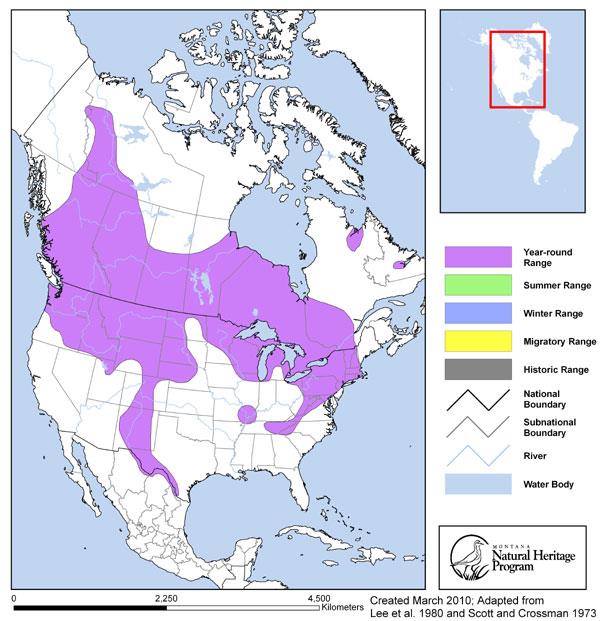
Western Hemisphere Range
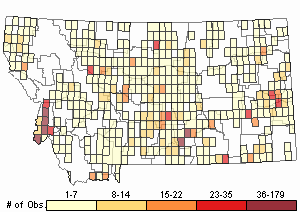
Observations in Montana Natural Heritage Program Database
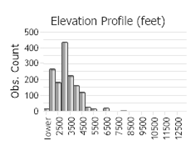
Number of Observations: 2468
(Click on the following maps and charts to see full sized version)
Relative Density
Recency
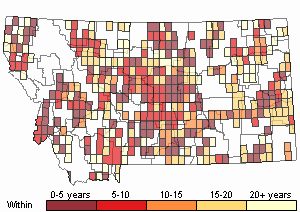

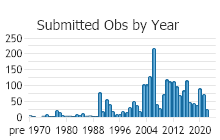
 (Observations spanning multiple months or years are excluded from time charts)
Habitat
Habitat variable. Found in lakes, streams, springs (Brown 1971). Preferred habitat is riffles with a rocky substrate (Morris et al. 1981, Elser et al. 1980).
Food Habits
Eats mostly immature aquatic insects picked off the rocks. Small amounts of algae and a few fish eggs are also eaten (Brown 1971).
Ecology
Showed a preference for main channel border habitat type in middle Missouri River study (Gardner and Berg 1980). Have declined after formation of Lake Koocanusa on the Kootenai River (Huston et al. 1984).
Reproductive Characteristics
Sexually mature probably in 3 yrs. Spawns late spring or early summer at 53 degrees F. in shallow riffle areas over gravel beds (Brown 1971). Middle Missouri River populations spawn early June to latter part of July. Peak in late June (Berg 1981).
Management
The management of this and other native and non-native fish species and their habitats is outlined in Montana Fish, Wildlife and Parks'
2023-2026 Statewide Fisheries Management PlanStewardship Responsibility
References
- Literature Cited AboveLegend:
 View Online Publication
- Berg, R.K. 1981. Fish populations of the wild and scenic Missouri River, Montana. Montana Department of Fish, Wildlife and Parks. 242 p.
 Brown, C.J.D. 1971. Fishes of Montana. Bozeman, MT: Big Sky Books/Montana State University. 207 p.
- Elser A., C. Clancy, L. Morris, M. Georges 1980 (revised). Aquatic habitat inventory of the Beaver Creek drainage and selected tributaries of the Yellowstone River. BLM report: YS-512-CT7-74. 86 pp.
- Gardner, W.M. and R.K. Berg. 1980. An analysis of the instream flow requirements for selected fishes in the Wild and Scenic portion of the Missouri River. Mt Dept. of Fish, Wildlife and Parks. 50 pp.
- Huston J.E., P. Hamlin; B. May 1937-; Montana. Dept. of Fish, Wildlife, and Parks.; United States. Army. Corps of Engineers. Seattle District. 1984
- Lee, D.S., C.R. Gilbert, C.H. Hocutt, R.E. Jenkins, D. E. McAllister, J. R. Stauffer, Jr. 1980. Atlas of North American freshwater fishes. North Carolina State Musuem of Natural History. 867 p.
- Morris, L., T. Hightower, and A. Elser. 1981. An aquatic resources assessment of selected streams in the Lower Yellowstone River Basin. Bureau of Land Management report: YA-512-CT9-52. 151 pp.
- Scott, W.B. and E.J. Crossman. 1973. Rainbow trout, Kamloops trout, Steelhead trout Salmo gairdneri Richardson. pp. 184-191. In: Freshwater fishes of Canada. Ottawa, Canada: Fisheries Research Board of Canada, Bulletin 184. 966 p.
- Additional ReferencesLegend: View Online Publication
Do you know of a citation we're missing?- Bahn, L. 2007. An assessment of losses of native fish to irrigation diversions on selected tributaries of the Bitterroot River, Montana. M.Sc. Thesis. Bozeman, MT: Montana State University. 118 p.
- Barfoot, C.A. 1993. Longitudinal distribution of fishes and habitat in Little Beaver Creek, Montana. M.Sc. Thesis. Bozeman, MT: Montana State University. 66 p.
- Barfoot, C.A. and R.G. White. 1999. Fish assemblages and habitat relationships in a small northern Great Plains stream. The Prairie Naturalist 31(2):87-107.
- Barndt, S.A. 1996. The Biology and Status of the Arctic Grayling in Sunnyslope Canal, Montana. M.Sc. Thesis. Bozeman, MT: Montana State University. 136 p.
- Brandt, Troy M. 2000. Fish diversity behavior and microhabitat use in secondary channels of the Bitterroot River, Montana. M.S. Thesis. University of Montana. Missoula, MT.
- Clancey, C.G. 1978. The fish and aquatic invertebrates in Sarpy Creek, Montana. M.Sc. Thesis. Bozeman, MT: Montana State University. 54 p.
- Clothier, W.D. 1952. Fish loss and movement in irrigation diversions from the West Gallatin River, Montana. M.Sc. Thesis. Bozeman, MT: Montana State University. 32 p.
- Craig, V.E. 1952. A story of fish production as it applies to Montana. M.Sc. Thesis. Bozeman, MT: Montana State University. 92 p.
- Dieterman, D.J., M.P. Ruggles, M.L. Wildhaber, and D.L. Galat (eds). 1996. Population structure and habitat use of benthic fishes along the Missouri and Lower Yellowstone Rivers. 1996 Annual report of Missouri River Benthic Fish Study PD-95-5832 to U.S. Army Corps of Engineers and U.S. Bureau of Reclamation. 238 p.
- Dockery, D.R. 2015. Relationships among swimming performance, water velocity, temperature, and body size for Sauger Sander canadadensis and Longnose Dace Rhinichthys cataractae. M.Sc. Thesis. Bozeman, MT: Montana State University. 126 p.
- Duncan, M.B. 2019. Distributions, abundances, and movements of small, nongame fishes in a large Great Plains river network. Ph.D. Dissertation. Bozeman, MT: Montana State University. 255 p.
- Endicott, C.L. 1996. Responses of riparian and stream ecosystems to varying timing and intensity of livestock grazing in central Montana. M.Sc. Thesis. Bozeman, MT: Montana State University. 115 p.
- Gerald, J.W. 1965. Food habits of the Longnose Dace, Rhinichthys cataractae. M.Sc. Thesis. Bozeman, Montana: Montana State University. 27 p.
- Gilham, A.T. 2016. Relationship between intensity of livestock grazing and trout biomass in headwaters of east front rocky mountain streams, Montana. M.Sc. Thesis. Bozeman, MT: Montana State University. 45 p.
- Gillespie, D.M. 1966. Population studies of four species of mollusks in the Madison River, Yellowstone National Park. Ph.D. Dissertation. Bozeman, Montana: Montana State University. 43 p.
- Heaton, J.R. 1966. The benthos and drift fauna of a riffle in the Madison River, Yellowstone National Park. Ph.D. Dissertation. Bozeman, Montana: Montana State University. 59 p.
- Hendricks, P., S. Lenard, D.M. Stagliano, and B.A. Maxell. 2013. Baseline nongame wildlife surveys on the Fort Peck Indian Reservation. Report to the Assiniboine and Sioux Tribes of the Fort Peck Indian Reservation. Montana Natural Heritage Program, Helena, MT. 83 p.
- Jeanes, E.D. 1996. Behavioral responses to water current of age-0 Arctic Grayling from the Madison River, and their use of stream habitat. M.Sc. Thesis. Bozeman, MT: Montana State University. 60p.
- Jones, Thomas S. 1991. Floodplain distribution of fishes of the Bitterroot River with emphasis on introduced populations of Northern Pike. M.S. Thesis. University of Montana. Missoula, MT.
- Joslin, Gayle, and Heidi B. Youmans. 1999. Effects of recreation on Rocky Mountain wildlife: a review for Montana. [Montana]: Montana Chapter of the Wildlife Society.
- Lance, M.J. 2019. Spatial and temporal variability in movements and vital rates of sympatric salmonids in an unfragmented, inland watershed. M.Sc. Thesis. Bozeman, MT: Montana State University. 116 p.
- McClure, W.V. 1991. Initial effects of streambank stabilization on a small trout stream. M.Sc. Thesis. Bozeman, MT: Montana State University. 93 p.
- Mogen, J.T. 1996. Status and biology of the spawning population of Red Rock Lakes Arctic grayling. M.Sc. Thesis. Bozeman, MT: Montana State University. 90 p.
- Montana Fish, Wildlife and Parks. 1989. Hauser Reservoir fisheries management plan: September 1989-September 1994. 16 p.
- Mullen, J.A. 2007. Spatiotemporal variation of fish assemblages in Montana prairie streams. M.Sc. Thesis. Bozeman, MT: Montana State University. 102 p.
- Mullins, M.S. 1991. Biology and predator use of cisco (Coregonus artedi) in Fort Peck Reservoir, Montana. M.Sc. Thesis. Bozeman, MT: Montana State University. 68 p.
- Nelson, F.A. 1976. The effects of metals on trout populations in the Upper Boulder River, Montana. M.Sc. Thesis. Bozeman, MT: Montana State University. 60 p.
- Nelson, M.L. 1999. Evaluation of the potential for resident bull trout to reestablish the migratory life-form. M.Sc. Thesis. Bozeman, MT: Montana State University. 72 p.
- Nelson, P.H. 1953. Life history and management of the American Grayling (Thymallus signifer tricolor) in Montana. M.Sc. Thesis. Bozeman, MT: Montana State University. 45 p.
- Novak, M.A. 1988. Impacts of a fire-flood event on physical and biological characteristics of a small mountain stream. M.Sc. Thesis. Bozeman, MT: Montana State University. 98 p.
- Pierce, B.E. 1963. Distribution of fish in a small mountain stream in relation to temperature. M.Sc. Thesis. Bozeman, MT: Montana State University. 16 p.
- Poole, A.S. 2019. Evaluation of embryo suppression methods for nonnative Lake Trout in Yellowstone Lake, Yellowstone National Park, Wyoming, USA. M.Sc. Thesis. Bozeman, MT: Montana State University. 108 p.
- Posewitz, J.A. 1961. Observations on the fish population of Willow Creek reservoir, Montana. M.Sc. Thesis. Bozeman, MT: Montana State University. 29 p.
- Purkett, C.A. Jr. 1950. A comparative growth rate of trout in relation to elevation and temperature. M.Sc. Thesis. Bozeman, MT: Montana State University. 33 p.
- Reiland, E.W. 1997. Fish loss to irrigation canals and methods to reduce these losses on the West Gallatin River, Montana. M.Sc. Thesis. Bozeman, MT: Montana State University. 170 p.
- Reinhart, D.P. 1990. Grizzly bear habitat use on cutthroat trout spawning streams in tributaries of Yellowstone Lake. M.Sc. Thesis. Bozeman, MT: Montana State University. 128 p.
- Rosenthal, L.R. 2007. Evaluation of distribution and fish passage in relation to road culverts in two eastern Montana prairie streams. M.Sc. Thesis. Bozeman, MT: Montana State University. 78 p.
- Sanborn, B.W. 1990. The ecology of Rainbow Trout in the Bighorn River, Montana. M.Sc. Thesis. Bozeman, Montana: Montana State University. 63 p.
- Sando, S.K. 1981. The spawning and rearing habitats of rainbow trout and brown trout in two rivers Montana. M.Sc. Thesis. Bozeman, MT: Montana State University. 67 p.
- Schultz, L.P. 1941. Fishes of Glacier National Park, Montana. USDI Conservation Bulletin No. 22. Washington D.C.: US Government Printing Office. 42 p.
- Sloat, M.R. 2001. Status of westslope cutthroat trout in the Madison River basin: the influence of dispersal barriers and stream temperature. M.Sc. Thesis. Bozeman, MT: Montana State University. 118 p.
- Stash, S.W. 2001. Distribution, relative abundance, and habitat associations of Milk River fishes related to irrigation diversion dams. M.Sc. Thesis. Bozeman, MT: Montana State University. 82 p.
- Stevenson, H.R. 1975. The trout fishery of the Bighorn River below Yellowtail Dam, Montana. M.Sc. Thesis. Bozeman, MT: Montana State University. 67 p.
- Stringer, A.L. 2018. Status of Northern Pearl Dace and chrosomid dace in prairie streams of Montana. M.Sc. Thesis. Bozeman, MT: Montana State University. 150 p.
- Sundeen, D.R. 1968. Abundance and movement of young trout in a portion of the Madison River, Montana. M.Sc. Thesis. Bozeman, Montana: Montana State University. 19 p.
- Sylvester, R. and B. Marotz. 2006. Evaluation of the Biological Effects of the Northwest Power Conservation Council's Mainstem Amendment on the Fisheries Upstream and Downstream of Hungry Horse and Libby Dams, Montana. Montana Fish, Wildlife, and Parks Annual Report prepared for U.S. Department of EnergyBonneville Power Administration. Bonneville Power Administration Project No. 2006-008-00 Contract No. 28350. 124 p.Contract No. 28350
- Sylvester, R. and B. Stephens. 2011. Evaluation of the physical and biological effects of the Northwest Power Conservation Council's Mainstem Amendment upstream and downstream of Libby Dam, Montana. Libby, MT: Montana Fish, Wildlife, and Parks Annual Report prepared for U.S. Department of Energy Bonneville Power Administration. Bonneville Power Administration Project No. 2006-008-00, Contract Nos. 43309 and 48555. 282 p.
- Sylvester, R., A. Steed, J. Tohtz, and B. Marotz. 2008. Evaluation of the Biological Effects of the Northwest Power Conservation Council's Mainstem Amendment on the Fisheries Upstream and Downstream of Hungry Horse and Libby Dams, Montana. Montana Fish, Wildlife, and Parks Annual Report prepared for U.S. Department of EnergyBonneville Power Administration. Bonneville Power Administration Project No. 2006-008-00 Contract No. 28350. 124 p.Contract No. 28350
- Trenka, R.J. 2000. Community structure and habitat associations of fishes of the lower Tongue and Powder Rivers. M.Sc. Thesis. Bozeman, MT: Montana State University. 85 p.
- Triano, B.L. 2020. Attraction, entrance, and passage efficiency of Arctic Grayling, trout, and suckers at Denil fishways in the Big Hole River basin, Montana. M.Sc. Thesis. Bozeman, MT: Montana State University. 67 p.
- Urban, Larry, 2002, Biological Resources Report: Wagner Pit Wetland Restoration Site. Proj. No. STPX 56(50) CN 4645. February 23, 2002. In Wgner Pit WS#13 Upper Yellowstone, Yellowstone County. Fin. Dist. 5 AdminDist 5.
- Watschke, D.A. 2006. Assessment of tributary potential for wild rainbow trout recruitment in Hebgen Reservoir, Montana. M.Sc. Thesis. Bozeman, MT: Montana State University. 139 p.
- Werdon, S.J. 1992. Population status and characteristics of Macrhybopsis gelida, Platygobio gracilis and Rhinichthys cataractae in the Missouri River Basin. Masters thesis. South Dakota State University, Brookings, SD. 55 pp.
- Williams, J.R. 2019. Quantifying the spatial structure of invasive Lake Trout in Yellowstone Lake to improve suppression efficacy. M.Sc. Thesis. Bozeman, MT: University of Montana. 66 p.
- Wuellner, M.R. 2007. Influence of reach and watershed characteristics on fish distributions in small streams of eastern Montana. M.Sc. Thesis. Bozeman, MT: Montana State University. 80 p.
- Young, B.A., T.L. Welker, M.L. Wildhaber, C.R. Berry, and D. Scarnecchia (eds). 1997. Population structure and habitat use of benthic fishes along the Missouri and Lower Yellowstone Rivers. 1997 Annual report of Missouri River Benthic Fish Study PD-95-5832 to U.S. Army Corps of Engineers and U.S. Bureau of Reclamation. 207 p.
- Web Search Engines for Articles on "Longnose Dace"
- Additional Sources of Information Related to "Fish"