View in other NatureServe Network Field Guides
NatureServe
Montana
Utah
Wyoming
Idaho
Wisconsin
British Columbia
South Carolina
Yukon
California
New York
Forage Kochia - Bassia prostrata
Other Names:
Prostrate Kochia, Prostrate Summer Cypress, Perennial Summer Cypress,
Kochia prostrata
Non-native Species
Global Rank:
GNR
State Rank:
SNA
(see State Rank Reason below)
C-value:
Agency Status
USFWS:
USFS:
BLM:
State Rank Reason (see State Rank above)
Bassia prostrata is native to southern Eurasia (Stevens et al. 1985). The species was intentionally brought to the western United States for testing as a potential forage and reclamation plant for semi-arid regions. In 1984 the cultivar 'Immigrant' was released, and has successfully been seeded in at least 11 western states. In Montana, seeding trials beginning in 2011 were conducted by the US Department of Agriculture in Carbon, Carter, and Stillwater Counties (Jacobs and Ricketts 2013). Plants have established and persisted, though with varying degrees of productivity. A conservation status rank is not applicable (SNA) because
Bassia prostrata is exotic (non-native) to Montana and is not a suitable target for conservation activities.
Bassia prostrata is not (fully) documented in the floras that are relevant to Montana (Welsh et al.
in Flora of North America; Giblin et al. [eds.] 2018; Lesica et al. 2022). Observations have been reported on AIM plots monitored by the Montana/Dakotas BLM at sites outside of the trial seedings. As a result, it is unknown if this non-native plant is spreading or being mis-identified. Herbarium plant specimens and long-term monitoring are needed to assess the distribution, persistence, and viability of
Bassia prostrata in Montana.
NOTE: It is important to document new species and locations by providing quality plant specimens to a State herbaria or Extension service:
Montana State University;
Montana State University-Billings;
University of Montana; or
Montana State University Extension.
General Description
PLANTS: A perennial, semi-evergreen, half-shrub with erect or ascending stems, 1-3 feet tall, and a more or less procumbent base. Plants grow from a deep taproot with an extensive fibrous root system. Upper stems turn red in late summer to fall while lower stems retain a green appearance year-round. Sources: Tilley et al. 2012; Welsh et al. 2015
LEAVES: Alternately arranged on stems. Stems and leaves have short, dense, and soft (pubescent) hairs, often intermixed with long, soft, crooked, and unmatted (villous) ones. Blades are hairy, linear to filiform in shape, 3-12 mm long by 0.3-0.7 mm wide, flat, and have entire margins. Sources: Tilley et al. 2012; Welsh et al. 2015
INFLORESCENCE: Upper stems have clusters of flowers arranged in a spike or panicle. Sepals and petals are hairy on the upper (dorsal) surface, with round, flat, and tuberculate or oblong and winglike appendages (about 1mm by 1.5 mm), that are often suffused in red. In fruit, the calyx has wart-like tubercles. Sources: Tilley et al. 2012; Welsh et al. 2015
Subspecies virescens under the cultivar name of 'Immigrant' was introduced into Montana as part of a seeding study conducted by the US Department of Agriculture (Limberger and Pokorny 2018).
Phenology
Flowering occurs from July to September (Tilley et al. 2012).
Diagnostic Characteristics
Forage Kochia -
Bassia prostrata, non-native
* Plants: Perennial, semi-evergreen half-shrub. Plants have woody lower stems.
* Leaves: Greenish. Linear in shape. Flat, not fleshy leaves.
* Sepals (Calyx), in
fruit: With sart-like tuberacles.
* Two introduced subspecies can be distinguished by:
Subspecies virescens [cultivar 'Immigrant']: Low-growing, 30 to 38 cm tall. Less pubescence. Introduced in a seeding trial in Montana, and in other western US sites.
Subspecies gricea [cultivar 'Snowstorm']: Taller, up to 76 cm. Greater amount of pubescence. Introduced in portions of the western US.
Common Kochia -
Bassia scoparia, non-native
* Plants: Annual, herbaceous forb, 30-150 cm tall. Not woody. Plants in Carter County, growing in alkaline soils, can be sparsely branches branched with narrower leaves; thereby, lacking the typical pyramidal appearance of Common Kochia (Kurt Hansen, USFS, personal communication).
* Leaves: Linear to narrowly oblanceolate in shape, flat (not fleshy), and with long hairs.
* Sepals (Calyx),
in fruit: 5-lobed with a horizontally flattened dorsal wing. Hairs lacking (glabrous) or nearly so.
Five-horn Smotherweed -
Bassia hyssopifolia, non-native
* Plants: Annual, herbaceous forb, up to 100 cm (1 meter) tall. Not woody.
* Leaves: Narrowly oblanceolate in shape, flat (not fleshy), and with long hiars; in part 1-3(5) nerved.
* Sepals (Calyx),
in fruit: 5-lobed, and often with curved to hooked dorsal spines. Hairs sparsely present (puberulent).
Red Sage -
Neokochia americana, native, SOC
* Plants: Perennial, sub-shrub, 8-25 cm tall. Woody at the base.
* Leaves: More-or-less linear, roundish (terete) or semi-roundish, generally fleshy. Hairs lacking (glabrous) to dense, soft,
and interwoven (tomentose).
* Sepals (Calyx),
in fruit: 5-lobed with a horizontally flattened dorsal wing. Glabrous or nearly so.
Range Comments
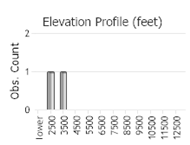
Forage Kochia is native to southern Eurasia (Stevens et al. 1985). The kochia accession was introduced into the US as P.I. 314929 from Stavapol botanical Gardens, Union of Soviet Socialist Republics (USSR) on May 19, 1966 (Stevens et al. 1985). It was brought over as a potential forage and reclamation plant for semi-arid regions, and to compete with the non-native Halogeton (Halogeton glomeratus) forb. It underwent testing in the western US, and in 1984 'immigrant' Forage Kochia was released by the US Department of Agriculture (USDA) Soil Conservation Service, USDA Forest Service Intermountain Forest and Range Experiment Station, Utah State Division of Wildlife Resources, and the State Agricultural Experiment Stations in Arizona, Idaho, and Utah. Forage Kochia has been successfully seeded in Arizona, Colorado, Idaho, Montana, Nevada, New Mexico, Oregon, Texas, Utah, Washington, and Wyoming at elevations ranging from 490 to 7,300 feet (Tilley 2012). The NRCS PLANTS website maintains updated distributions.
In Montana, Forage Kochia was seeded into native and disturbed rangelands at three locations in Carter and Stillwater Counties beginning in 2011 (Jacobs and Ricketts 2013; Walstad and Larson 2017; and Limberger and Pokorny 2018). As of 2017 and 2018, monitoring at two sites in Carbon County has shown that plants have established and persisted, though with varying degrees of productivity.
Observations in Montana Natural Heritage Program Database
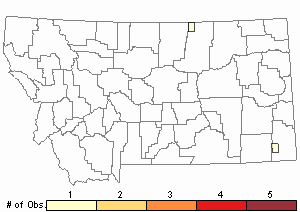
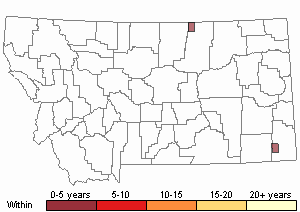
Number of Observations: 12
(Click on the following maps and charts to see full sized version)
Relative Density
Recency
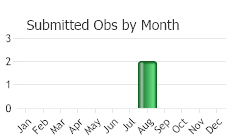
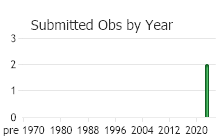
 (Observations spanning multiple months or years are excluded from time charts)
Habitat
In the Intermountain West, Forage Kochia is found in shadscale-saltbush, saline desert, saline desert-shrub, sagebrush steppe, and pinon-juniper plant communities (Tilley et al. 2012). Plants are suited to rangelands that receive 15-40 cm of annual precipitation, and occur in a variety of soil textures, including sands, gravels, clays, silts, and loams. They grow best in medium-textured soils. In southwest Idaho, plants were most abundant in low-elevation sites with silty soils, which are also indicative of slickspot and playa habitats (Gray and Muir 2013). Plants are sodic tolerant, and grow and spread well in high saline sites, such as slickspots.
Ecology
FORAGE QUALITY & NUTRITION
Forage Kochia is highly saline tolerant (Stevens et al. 1985; Tilley et al. 2012). When grown in soil salinity levels of 17 mmho/square cm, their ability to produce forage did not decline (Tilley et al. 2012).
Forage Kochia is an alternative to harvested hay because it is highly nutritious for cattle. Plants can be used for fall and winter forage. From August to March, plants have crude protein levels ranging from 7-14% which is higher than many perennial cool season grasses, forbs, and legumes. Plants do not develop nitrate accumulation or oxalate toxicity. Plants mixed with dormant grass provide the best nutritional benefits when fed to cattle during the fall and winter months. Cattle grazing only on Forage Kochia have the potential to develop frothy bloat.
Wildlife species also find Forage Kochia to be palatable. A seeding study in Montana found notable use of Forage Kochia by wildlife (Limberger and Pokorny 2018).
The cultivars of Forage Kochia introduced into the western US include 'Snowstorm' and 'Immigrant'. 'Snowstorm' was developed to be 64% taller, produce 68% more forage, have 22% higher protein content, and be 4% more digestible when compared with 'Immigrant' (Tilley et al. 2012). The shorter stature of 'Immigrant' Forage Kochia can limit its use during the winter months.
DISPERSAL, SPREAD, & ESTABLISHMENT
A study in southwest Idaho examined 28 sites, 3 to 24 years after Forage Kochia was seeded into postfire rehabilitation and greenstrip project areas between 1986 and 2007 (Gray and Muir 2013). The 28 sites had known seed boundaries and differed in elevation, topography, and precipitation levels, but overall represented the range of environmental characteristics in which Forage Kochia was seeded in southwestern Idaho. Environmental and land management conditions prior to the seedings were largely unavailable for this study. The Greenstripping Program was initiated by the Idaho BLM from 1985 to 1993 as a way to prevent the spread and impact of wildfires on public lands.
In the southwestern Idaho study, Forage Kochia did not remain confined to the seeded areas (Gray and Muir 2013). At the 28 sites, individual plants were found at distances of 0 to 0.44 of a mile (0 to 710 meters) from the seeded boundary, with an average distance of 0.13 of a mile (208 meters). Large, relatively isolated patches of Forage Kochia were also observed beyond the study boundaries. Recruitment was observed within the original seeded populations and in non-seeded areas from the 'newer' established sub-populations. Based on the study's findings, additional observations, and search areas that were limited by time constraints, the researchers concluded that seeds can spread to distances of one-half mile (800 meters); this distance represents a conservation estimate of potential spread.
The rate of spread by Forage Kochia increased linearly with time (Gray and Muir 2013). This indicates that the potential for spread continues into the present day. The researchers calculated a spread rate of 4 meters per year. Forage Kochia spread into unseeded sites whether they were dominated with a high abundance of native plants, such as Big Sagebrush (Artemisia tridentata), or with non-native annual forbs and grasses. High saline slickspots were also invaded by Forage Kochia. In fact, the highest abundance of Forage Kochia was found in low-elevation sites with silty soil, which included the slickspot and playa habitats.
The seeds of Forage Kochia are predominantly wind-dispersed, but also aided by anthropogenic sources (Gray and Muir 2013). Plants were found along roadsides and in vehicle tracks within unseeded habitats. Researchers could not determine if vehicles or other equipment carried seed to new places or helped create the disturbed ground conducive for wind-dispersed seeds to colonize.
PLANT COMPETITION [Adapted from Gray and Muir 2013]
Through study trials Forage Kochia has been found to compete well against many invasive, non-native (exotic) annual weeds (Tilley et al. 2012). Specifically, Forage Kochia has been found to successfully compete against Halogeton, Cheatgrass (Bromus tectorum), Russian Thistle (Salsola kali), and Medusahead (Taeniatherum caput-medusae) (Tilley et al. 2012). This is because plants start growing in very cool temperatures and are photosynthesizing at the same time of the year as Cheatgrass, which causes direct competition for water availability. Studies by McArthur et al. (1990) and Monaco et al. (2003) provide examples of competitive interactions between Forage Kochia and Cheatgrass, and a decline in the latter species.
In the southwestern Idaho study, the abundance of Forage Kochia negatively correlated with the following functional groups: native perennial grasses; native perennial shrubs; exotic perennial grasses; and exotic annual grass (Cheatgrass). Forage Kochia's negative relationship with these functional groups suggests that competitive interactions for resources may be occurring. Regarding Cheatgrass, the authors also found similar proportions in Cheatgrass cover between seeded and unseeded sites, but a negative association with plant litter. Cheatgrass is known to increase plant litter, and Forage Kochia is thought to germinate on bare soil or in places between plants, thus providing a possible explanation.
The abundance of Forage Kochia positively correlated with the functional group, exotic annual forbs. This positive relationship may suggest a lack of competitive interactions for resources – or that other factors may have a greater influence than those interactions. The researchers observed that seedlings of Curveseed Butterwort (Ranunculus testiculata), an exotic forb, were often found growing under the canopy of Forage Kochia – indicating a beneficial interaction.
Forage Kochia was present in both seeded and unseeded areas, though its abundance varied across sites. The abundance of Forage Kochia increased with time on both seeded and unseeded sites. Sites that were seeded 24 years prior to the study by Gray and Muir (2013) demonstrated that individuals can establish and self-perpetuate a 'new' population.
PLANT-LIVESTOCK INTERACTIONS
Grazing management can influence the abundance of Forage Kochia. In the southwest Idaho study, plants were most abundant on sites that varied in their grazing intensity, and less where intensively grazed (Gray and Muir 2013). The timing and intensity of grazing affects the branching density of Forage Kochia (Tilley et al. 2012; Gray and Muir 2013). Grazing can stimulate plant growth and increase branching density if not consistently or intensively grazed. Plants that are grazed to about two inches do not regenerate well (Tilley et al. 2012). Cattle have been shown to graze inflorescences before eating leaves and vegetative stems. Spring grazing has the potential to limit the biomass produced by forage production. However, where rangelands have green grass, Forage Kochia is rarely grazed in the spring. Livestock have been observed to switch to Forage Kochia after grasses have gone dormant, often between June and mid-July. Preference for Forage Kochia by livestock increases through the summer, fall, and winter.
FIRE ECOLOGY [Adapted from Tilley et al. 2012 and Gray and Muir 2013]
Forage Kochia has fire resistant characteristics. Plants create open stands, and individuals have an open canopy. Forage Kochia can retain a high fuel moisture level in the late summer through winter because the lower portions of the plants can remain evergreen. Although fire will burn the above ground portions, plants often re-sprout and recover quickly.
The abundance of Forage Kochia was positively correlated with the number of fires since seeding. High intensity fires have been found to kill seeds and the species apparently does not develop a persistent seedbank. For established plants, fire can stimulate resprouting, even after multiple burns. In plant communities that are not adapted to fire, like salt-desert shrub, or to high-intensity burns, it is possible that resprouting from established Forage Kochia plants could alter or dominate the local habitats.
BIOLOGICAL SOIL CRUST
In southwestern Idaho Gray and Muir (2013) found that Forage Kochia positively correlates with biological crust cover, and negatively associates with moss cover. To germinate and grow, Forage Kochia may require bare ground, disturbed soil, open space, and/or subsequent lack of competition from other plants, which moss cover is likely to prevent (Harrison et al. 2000). Further investigations into these relationships are needed because in this study sites that had a low abundance of Forage Kochia were also highly intensively grazed and had few biological soil crusts.
PLANT-INVERTEBRATE INTERACTIONS
Forage Kochia is not known to be affected by insects (Talley et al. 2012). However, Harrison et al. (2000) hypothesized that the plant may serve as a host for insects in the genus Lygus.
Biology
LIFE SPAN
The longevity of Forage Kochia has not been well studied. Plants have been thought to live up to 15-years (Balyan 1972). The study in southwestern Idaho observed that in the springtime, Forage Kochia seedlings were common in the seeded sites and around reproductive individuals, but by late summer many of these seedlings had died (Gray and Muir 2013).
DROUGHT TOLERANCE
Forage Kochia is drought tolerant due to several physiological traits (Gray and Muir 2013). Plants take up available soil moisture very early in the growing season. They photosynthesize using a C4 pathway, which is a relatively unique trait among dicot vascular species. Most dicot plants use a C3 photosynthetic pathway. C4 plants can bring CO2 into their leaves using a smaller stomatal opening (narrower diameter), which helps reduce water loss (evaporation). Thus, they are more efficient at using carbon dioxide (CO2) to maintain their normal rate of photosynthesis, which greatly improves their drought tolerance especially in high air temperatures. Forage Kochia also thrives in saline soils (halotype). They can accumulate salts which increase their internal osmotic potential, which also improves their drought tolerance and ability to persist in saline conditions. Collectively, these attributes allow Forage Kochia to be a strong competitor in low elevation, arid communities and disturbed sites colonized by other non-native forbs and grasses. In contrast, Forage Kochia does not compete well at sites with higher elevations or greater precipitation.
Reproductive Characteristics
Forage Kochia reproduces by seed.
FRUITS
Fruit is an utricle, compressed with a horizontal seed. Seeds oval or orbicular in outline, about 2 mm wide, brown, and smooth (Welsh et al. 2015).
GENETICS
Subspecies virescens
Breeder and Foundation seed is maintained by the Utah Crop Improvement Association (Tilley et al. 2012). 'Immigrant' Forage Kochia is a diploid (2n=18) release of subspecies virescens.
Subspecies grisea
Subspecies grisea was developed as a synthetic cultivar using germplasm collected in Uzbekistan (Tilley et al. 2012). As of 2012, Breeder and Foundation seed are maintained by the USDA-ARS Forage and Range Research Laboratory at Logan, Utah. The Utah Crop Improvement Association would be responsible for making Foundation seed available. 'Snowstorm' Forage Kochia is a tetraploid (2n=36) release of subspecies grisea.
SEED PRODUCTION & STORAGE
Early snowfall can hinder seed production because snow-loaded branches drop seeds before they mature. However, seeds require a hard frost to germinate in the spring. Seed production fields have reported 400 to 600 pounds per acre of clean seed. There are an estimated 395,000 pure live seed (PLS) per pound. Seeds should be dried to less than 7 percent moisture and stored in cool, dry conditions, ranging from 36 to 50 degrees Fahrenheit. Seed production declines when plants reach an age of 5 to 6 years old.
LIFE CYCLE
Forage Kochia seeds require a hard frost to mature while still on the plant.
Disturbed bare ground, or space between vascular plants, is likely necessary for seeds to germinate (Harrison et al. 2000; Walstad and Garrett 2017).
Management
If not properly managed, Forage Kochia can become weedy or invasive in certain areas or habitats of the western US, and can displace desirable vegetation (Talley et al. 2012).
SITE PREPARATIONS - MONTANASite preparations to seed Forage Kochia and the native Winterfat (
Krascheninnidolvia lanata into two sites dominated by the non-native Crested Wheatgrass (
Agropyron critatum) was tested in Carbon County, Montana from 2012 to 2017 (Walstad and Garrett 2017). The purpose was to improve species diversity, wildlife, habitat, and late season forage quality.
Disc+Broadcast Seed+Roll prepared the site the best and produced better results (Walstad and Garrett 2017). At site 1, both Forage Kochia and Winterfat germinated, resulting in the highest density and frequency, and produced seed along with many seedlings through to 2017. However, the number of plants per square foot was rated as low. Forage Kochia averaged 12 inches tall while Winterfat grew to 8 inches. Discing appeared important to open up the site for plants to establish. The rolling likely allowed the seed to better contact the soil.
At Site 2, the treatment was followed by livestock grazing. This resulted in the removal of inflorescences and no subsequent seed production for two years. By 2014, Forage Kochia and Winterfat were absent.
Disc+Broadcast Seed produced the poorest results (Walstad and Garrett 2017). Forage Kochia and Winterfat established and persisted until 2017, but in trace amounts.
Broadcast Seed with no site preparation was insufficient to establish Forage Kochia and Winterfat.
SEEDINGSeeding of Forage Kochia is more successful when implemented in the fall or winter (Tilley et al. 2012). This allows seeds to germinate and begin growth in early spring. Aerial, broadcast, and drilled seeding techniques work. With aerial applications, altitudes from 50 to 70 meters above the ground, when wind speeds are less than 13 feet per second is recommended because wind greatly influences where plants establish. The soil surface should be lightly disturbed by harrowing, or spread directly into snow. Drilled seed that is pressed into the ground will rarely germinate. Burning prior to seeding can benefit establishment.
Seeding of Forage Kochia into mature, native rangeland was tested in Carter County, Montana from 2012 to 2018 (Limberger and Pokorny 2018). The purpose was to improve forage quality for livestock. The grassland was lightly harrowed in the fall and lightly disced in the spring and then drill-seeded. The light level of disturbance allowed the seed to better contact the soil. In 2013 (first year), Forage Kochia had good vigor, spread, and seed production. Plants averaged 8 inches tall. From 2014 to 2018, plant vigor, spread, and seed production declined to fair. Plant height ranged from 4 to 12 inches tall. In 2018, the site had above average precipitation which benefited the native rangeland species and increased the canopy cover of the non-native Japanese Brome (
Bromus japonicus) to 25%. Despite the vegetative growth, Forage Kochia survived and was doing well. In addition, use of Forage Kochia by wildlife species was notable.
SEEDING - FEDERAL GUIDANCE* Idaho Bureau of Land Management (ID BLM; 2010) recommendations restrict the use of Forage Kochia when seeding around slickspots in order to retain habitat for rare and sensitive plants.
* The US Department of the Interior-Bureau of Land Management (USDI-BLM) recommendations for the Emergency Fire Rehabilitation (EFR) Program do not allow seeding of Forage Kochia within a 402-meter buffer around slickspots.
CHEMICAL CONTROLThe herbicide type and concentration, application time and method, environmental constraints, land use practices, local regulations, and other factors will determine its effectiveness and impact to non-target species. Strict adherence to application requirements defined on the herbicide label will reduce risks to human and environmental health. Consult your County Extension Agent and/or Weed District for information on herbicidal control. Chemical information is also available at
Greenbook.
2,4-D has been found to effectively control Forage Kochia (Harrison et al. 2000).
Useful Links:Central and Eastern Montana Invasive Species TeamMontana Invasive Species websiteMontana Biological Weed Control Coordination ProjectMontana Department of Agriculture - Noxious WeedsMontana Weed Control AssociationMontana Weed Control Association Contacts WebpageMontana Fish, Wildlife, and Parks - Noxious WeedsMontana State University Integrated Pest Management ExtensionWeed Publications at Montana State University Extension - MontGuidesStewardship Responsibility
Threats or Limiting Factors
Forage Kochia can become weedy or invasive in certain areas or habitats (Tilley et al. 2012). Plants have the ability to displace desirable vegetation if not properly managed (Tilley et al. 2012).
Seeding of 'Immigrant' Forage Kochia has been promoted for use in degraded rangelands following fire (Tilley et al. 2012; Gray and Muir 2013). The premise is that after a fire Forage Kochia could compete against annual grasses, which would promote the establishment of native plants (Harrison et al. 2000). For degraded rangelands, Forage Kochia can provide valuable, nutritional forage to livestock, wildlife, and upland game birds, as well as cover for wildlife, while also decreasing fire intervals (Tilley et al. 2012). However, the evidence that Forage Kochia facilitates establishment of native plants is anecdotal, and scientific studies evaluating interactions with native and non-native species are greatly needed (Gray and Muir 2013).
In Idaho, 'Immigrant' Forage Kochia was found to spread outside of seeded areas at a rate of about 4 meter per year (Gray and Muir 2013). Plants were found to establish self-perpetuating sub-populations at least 0.45 miles from their seeded source. The abundance of plants was found to increase with time after seeding. Populations of this non-native plant can establish outside of managed areas. Aerial, as opposed to ground, seeding increases the risk that the species will be distributed to places outside of the intended project site. The impacts from dispersal and spread of Forage Kochia, especially in Montana, requires further study.
References
- Literature Cited AboveLegend:
 View Online Publication
- Flora of North America Editorial Committee. 2003. Flora of North America North of Mexico, Volume 4, Magnoliophyta: Caryophyllidae, Part 1. Oxford University Press, New York. 584 p.
- Gray, Erin C., and Patricia S. Muir. 2013. Does Kochia prostrata Spread From Seeded Sites? An Evaluation From Southwestern Idaho, USA. Rangeland Ecology and Management 66(2). March. pp. 191-203
 Hitchcock, C.L. and A. Cronquist. 2018. Flora of the Pacific Northwest: An Illustrated Manual. Second Edition. Giblin, D.E., B.S. Legler, P.F. Zika, and R.G. Olmstead (eds). Seattle, WA: University of Washington Press in Association with Burke Museum of Natural History and Culture. 882 p.
- Jacobs, Jim, and Matt Ricketts. 2013. Establishing Winterfat and Forage Kochia on Four Seedbed Treatments in Cheatgrass or Crested Wheatgrass Dominated Sites. USDA-NRCS, Bozeman, Montana.
- Keller, Wesley, and A.T. Bleak. 1974. Kochia Prostrata: A Shrub for Western Ranges? March. Utah Science.
- Lesica, P., M.T. Lavin, and P.F. Stickney. 2022. Manual of Montana Vascular Plants, Second Edition. Fort Worth, TX: BRIT Press. viii + 779 p.
- Limberger, AJ, and Monica Pokorny. 2018. Forage kochia Seeding into Rangeland, Carter County, MT. August. US Department of Agriculture, Montana
- Stevens, R., K.R. Jorgensen, E.D. McArthur, and J.N. Davis. 1985. 'Immigrant' Forage Kochia. Rangelands 7(1), February, pp. 22-23.
- Tilley, D., D. Ogle, L. St. John, B.L. Waldron, and R.D. Harrison. 2012. Plant Guide for forage kochia (Bassia prostrata). USDA-Natural Resources Conservation Service, Aberdeen Plant Materials Center. Aberdeen, Idaho 83210.
- Walstad, Krist, and Garrett Larson. 2017. Winterfat and Forage Kochia Seeding into Crested Wheatgrass, Carbon County, MT. USDA, NRCS Conservation District, Joliet and Columbus, Montana.
- Welsh, Stanley L., N. Duane Atwood, Sherel Goodrich, and Larry C. Higgins [Editors and Contributors]. 2015. A Utah Flora. Summary Monograph. Fifth Edition, revised 2015. Brigham Young University, Provo, Utah.
- Web Search Engines for Articles on "Forage Kochia"