View in other NatureServe Network Field Guides
NatureServe
Montana
Utah
Wyoming
Idaho
Wisconsin
British Columbia
South Carolina
Yukon
California
New York
Palmer's Amaranth - Amaranthus palmeri
Other Names:
Palmer Amaranthus
Non-native Species
Global Rank:
G5
State Rank:
SNA
(see State Rank Reason below)
C-value:
Agency Status
USFWS:
USFS:
BLM:
State Rank Reason (see State Rank above)
Amaranthus palmeri is a forb native to the southwestern United States (US) and northern Mexico region (Sauer 1957). Since about 1989, populations have moved outside of the species’ native range through anthropogenic vectors - initially spreading in the southeast and then northward (Ward et al. 2013). These non-native populations have become a serious invasive weed in cotton, soybean, and corn fields. In the US,
Amaranthus palmeri is ranked as one of the most problematic weeds due to its prolific seed production, rapid growth, and resistance to various herbicides (Ward et al. 2013; Seipel et al. 2025). In Montana,
Amaranthus palmeri has been present since 2018, but went undetected until 2023. With time, plants have increasingly and sporadically been showed up in agricultural fields. The Montana Department of Agriculture (MDA) has targeted this plant as a high priority, and is collaborating with landowners and other organizations to prevent and contain its establishment (Seipel et al. 2025). A conservation status rank is not applicable (SNA) because
Amaranthus palmeri is a non-native vascular plant in Montana that is not a suitable target for conservation activities.
NOTE:
Palmer's Amaranth is an Early Detection Rapid Response [EDRR] species. If you suspect its presence or have questions, consult MDA's
Palmer's Amaranth webpage and reach out to your local Extension agent (
Montana Weed Control Association - Weed District Contacts) or
Montana State University Extension.
General Description
PLANTS: An annual forb with an erect, branched, and reddish-green stem, 1 to 5 meters tall. Plants lack hairs (glabrous). Sources: Mosyakin and Robertson in Flora of North America (FNA) 2003; Ward et al. 2013
LEAVES: Alternately arranged on the stem with petioles longer than their simple blades. Leaf blades are lanceolate when young and become more ovate with maturity, ranging from obovate, rhombic-obovate, to elliptic in shape, 1-3.5 cm wide by 1.5-7 cm long. Mature leaves form a v-shape and in combination with parallel prominent veins resembles a chevron. Prominent, whitish veins occur on the underside. Blades have a cuneate-shaped base, smooth (entire) margins, and an acute, sometimes spined, terminal tip. Sources: Mosyakin and Robertson in FNA 2003; Ward et al. 2013
INFLORESCENCES: Occurring terminal on the central stem, up to 60 cm tall, and in axils of lateral branches. Cylindrical spikes or panicles that droop with small greenish flowers. Plants are unisexual. Male (staminate) and female (pistillate)) flowers are found on separate plants (dioecious). Staminate flowers are soft to the touch while pistillate flowers are rough from prickly, stiff bracts. Fruit: Utricle. Sources: Mosyakin and Robertson in FNA 2003; Ward et al. 2013
Phenology
Germination and flowering are tied closely with precipitation and other environmental conditions. Palmer's Amaranth plants typically flower in the summer to fall (Mosyakin and Robertson in FNA 2003). However, in the southern part of its native range, flowering can occasionally occur anytime from spring to winter (Mosyakin and Robertson in FNA 2003).
Diagnostic Characteristics
Palmer's Amaranth -
Amaranthus palmeri, non-native, invasive, and undesirable
* Plants: Staminate and pistillate flowers on separate plants (dioecious). Central stem, reddish-green, and often at least 3 feet tall.
* Hairs: Hairs absent (glabrous).
* Leaves: Petiole longer than blade. Lanceolate when young, becoming more obovate with maturity.
* Inflorescence: Relatively long and narrow, and terminal or in axils of leaves.
Redroot Amaranth -
Amaranthus retroflexus, native
* Plants: Staminate and pistillate flowers on the same plant (monoecious). Central stem, reddish below, and often less than 3 feet tall.
* Hairs: soft and short (pubescent) on the stem, giving the plant a fuzzy appearance.
* Leaves: Petiole shorter than blade. Blade obovate in shape, 2-10 cm long.
* Inflorescence: Relatively short and thick, with short, pointed bracts.
Prostrate Amaranth -
Amaranthus blitoides, native
* Plants: Staminate and pistillate flowers on the same plant (monoecious). Stems branched and prostrate, often less than 1.5 feet tall.
* Hairs: Glabrous to pubescent.
* Leaves: Petiole barely longer than blade. Lanceolate to ovate, 10-25 mm long.
* Inflorescence: Shorter flowering stems.
Useful LinkHow to Identify Palmer Amaranth (North Dakota State University Extension)
Species Range
Montana Range
Range Descriptions
 Non-native
Range Comments
Palmer's Amaranth is native from Southern California to northwestern Mexico, and east to New Mexico and Texas (Sauer 1957). In the early 1900s, Palmer's Amaranth began to show up in states outside of its native range, such as in Virginia (1915), Oklahoma (1926), and South Carolina (1957) (Ward et al. 2013). As of 2026, plants occur in most states of the continental US, and in at least one Canadian province (Mosyakin and Robertson in FNA 2003).
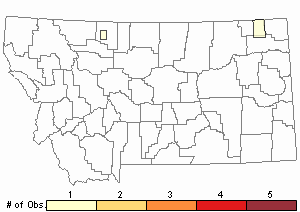
In Montana, Palmer's Amaranth has been present in Roosevelt County since 2018. However, this occurrence went mostly unnoticed until news regarding its detection in 2023 circulated around the state. In 2023, plants were found sprouting from bird seed within a garden in Toole County (Helena Independent Record 2023). Collaboration between the landowner and a Montana State University Extension (Extension) agent verified the species and appropriately eradicated the plant. Since then plants have been found along a roadside, under bird feeders, or in agricultural fields in at least 6 other counties. Although plants are colonizing, landowners and local Extension agents have been successful in removing them. As of 2025, the site in Roosevelt County may be the only known established population in Montana (Joshua Wagoner, MDA, personal communication 2026).
Observations in Montana Natural Heritage Program Database
Number of Observations: 4
(Click on the following maps and charts to see full sized version)
Relative Density
Recency


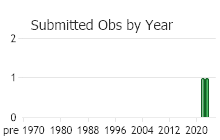
 (Observations spanning multiple months or years are excluded from time charts)
Habitat
In its native range Palmer's Amaranth has a long history of associating with various native peoples and cultures.
Outside of its native range, Palmer's Amaranth colonizes disturbed, fertile soils, such as gardens and agricultural fields (Ward et al. 2013). Plants have been brought to Montana as a contaminant in bird seed and have sprouted up under feeders in several counties. Plants could be spreading with help from farm equipment, as they have been found along a roadside and in a few agricultural fields in Montana. The MDA is working with landowners to eradicate, contain, and prevent populations from establishing.
Ecology
CULTURALIn its native range, people have a long, shared history with Palmer's Amaranth (Ward et al. 2013). Native American tribes, including the Navajo, Pima, Yuma, and Mohave have cooked the leaves, and made meal by grounding the seeds (Moerman 1998).
PLANT-ANIMAL INTERACTIONS [Adapted from Ward et al. 2013]
Seeds of Palmer's Amaranth plants are likely eaten by red fire ants (
Solenopsis invicta), which are not native to the US. Rodents and birds of various origins eat or are suspected of eating Palmer's Amaranth seeds. For birds, this includes 11 species, including Killdeer (
Charadrius vociferus). Seeds ingested by birds, and recovered from their digestive tract were viable.
Palmer's Amaranth is a host plant for several non-native nematode species, which occur in Montana. The plant is rated as a moderate host for Southern Root-knot Nematode (
meloidogyne incognita) and Peanut Root-knot Nematode (
Meloidogyne arenaria). The plant has the potential, but is thought to be a poor-host for Reniform Nematode (
Rotylenchulus reniformis).
Biology
PHOTOSYNTHESIS AND GROWTH RATESPalmer's amaranth photosynthesizes using a C4 pathway, which gives them a competitive edge over most other dicot vascular plants (who use a C3 pathway). As a dicot vascular plant, being C4 is also a unique trait. In the Sonoran desert area where Palmer's Amaranth is native, only about 4% of the dicot species are C4 plants. C4 plants can bring CO2 into their leaves using a smaller stomatal opening (narrower diameter), which helps reduce water loss (evaporation). Thus, they are more efficient at using carbon dioxide (CO2) to maintain their normal rate of photosynthesis. Being a C4 dicot plant colonizing ephemeral, disturbed, and saline environments outside of it native range, gives Palmer's Amaranth the competitive edge to grow and outcompete its neighbors. When ambient temperatures get hot, this more efficient means of photosynthesizing with less water loss greatly aids its growth and survival.
Palmer's Amaranth is a solar tracker (diaheliotropism)! The plant orients its leaves perpendicular to the sun's rays which maximizes light interception and photosynthetic performance. This also helps an ephemeral, annual species maximize growth and complete its life cycle when environmental conditions are appropriate. In comparison to other plants Palmer's Amaranth exhibits high photosynthetic rates.
Palmer's Amaranth is characterized as a rapid grower. Growth rates were evaluated for four Amaranth species (Horak and Loughin 2000): Palmer's Amaranth, Redroot Amaranth, White Amaranth (
Amaranthus ablus), and Common Waterhemp (
Amaranthus tuberculatus). Palmer's Amaranth produced from 32 to 83 percent more dry biomass than the other three species. In terms of height gained per growing degree day, young Palmer's Amaranth plants were at least 50% greater when compared with the other 3 species in the early growing season. Palmer's Amaranth can leverage its faster growth rate to complete its life cycle within a shorter timeframe. In summary, the high photosynthetic rate combined with the ability for its leaves to track the sun, allows this plant to accumulate more biomass than most other species.
Palmer's Amaranth can also grow in shaded conditions. A study found that when grown under 87% shade, the plant grew leaves that were 42% greater in specific leaf area (compared to non-shaded conditions), thinner, and with fewer light compensation points (Jha et al. 2008).
Under conditions of drought, Palmer's Amaranth can concentrate solutes in the leaves which allows the stomates to stay open, maintaining positive turgor pressure. Without the ability to concentrate solutes, the leaves would wilt, stopping photosynthesis.
GENDER RESPONSES TO ABIOTIC STRESSERSFor crop plants, 'available' nitrogen is a critical limiting factor in agricultural production (Taiz and Zeiger 1991). Its deficiency can impact leaf, fruit, and seed production, reduce photosynthetic rates, and affect defense mechanisms. The morphological and physiological responses of gender under various conditions of light and nutrients were studied for Palmer's Amaranth. In greenhouse experiments, Korres et al. (2021) studied how Palmer's Amaranth plants responded to various conditions of light and nutrients. Specifically, this research studied how gender affected morphology and physiology when plants were grown in stressed conditions of nutrients and light. They found that a deficiency in nitrogen hampered the growth of all individual plants for both genders, and especially under high light conditions. When nitrogen was sufficient, female plants grew taller and produced more total biomass than male plants, especially at low light levels. When nitrogen was sufficient, male plants produced bigger leaves and more leaf biomass than female plants, especially under low and medium light levels. This research supported other studies, the benefit to having more leaf area can be supported in a resource-rich environment, whereas, an investment in smaller leaves is best in a resource-poor environment.
The availability of phosphorus is important for many metabolic (energy) activities that influence growth, turgor pressure, osmotic regulation, photosynthetic rates, and much more. Korres et al. (2021) found that phosphorus was depleted, female plants produced larger leaves, but only under high light conditions.
After the flowering stage and when averaged across all (nitrogen and phosphorus) nutrient deficiency and light intensity treatments, growth rates of female and male plants are comparable. At this stage, male plants have an easier time establishing and eventually dominate.
When grown under nutrient or light-deficient environments, vascular plants exhibit stress, and often respond by rapidly growing elongated stems or hastening the flowering period. Korres et al. (2021) examined the responses by male and female Palmer's Amaranth plants to various levels of light and soil nutrients (nitrogen and phosphorus). They found that high-light promoted flowering regardless of gender, and hastened the number of days to flowering. Under low light conditions, fewer plants flowered, and took longer to get to the flowering stage. Further they found that female plants initiate flowering six to eight days earlier than male plants.
The photosynthetic capacity of male and female Palmer's Amaranth plants to various levels of light and soil nutrients (nitrogen and phosphorus) was studied by Korres et al. (2021). They found the female plants had a greater photosynthetic capacity when compared to male plants with one exception. Female plants growing under high-light and nutrient-deficient soils had a lower photosynthetic capacity when compared to male plants.
ALLELOPATHYAllelopathy is a biological phenomenon that allows a plant species to exude at least one biochemical that can influence (negatively or positively) the germination, growth, and survival of neighboring plants (
Wikipedia 2026). At least two studies have shown the potential for Palmer's Amaranth to inhibit seedling growth and biomass in carrots and onions (Ward et al. 2013). It has been suggested that Palmer's Amaranth may use allelopathy to negatively affect the germination and growth of neighboring plants (Ward et al. 2013).
Reproductive Characteristics
Palmer's Amaranth reproduces by seeds. Plants are dioecious, requiring outcrossing between the staminate and pistillate plants. This enhances genetic diversity, can introduce new traits, and also coverup deleterious mutations in progeny. Plants that have better adaptive capacity tend to also spread widely (Korres et al. 2017). Dioecious species often evolve gender-specific functional differences.
FLOWERS
Female (pistillate) flowers: 2-3.5 mm long. Tepals, 1.7-3.8 mm long, acuminate with an abrupt, short, sharp (mucronulate) tip. Style branches spread with 2-3 stigmas.
Male (staminate) flowers: Produce a large amount of pollen. In Arizona, researchers found 371 pollen grains per cubic meter.
FRUITS
Fruit is an utricle, thin-walled, about 1.5 mm long. At maturity, the top half separates to expose a single, smooth black (Ward et al. 2013) or dark reddish brown to brown seed (Mosyakin and Robertson in FNA 2003). Seeds are round or disc-shaped, 1-2 mm long.
GENETICS
Palmer's Amaranth is assumed to be an ancient tetraploid. Chromosome number of 2n=32 (Rayburn et al. 2005) or 34 (Gaines et al. 2012). Readers wanting a review of genetics and cytogenetics for Palmer's Amaranth should consult Ward et al. (2013).
LIFE CYCLE [Adapted from Ward et al. 2013 and Seipel et al. 2025]
Plants are wind-pollinated. The distance that pollen moves relies on the aerodynamics of the pollen grain and the local atmospheric conditions (Ward et al. 2013). The pollen of Palmer's Amaranth has been estimated but not demonstrated to travel up to 46 km from the source plant. Movement of viable pollen beyond 300 meters has not been shown in the field. Preliminary studies found that pollen viability was reduced within 30 minutes of release (anthesis) and was nearly non-viable at 240 minutes following anthesis (Sosnoskie 2007). The glyphosate resistance trait was transferred up to 300 meter through pollen from glyphosate-resistant males to glyphosate-susceptible female plants (Sosnoskie et al. 2012).
In its native habitat, plants are opportunistic, rapidly germinating and completing its lifecycle in response to available moisture. Germination can occur in shallow soils. Seedlings more frequently establish from seeds buried less than 1.3 cm. Seed viability is influenced by both the growing conditions of the maternal plant and the location within the inflorescence where they develop.
The first set of leaves (cotyledons) are strap-shaped and reddish-purple. Plants that emerge earlier in the season will produce more seeds. In California, Palmer's Amaranth that emerged between March and June produced 200,000 to 600,000 seeds per plant compared with those that emerged between July and August, producing at most 80,000 seeds per plant - when growing without competition. Seeds generally lack mechanisms to promote their dispersal, and therefore typically fall near the parent-plant (gravity-dispersed). However, water flow (irrigation), birds, mammals, plowing, mowing, harvesting, and agricultural equipment can also be vectors for dispersing seed.
Economic Value
Outside of its native range, Palmer's Amaranth has become an economically damaging weed for the agricultural industry (Ward et al. 2013). The species has been especially detrimental on the production and harvesting of cotton, corn, and soybean crops. As the species expands its range, so does the number of crop species that are negatively impacted.
Management
The weedy, invasive nature of Palmer's Amaranth was first noted in 1989 in the cottonfields of South Carolina by the Southern Weed Science Society (Webster and Cobble 1997). By 1995, it acquired the reputation as a most troublesome weed in the cotton fields of South and North Carolina. By 2009, 9 of 10 southern US states listed the plant as in the top 10 of problem weeds. Since then, Palmer's Amaranth has become a major problem for corn and soybean farmers. It is known as one of the most economically damaging glyphosate-resistant weed species in the U.S. (Beckie 2006; Ward et al. 2013).
PREVENTION [Adapted from Seipel et al. 2025]
Preventing the establishment of Palmer's Amaranth can be accomplished by many practices:
* Learn to differentiate “native” Amaranth or pigweed species from Palmer's Amaranth and other “non-native” species. Refer also to Diagnostic Characteristics.
* Purchase certified weed-free seed. Ask for a copy of the seed label prior to purchasing, and read the label's contents. If Amaranthus species are listed, inquire as to whether it is Palmer's Amaranth or a dioecious species, or consider purchasing a different seed mix or seeds from another vendor.
* Test seed for contamination. The Federal Seed Act requires that all agricultural and vegetable seed sold in the US have a label that includes, among other things, the percent total weed seed and percent noxious weeds (as determined by the state noxious weed list where seed is originated or sold). In Montana, Palmer's Amaranth is a restricted weed seed, which requires that the name and percentage of restricted weed seed be shown on the seed label. Relatively inexpensive genetic testing can differentiate between monoecious and dioecious Amaranth or pigweed species, which reduces the risk of using contaminated seed. Testing is available – see "Other Links" at bottom of Management Section.
* Inspect fields as often as possible, especially from mid- to late- summer to ensure Palmer's Amaranth or other noxious weeds are not growing.
VECTORS OF SPREAD & CONTROLPalmer's Amaranth has spread to places outside of its native regions through anthropogenic vectors. These vectors include contaminated crop seed, hay, forage, manure, and farming equipment. Dispersal by rodents and birds is suspected or reported.
Montana: The first occurrence was found in a home garden, where the source was determined to come from contaminated millet (bird) seed. Images posted on iNaturalist allowed the landowner and Extension agent to verify the species, and subsequently eradicate it.
Minnesota: The first occurrence of Palmer's Amaranth was found in 2016 (Yu et al. 2021). The Minnesota Department of Agriculture (MDA) determined that the source came from manure contaminated with Palmer's Amaranth seed. Further investigations found that a sunflower processing company produced screenings, which are a mixture of sunflower seeds, hulls, chaff, and other materials, that were fed to cattle at various feedlots. Unknowingly, the sunflower processing plant had at least one batch that was contaminated with Palmer's Amaranth seeds. The subsequent manure produced by the cattle was then onto croplands to help fertilize the soil. When the manure was added to the fields, plants germinated. Through timely and active management, collaboration, and hard work MDA intensively scouted, torched, prescribe burned, and applied herbicide on the contaminated fields in 2016 and 2017. By 2018, Palmer's Amaranth was not found on those fields – though newer infestations in other places were detected. Readers wanting to learn more should read Yu et al. (2021).
HERBICIDE RESISTANCE [Adapted from Ward et al. 2013]
Palmer's Amaranth has proven to evolve resistance to many types of herbicides that operate in five different mechanisms of action (MOA):
Dinitroanilines are a class of organic compounds based on dinitroaniline with the chemical formula C6H3(NO2)2NH2 (
Wikipedia 2026). There are many dinitroaniline herbicides, which work by inhibiting microtubule formation. Microtubules are part of a plant cell's cytoskeleton. Resistance to the effects of five different types of dinitroaniline herbicides was confirmed between 1989 and 1998 by Palmer's Amaranth populations in various locations of South Carolina and Tennessee (Ward et al. 2013).
Triazines are a class of nitrogen-containing heterocycles, with the parent chemical formula C3H3N3
Wikipedia. Atrazine, a type of Triazine, is a synthetic herbicide that is absorbed by leaves and roots where it inhibits photosynthesis. Resistance in some populations of Palmer's Amaranth was reported for Texas, Kansas, and Georgia in 1993, 1995, and 2008, respectively.
Acetolactate Synthase (ALS) enzyme is a protein found in plants and micro-organisms, which catalyzes the first step in creating branched-chain amino acids (
Wikipedia 2026). Since 1982, ALS herbicides, which prevent the synthesis of branched-chain amino acids, have been used to control Palmer's Amaranth (Ward et al. 2013). As of 2006, populations of Palmer's Amaranth in the southern US demonstrated a widespread resistance to ALS inhibitors (Ward et al. 2013). Further, cross-resistance to many types of ALS-inhibiting herbicides from the same plant populations are commonly documented.
Glyphosates are broad-spectrum, systematic herbicides (
Wikipedia2026). They are made of a glyphosate salt that is combined with other ingredients to allow for penetration into the plant (Wikipedia 2026). Roundup® is commonly used and is the best known glyphosate herbicide. Resistance to glyphosate herbicides by Palmer's Amaranth was confirmed in Georgia in 2004, and is now widespread in the southern US. Many of these glyphosate-resistant Palmer's Amaranth populations evolved in cropping systems that were exposed to repeated glyphosate use, and where a low diversity of weed management tactics were used (Beckie 2011; Culpepper 2006). In these situations, Palmer's Amaranth populations appear to have independently evolved more than one mechanism to resist glyphosate (Ward et al. 2013).
4-Hydroxyphenylpyruvate dioxygenase (HPPD) is a class of oxygenase enzymes that oxygenate or oxidize a target molecule (
Wikipedia 2026). In plants HPPD is used in cycles that produce energy, and in producing two cofactors, plastoquinone and tocopherol, which are essential for survival (Wikipedia 2026). Resistance by Palmer's Amaranth to several types of HPPD-inhibiting herbicides was confirmed in Kansas (Ward et al. 2013).
SOIL NUTRITION AND LIGHT INTENSITYIn greenhouse experiments, Korres et al. (2021) studied how Palmer's Amaranth male and female plants responded to various conditions of light and nutrients [refer also to the Ecology section]. The researchers concluded that:
* Nitrogen deficiency was the most important factor that affected the performance (height, leaf area, and flowering) of both male and female plants – especially under conditions of high light (not being shaded by other plants). Overall performance is less when soils are deficient in nitrogen.
* Phosphorus definciency is not as influential as nitrogen deficiency on the growth and flowering of Palmer's Amaranth plants.
* Their findings support other research showing that the timing of fertilization can be manipulated to control Palmer's Amaranth, a small-seeded plant, in fields where large-seed crops are planted.
* Their findings support other research indicating that planting of nitrogen-demanding winter cereal cover crops, prior to the primary crop planting, can be a significant tool to help control Palmer's Amaranth.
* There is potential to manipulate the population (gender) structure of Palmer's Amaranth by altering the micro-environment at the field level.
CROP ROTATION – HOST PLANT [Adapted from Ward et al. 2013]
In the southeastern US, Palmer's Amaranth has been found to serve as a host plant for at least two non-native nematode species. To help prevent nematode infestations, a basic guideline is to annually alternate the planting of a susceptible host and a non-host crop in a given field. However, if Palmer's Amaranth occurs in the non-host field, then it could disrupt this management strategy because the plant can serve as a potential host.
Useful Links:National Agricultural Genotyping CenterCentral and Eastern Montana Invasive Species TeamMontana Invasive Species websiteMontana Biological Weed Control Coordination Project Field Guide for Biological Control of Weeds in Montana Montana Department of Agriculture - Noxious WeedsMontana Weed Control AssociationMontana Weed Control Association - Weed District ContactsMontana Fish, Wildlife, and Parks - Noxious WeedsMontana State University Integrated Pest Management ExtensionWeed Publications at Montana State University Extension - MontGuidesStewardship Responsibility
Threats or Limiting Factors
Palmer's Amaranth exhibits invasive tendences, in part from its abilities to rapidly grow, accumulate large amounts of biomass in a relatively short life cycle, and tolerate harsh conditions. Through anthropogenic vectors, the species has dramatically expanded its historical range where it poses direct threats to agriculture. Realized threats to native plant species or their habitats have not been identified. In Montana, where plants have colonized and control efforts have prevented establishment, threats to crop and native plants have been abated (as of 2025).
Detrimental effects from Palmer's Amaranth to agricultural crops are well-documented. Where Palmer's Amaranth is present, numerous observations and studies over the decades have demonstrated that it interferes with the germination, growth, and yields of crop plants, including corn, cotton, peanut, sorghum, soybean, and sweet potato (Ward et al. 2013). For example, in Texas, interference from 1 and 10 Palmer's Amaranth plants reduced cotton lint yields by 11 and 59 percent per 9.1 square meters. Densities of 1 to 6 Palmer's Amaranth plants per square meter resulted in reduced yields of 'jumbo" (highest quality) sweet potatoes by 56 and 95% and of 'marketable grade' sweet potatoes by 36 and 81 percent.
The large biomass produced by Palmer's Amaranth also interferes with the process of harvesting crops (Ward et al. 2013). Farmers must spend more time dislodging the weeds' large stems from the harvest equipment. More time spent harvesting and cleaning also negatively impacts costs and people's time.
Various Palmer's Amaranth populations in many locations within the US have developed resistance to herbicides. Resistance to at least 5 different mechanisms of action (MOAs) in herbicides have been confirmed since 1989. Factors such as high genetic diversity and fecundity rates, have allowed the plant to develop resistance genes to certain herbicides, which are then inherited by their progeny. The agricultural community is increasingly being challenged to find new ways to control existing populations, as well as to prevent the establishment and spread of Palmer's Amaranth.
References
- Literature Cited AboveLegend:
 View Online Publication
 Beckie, H. J. 2006. Herbicide resistant weeds: management tactics and practices. Weed Technol. 20:793—814.
- Ehleringer, James. 1983. Ecophysiology of Amaranthus palmeri, A Sonoran Desert Summer Annual. Oecologia, Vol. 57, No. 1/2, pp. 107-112
- Flora of North America Editorial Committee. 2003. Flora of North America North of Mexico, Volume 4, Magnoliophyta: Caryophyllidae, Part 1. Oxford University Press, New York. 584 p.
- Helena Independent Record. 2023. First Case of Palmer Amaranth Pigweed Found Growing Near Shelby. June 22. Helena Independent Record Newspaper, Helena, Montana
- Jha, P., J. K. Norsworthy, M. B. Riley, D. G. Bielenberg, and W. Bridges. 2008. Acclimation of Palmer amaranth (.Amaranthus palmeri) to shading. Weed Sci. 56:729-734.
- Korres, Nicholas E., Jason K. Norsworthy, toby FitzSimons, Trent L. Roberts, and Derrick M. Oosterhuis. 2017. Differential Response of Palmer Amaranth (Amaranthus palmeri) Gender to Abiotic Stress. Weed Science, March-April, Vol. 65, No. 2, pp. 213-227.
- Sauer, J. D. 1957. Recent migration and evolution of the dioecious amaranths. Evolution 11:11—31.
- Seipel, Tim, Jan Mangold, Tim Fine, Monica Pokorny, and Noelle Orloff. 2025. Palmer Amaranth (Amaranthus palmeri). MontGuide. MT202011AG, Revised 4/25. Montana State University-Extension, Bozeman, Montana.
- Sosnoskie, L. and A. S. Culpepper. 2012. Changes in cotton weed management practices following the development of glyphosate-resistant Palmer amaranth. Page 1520 in Proceedings of the 2012 Beltwide Cotton Conference. Cordova,TN: National Cotton Council of America.
- Sosnoskie, Lynn M., Theodore M. Webster, and A. Stanley Culpepper. 2013. Glyphosate Resistance Does Not Affect Palmer Amaranth (Amaranthus palmeri) Seedbank Longevity. Weed Science, April-June, Vol. 61, No. 2, pp. 283-288.
- Taiz, Lincoln, and Eduardo Zeiger. 1911. Plant Physiology. The Benjamin/Cummings Publishing Company, Inc. Redwood City, California
- Ward, Sarah M., Theodore M. Webster, and Larry E. Steckel. 2013. Amaranth (Amaranthus palmeri): A Review. Jan-Mar, Vol. 27, No. 1, pp. 12-27.
- Yu, Eric, Shane Blair, Mari Hardel, Monika Chandler, Denise Thiede, Anthony Cortilet, Jeffrey Gunsolus, and Roger Becker. 2021. Timeline of Palmer Amaranth (Amaranthus palmeri) Invasion and Eradication in Minnesota. Weed Technology. 35: 802-810
- Web Search Engines for Articles on "Palmer's Amaranth"